I was about twenty-three when my bedframe literally fell apart underneath me. Not gradually, mind you – I’m talking full structural collapse at half past midnight, with this almighty crash that had my downstairs neighbour banging on the ceiling with what sounded like a broom handle. There I was, lying on a mattress surrounded by splintered MDF and those little cam bolts that hold flat-pack furniture together, wondering if this was what rock bottom looked like.
Couldn’t afford a replacement for about three weeks – money was tight after I’d just moved into this poky one-bed flat in Beeston – so I figured I’d just… leave it. Push the mattress against the wall, tidy up the debris, see how it went. Expected to hate every minute of it, honestly. Thought I’d be counting down the days until I could get to Argos with my credit card.
Except something weird happened. The room looked massive suddenly. Where before there’d been this chunky pine bedframe taking up what felt like half the floor space, now there was just clean lines and actual room to move around. I could see right across to the window without this visual barrier cutting everything up, and weirdly, it made the whole space feel… calmer? More grown-up, somehow.
That was fifteen years ago, and I still choose to sleep low. Not because I have to anymore – I mean, Danny and I could absolutely afford a proper bedroom suite if we wanted one – but because I’ve learned that getting your mattress closer to the ground can completely transform how a small bedroom feels.
Our spare room is tiny. And when I say tiny, I mean you could probably fit the whole thing inside a Premier Inn bathroom with space left over. Eight feet by ten, with this sloped ceiling that drops down to about shoulder height on one side where it meets the eaves. When we first moved in, we shoved a standard double bed in there with a metal frame from Ikea, and guests would be polite about it but you could tell they felt like they were sleeping in a cupboard.
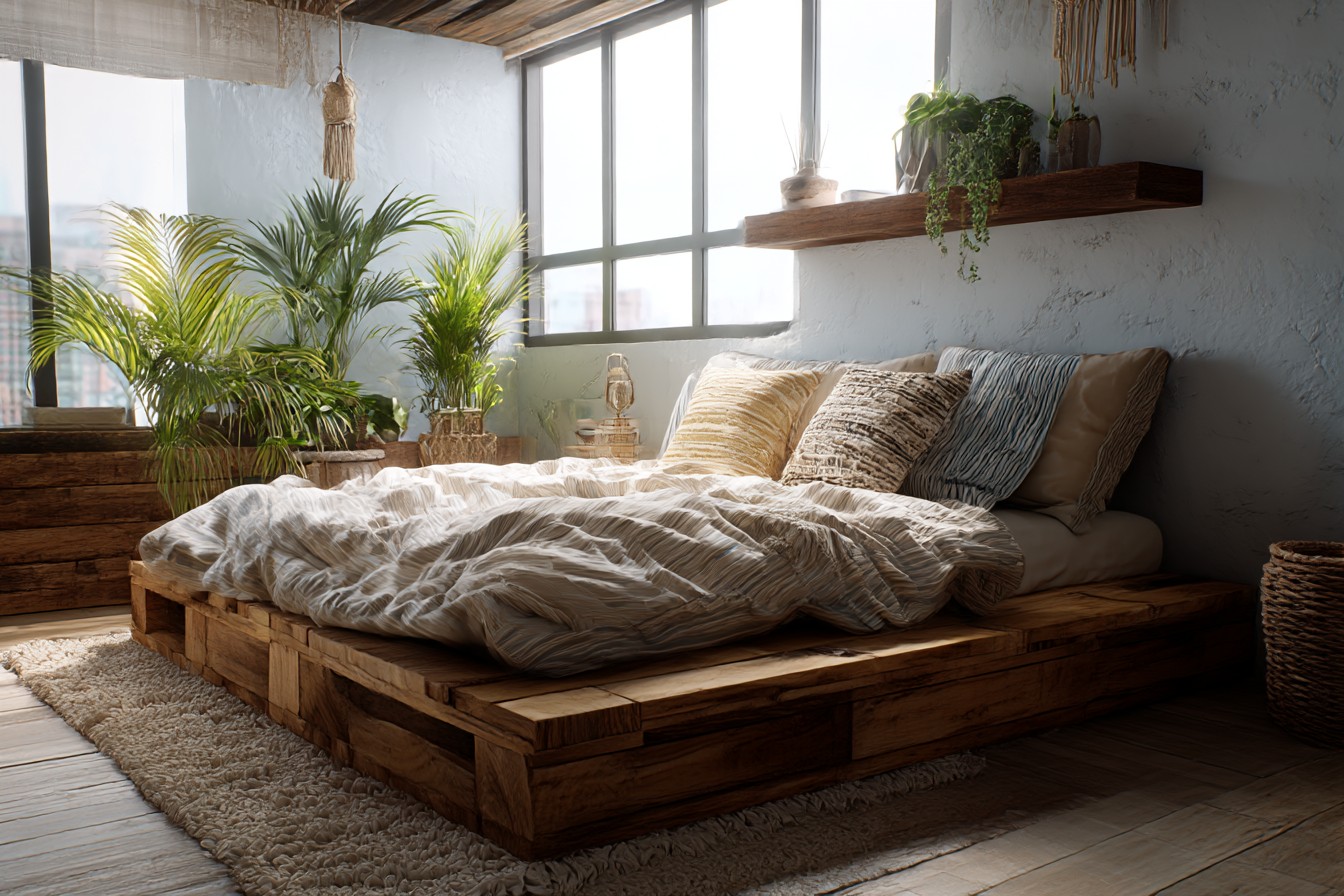
Now we’ve got what’s basically a floor bed – well, a mattress on a platform I built that sits maybe four inches off the ground – and people actually fight over who gets to stay in there. Same square footage, completely different feeling. The ceiling feels higher, the walls feel further apart, and somehow there’s actual space to walk around instead of that sideways shuffle you do in cramped bedrooms.
The trick is making it look intentional rather than like you’ve given up on adult life. Random mattress dumped on carpet? Looks like a student bedsit. Beautiful mattress on a thoughtfully made platform with gorgeous bedding and maybe some carefully placed cushions? Looks like you’ve studied minimalist design and made sophisticated choices about how you want to live.
Building the platform was easier than I’d expected. Spent about £50 on timber from B&Q – just some 2×6 planks and some slats for airflow underneath. Took me one Saturday afternoon and several cups of tea, plus Danny holding things steady while I figured out my spirit level. Nothing fancy, just a simple rectangle that raises the mattress enough to feel intentional without creating that visual weight that makes small rooms feel smaller.
The Japanese have been doing this for centuries, haven’t they? Those traditional tatami rooms where everything happens close to the ground. There’s something genuinely calming about sleeping low – makes you feel more connected to the space somehow, less like you’re perched up on furniture and more like you’re actually inhabiting the room.
Bedding becomes crucial when everything’s at eye level. Can’t hide behind a fancy headboard or throw a valance over tatty bed legs – what you see is what you get. I’ve learned to invest properly in sheets and duvet covers because they’re basically doing all the decorative heavy lifting. Good quality cotton, colours that work with the walls, everything kept absolutely spotless because any mess is immediately obvious.
Storage gets interesting without that under-bed space to rely on. But actually, you gain more than you lose because suddenly you’ve got all this wall space that isn’t being visually chopped up by bed frames and headboards. I put up some floating shelves where a headboard would normally go – three different lengths at slightly different heights that hold books, a small succulent that somehow survives my neglect, and whatever I’m currently reading.
Lighting changes too. Bedside table lamps feel enormous when you’re sleeping at floor level – like having streetlights next to your head. I switched to pendant lights that hang down from the ceiling, positioned exactly where we need them for reading. Creates this lovely cocoon effect that makes the low bed feel cosy rather than just… low.
My mate Rachel tried copying what we’d done after staying over, but made the classic mistake of just shoving her existing mattress on the bedroom floor without thinking it through properly. Looked awful – like she’d been evicted and was camping in her own house. We sorted it by building a proper platform, adding a massive rug to define the sleeping area, and hanging her curtains much higher than the actual window to draw your eye upward. Same mattress, same poky room, completely different vibe.
The cleaning situation is real though. Nowhere for dust bunnies to hide when your bed’s basically part of the floor. I’m hoovering under there twice a week now, which sounds like a pain but actually takes about thirty seconds since there’s no bed frame to navigate around. Plus side: my bedroom floors have never been cleaner, and I actually notice things like scuff marks that I’d have ignored before.
Not every mattress works directly on the floor – learned this the expensive way with a memory foam one that developed these grim damp patches after about six months. The platform with slats isn’t just aesthetic, it’s essential for airflow. That £50 investment in a simple wooden frame probably saved me having to replace a £400 mattress.
What really gets me about floor beds is how they change your relationship with the whole room. Instead of this big piece of furniture dominating everything, the bed becomes part of the landscape. The space flows better, feels bigger, and somehow more like somewhere you’d actually choose to spend time rather than just the place where you collapse at the end of the day.
Small bedrooms don’t have to feel like cells. Sometimes the answer isn’t cramming in more storage solutions or clever space-saving gadgets – sometimes it’s just removing the visual barriers that make everything feel cramped in the first place. Getting low might be the best thing you ever do for a tiny space.