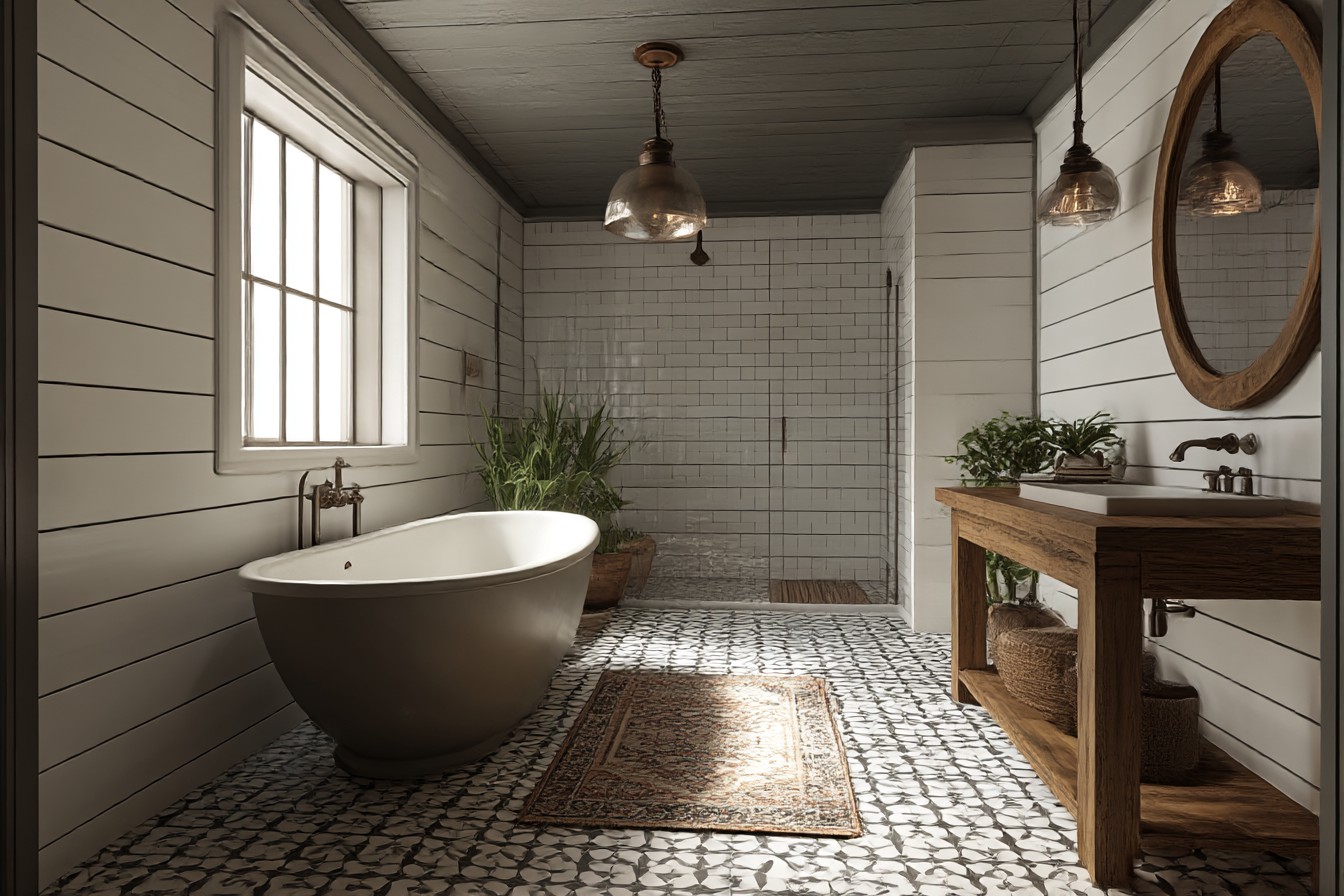
Right, so three years ago I made what seemed like a brilliant decision at the time I was going to transform our depressing guest bathroom with some trendy shiplap. You know those Instagram-perfect farmhouse bathrooms that somehow look effortlessly charming? Yeah, well, turns out there’s nothing effortless about getting it right, and I nearly created what my girlfriend diplomatically described as “a wooden prison cell.”
The bathroom in question was this tiny space maybe five feet by six feet that came with the flat and had clearly been designed by someone who thought beige was a personality trait. Builder-grade everything, no character whatsoever, the kind of room that made you want to get in and out as quickly as possible. I’d been scrolling through design blogs during my lunch breaks at school, looking at all these gorgeous shiplap installations, thinking “how hard can it be?”
Famous last words, obviously.
My first attempt at research involved walking into B&Q on a Saturday morning with absolutely no clue what I was doing. I was heading straight for the cheapest pine planks when this bloke working there proper lifesaver, honestly stopped me and asked what I was planning to do with them. When I explained about the bathroom, he just shook his head and said, “Mate, you’re about to put untreated wood in the steamiest room in your house. That’s not going to end well.”
Turns out wood and bathrooms have a complicated relationship. Who knew? Well, everyone except me, apparently. If you’re determined to use real wood, you need something like cedar that can handle moisture, or you need to spend ages sealing every single surface. And I mean everything front, back, all the edges. The marine-grade sealant alone was going to cost more than my original budget for the entire project.
This is where I discovered MDF shiplap boards with moisture-resistant cores, and honestly, it felt like cheating at first. I’m standing there in the store thinking I should be using “proper” wood because that’s what all the blogs show. But these boards cost about half what decent wood would, they don’t expand and contract when your teenager takes their third shower of the day, and once they’re painted, you genuinely can’t tell the difference. Sometimes practical wins over purist, you know?
The height question nearly broke my brain. Every photo I’d seen showed floor-to-ceiling shiplap, probably because that’s what looks dramatic in magazine shots. But I’m in this shoebox of a bathroom, and I had this nagging feeling that wood covering every wall might feel a bit like being trapped inside a sauna. So I did something I’d learned from our living room makeover I tested it first with painter’s tape.
Best decision ever, that tape test. Full height looked absolutely overwhelming in our tiny space. Traditional wainscoting height felt too formal somehow like we were trying to recreate some Victorian mansion vibe in a modern flat conversion. I ended up going about four feet high, which hit right at our window level and left enough wall space above for paint that could make the ceiling feel higher.
Now, the paint situation nearly derailed everything. My initial plan was classic white because, well, safe choice, right? Timeless, clean, can’t go wrong with white. Except apparently you can go very wrong with white. After I’d primed everything and lived with it for a few days, the whole room felt like a medical facility. Sterile and cold, especially with our rubbish bathroom lighting.
I ended up switching to this warm grey Farrow & Ball’s Mole’s Breath, which sounds disgusting but looks beautiful and the transformation was incredible. Suddenly the texture looked cozy instead of clinical, and the colour had enough depth that you could actually see the shiplap detail instead of it all washing out under the lights.
The installation process taught me things about myself I didn’t really want to know, mainly that my patience runs out after about two hours of precision work. Each board has to be perfectly level, properly spaced, with all the joints lining up if you want it to look intentional rather than like someone had a go after a few pints. I borrowed a laser level from our upstairs neighbour after my first attempt with a spirit level looked wonky enough that even I could tell it was wrong.
Here’s something nobody mentions in those design blogs if you’re doing this in your only bathroom, you’re basically making yourself homeless for a weekend. The smell from the primer and paint was terrible, everything needed to be sealed properly, and then you’ve got to wait for everything to cure before you can actually use the space again. I managed to lock myself out of our downstairs loo for an entire day because I’d underestimated how long the sealant needed.
I added this simple wooden trim along the top edge where the shiplap met the painted wall above, nothing fancy, just a basic piece of timber with the edges rounded off. It covered up any slight unevenness in my board installation and there definitely was some while creating a proper finished look. Sometimes the simplest solutions are the ones that save your bacon.
Three years on, that bathroom still makes me happy every time I walk past it. It’s got character without looking like we’ve relocated a barn indoors, texture without being busy, and it feels warm and welcoming instead of like a waiting room. People always comment that the flat feels more “finished” now, which is exactly what we were after.
The thing I learned is that shiplap works best when it adds interest rather than overwhelming the space. When it’s done right, people notice how the room feels rather than immediately thinking “oh, they’ve put wood on the walls.” It becomes part of the overall atmosphere rather than the main event, if that makes sense.
Looking back, I probably would have saved myself some stress by doing more research upfront instead of just diving in with enthusiasm and a credit card. But then again, some of the best lessons come from figuring things out as you go, especially when you’re working on a teacher’s budget and can’t afford to get professionals in for everything.