You know what’s mad? I spent three months obsessing over our bathroom renovation – watching endless YouTube videos about grouting techniques, driving Danny mental with tile samples scattered across the dining table, price-comparing taps at four different suppliers. Got everything perfect from floor to shoulder height, then just slapped some basic white emulsion on the ceiling and called it a day.
Took me ages to realise what was bothering me about the finished room. I’d be lying in the bath (finally had a proper soak instead of our old shower-over-bath situation), and my eyes would just… wander upwards. And there it was. This massive blank space that I’d completely ignored. Like spending hours perfecting your makeup then forgetting to brush your hair.
The lightbulb moment came when I popped round to see what my mate Claire had done with her new ensuite. She’d gone all out – gorgeous Victorian-style tiles, this incredible copper basin that cost more than our monthly food shop, proper fancy towel radiator. But standing there trying to be appropriately impressed, all I could think was how boring her ceiling looked. All that money spent, all that planning, and she’d got the same flat white situation I had.
I didn’t say anything, obviously. You don’t critique someone’s bathroom when they’re proudly showing it off. But it got me thinking – why do we treat ceilings like they don’t exist? You’re in your bathroom at least twice a day, probably more if you’ve got kids or drink as much tea as I do. Your eyes go everywhere. Up is somewhere.
My chance to fix things came about eight months later when the people upstairs had a bit of a plumbing disaster. Nothing too dramatic – just enough water damage to mean I needed to repaint the ceiling anyway. Instead of reaching for the usual Dulux trade white (which, let’s be honest, has been my go-to for everything), I grabbed a tester pot of this pale mint green. Same colour family as my walls but loads lighter.
Game changer doesn’t even cover it. The whole room felt bigger somehow, like the ceiling had lifted. Danny noticed immediately, which is saying something because he usually doesn’t clock decorating changes until I point them out three times.
Thing is, bathroom ceilings are brilliant for experimenting because they’re not in your face like walls are. You can try things that might feel too much elsewhere. I’ve learned this through trial and error – some spectacular successes, some absolute disasters that required emergency repainting.
The colour thing took me a while to crack. My first proper attempt was this deep teal situation in our downstairs loo. Looked gorgeous in the tin, looked like a cave once it was up there. Made the tiny space feel claustrophobic, plus every bit of dust showed up immediately. Had to redo it in a pale version of the same shade, which taught me the golden rule – always go lighter than your walls, never darker.
For our main bathroom, I ended up doing something a bit more subtle. Painted the ceiling the same sage green as the walls but in completely different finishes – matt up top, eggshell on the walls. Creates this tonal effect that’s quite sophisticated without being obvious. Cost about fifteen quid extra in paint and made the whole room look intentional rather than just… functional.
I got properly adventurous when we moved and I had a whole new bathroom to play with. Decided to try shiplap on the ceiling after seeing it done beautifully in a house viewing (didn’t get that house, but definitely nicked some ideas). Won’t lie, it was more faff than those renovation shows make it look. Spent an entire weekend with a mitre saw, spirit level, and increasingly creative swear words.
The measuring alone nearly broke me. Our ceiling wasn’t quite square – old house problems – so every board needed trimming differently. Danny kept suggesting we just pay someone, but I was determined to figure it out myself. Eventually got there, though the first few boards are definitely not my finest work. Luckily they’re over by the door where nobody really looks.
But honestly? Worth every minute of aggravation. The shiplap adds this texture and movement that plain paint just can’t achieve. Catches the light differently throughout the day, makes the whole space feel more expensive than it actually was. Used basic pine tongue-and-groove from the builders’ merchant rather than the fancy pre-finished stuff – saved about sixty quid and looks identical once painted.
Beadboard’s another option that’s way more forgiving if your cutting skills are questionable. Did this in our current ensuite using those click-together panels from Wickes. Took me one Saturday afternoon and cost maybe forty pounds including paint. The vertical lines make the room feel taller, which is brilliant in our Victorian terrace where the ceilings aren’t exactly soaring.
The maintenance is easier than you’d think too. Thought all those grooves would be dust traps, but they’re actually fine. Quick wipe with a damp cloth every few weeks keeps everything looking fresh. Much easier than the textured ceiling we had before, which was impossible to clean properly.
Where it gets really interesting is adding proper architectural details. Crown moulding round bathroom ceilings creates this finished look that transforms the whole space. I learned to cut mitres through YouTube University (badly at first – wasted three lengths of moulding on wonky angles), but once you get the hang of it, it’s quite satisfying.
Simple white moulding from Travis Perkins, nothing fancy. Installed it over two evenings with the radio on and several cups of tea. The difference was immediate – went from feeling like a utilitarian space to an actual room. Cost about thirty quid in materials and made the bathroom look like it belonged in a much more expensive house.
Been thinking about trying coffered ceilings next – not the full architectural job that needs professional installation, just simple rectangular frames using basic moulding strips. Saw this done brilliantly in a Victorian conversion in Nottingham. The woman had created three neat rectangles on her bathroom ceiling, painted the recessed bits a shade deeper than the frames. Looked properly grand without being over the top.
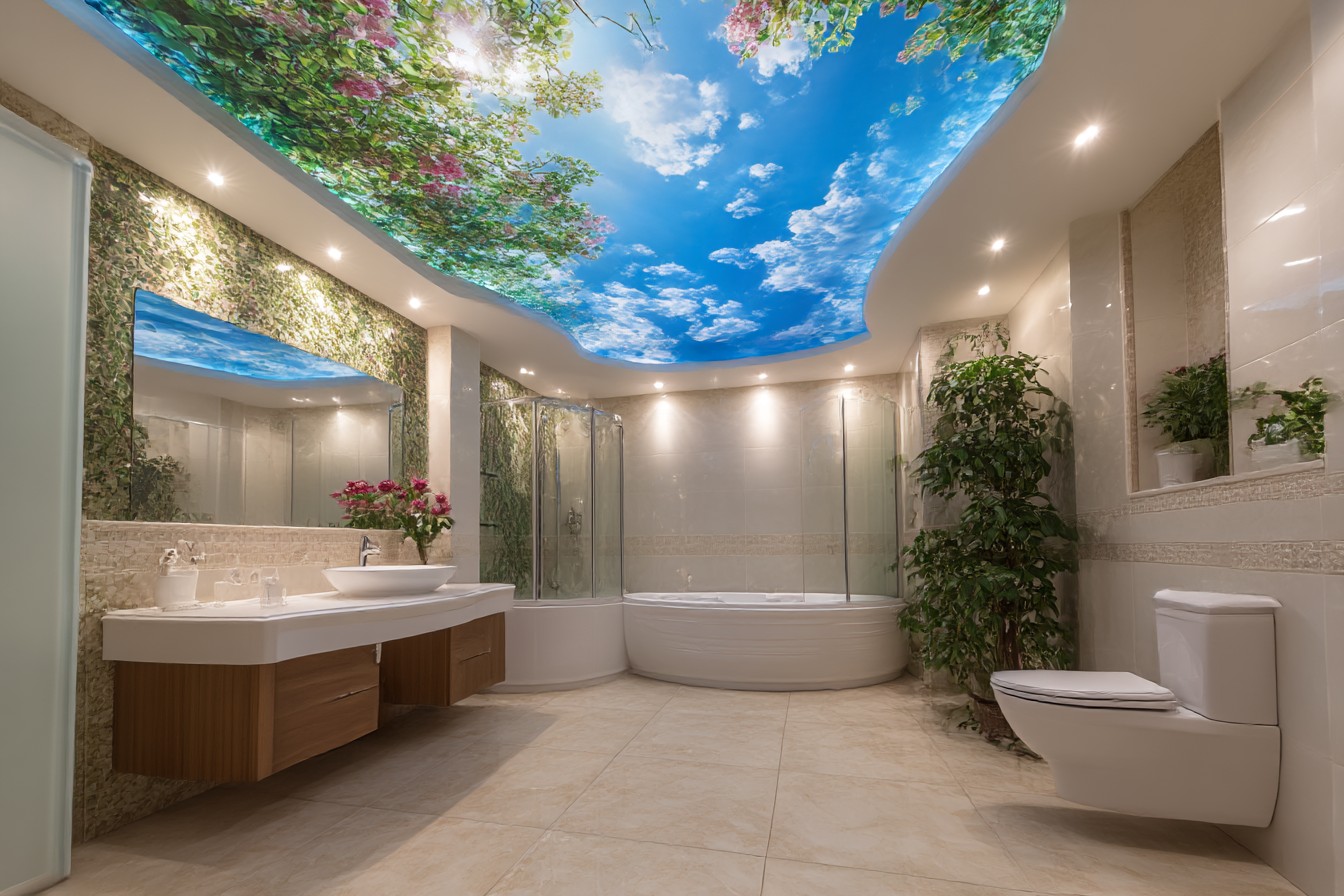
Actually tried wallpaper on one ceiling, which sounds mental but worked surprisingly well. Small botanical print, nothing too busy – learned that lesson from a friend who did huge tropical leaves and couldn’t sleep for feeling like she was in a jungle. The installation was proper awkward (gravity’s not your mate when you’re papering ceilings), but the impact was worth the neck strain and the swearing.
Key with ceiling wallpaper is choosing something subtle with a small repeat pattern. Light background’s essential unless you want your bathroom feeling like a cave. And definitely invest in proper paste – tried the cheap stuff first time and had bits peeling off within a week.
The lighting aspect’s something I wish I’d considered earlier. Those downlights everyone installs look much more intentional when they’re part of a planned ceiling design. In our current setup, I positioned three LED spots to highlight the shiplap lines. Creates lovely shadow patterns that change as the day goes on.
Biggest mistake I made early on was ignoring practical stuff in favour of looking fancy. That dark teal ceiling I mentioned? Every speck of dust, every water spot showed up immediately. Looked amazing for about three days, then became a maintenance nightmare. Light colours hide imperfections way better.
Similarly, heavy textures can be dust magnets. Love the look of those deep coffered ceilings, but unless you fancy getting up there with a soft brush every fortnight, stick to simpler profiles that don’t collect grime.
Budget-wise, paint’s obviously the most accessible starting point. Good bathroom paint costs twenty to thirty quid for most normal-sized bathrooms. Shiplap or beadboard runs fifty to a hundred pounds depending on your space. Architectural moulding adds maybe thirty to sixty quid to your project.
The real cost’s usually your time rather than materials. Most ceiling treatments are weekend DIY jobs if you’re comfortable on a stepladder and own basic tools. Though don’t be daft about electrical work – always get sparks in for anything involving wiring. Some things are worth paying for to avoid electrocuting yourself.
What’s surprised me most about focusing on bathroom ceilings is how much it’s changed my daily experience of the space. Instead of rushing through morning routines, I actually enjoy spending time in there. Sounds weird, but when you’ve created something lovely, you want to appreciate it. Even if that something’s above your head while you’re brushing your teeth.