I’ll be honest – I used to think people who painted their bathrooms black were either incredibly brave or slightly unhinged. Then I walked into my friend Sarah’s ensuite last month and basically stood there gawping like an idiot. The whole room was done in these gorgeous charcoal greys and deep blacks, but instead of looking like a cave, it felt like stepping into some posh hotel spa. I actually asked her if I could just… stand there for a minute longer because I couldn’t work out what made it so bloody lovely.
The thing is, I’d tried this before. Spectacularly failed, if I’m being completely honest. About three years ago, I decided our guest bathroom needed “sophistication” – which in my mind meant painting it what I thought was an elegant charcoal grey. Except it wasn’t elegant. It was just miserable. Phil walked in and asked if I was going through something emotionally. My mother-in-law genuinely wondered if we’d had money troubles and couldn’t afford proper lighting. Not exactly the luxurious spa vibe I was aiming for.
That disaster taught me something important though – you can’t just slap dark paint on walls and expect magic to happen. There’s actually quite a bit of thought that needs to go into it, which sounds obvious now but absolutely wasn’t at the time. I’d basically created a grey box and wondered why it felt depressing.
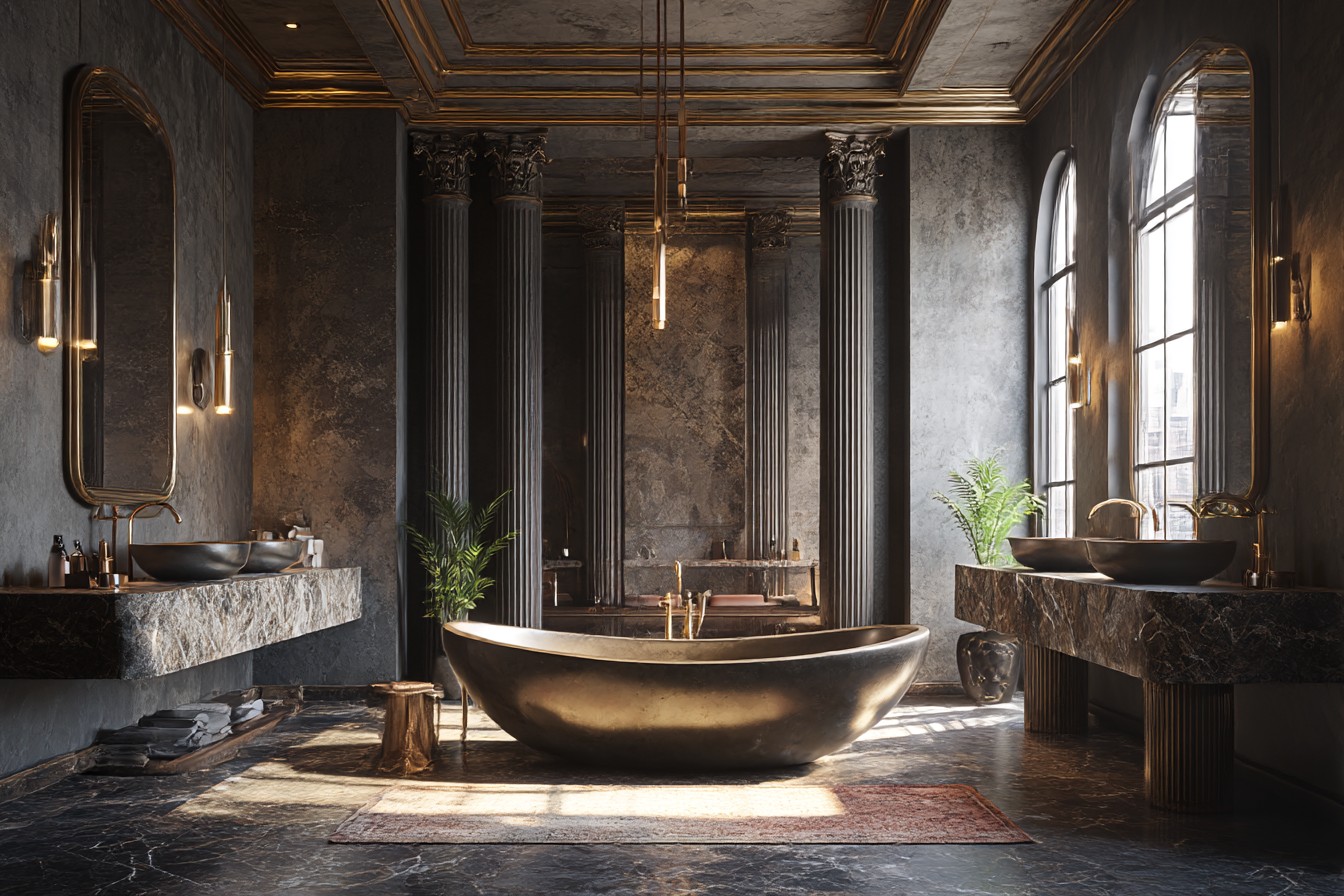
Sarah’s bathroom worked because she’d mixed textures like she actually knew what she was doing. Matte black tiles on one wall, glossy grey ones on the floor, these gorgeous brushed brass taps that caught the light, and just enough white trim around the edges to stop everything disappearing into a black hole. Every surface reflected light differently, which meant instead of feeling flat and dead, the room had proper depth to it.
I spent ages after that first failure researching what I’d done wrong. Turns out material choice becomes absolutely massive when you’re working with dark colours. When I tried to “fix” my grey disaster by adding black towels and accessories, I basically made everything worse. It all just blended together in this horrible, muddy way that made the room feel smaller and more depressing than before.
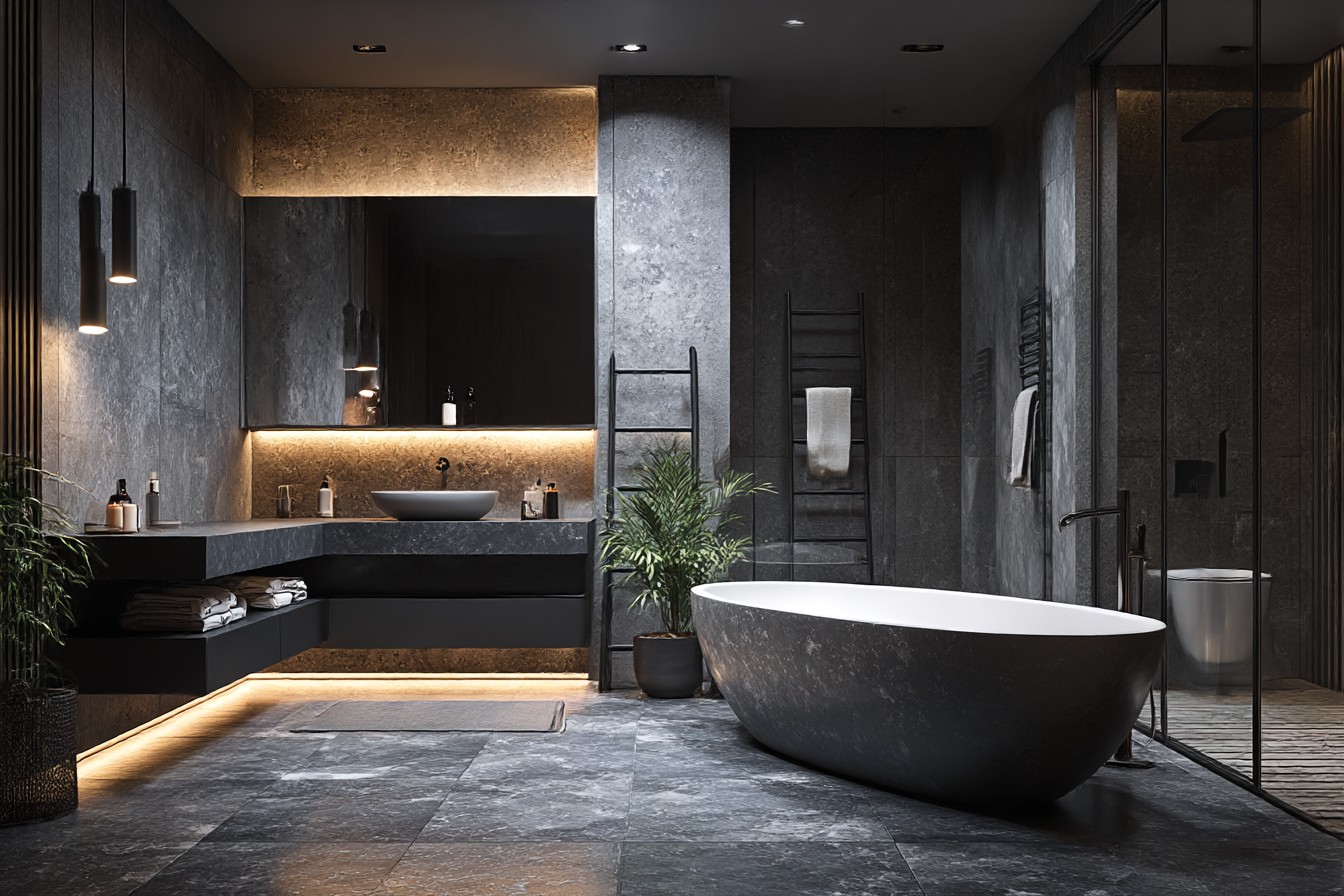
Now when I’m thinking about dark bathrooms – and yes, I am planning another attempt because I’m clearly a glutton for punishment – I think about it like building up layers. You need your main colour, your contrast colour, and then different textures to make it all work together. So maybe matte black subway tiles with a polished grey marble countertop and brushed nickel fixtures. Each surface catches light differently, which stops that awful cave effect I managed to create the first time.
Pattern mixing gets really tricky with dark schemes too. I saw this bathroom on Instagram where someone had combined black hexagon floor tiles with grey herringbone walls and honestly, it gave me a headache just looking at it. Too much pattern competition makes everything feel chaotic rather than sophisticated. I’ve learned it’s better to pick one statement pattern and keep everything else relatively simple. Bold geometric floors with plain walls, or subtle marble veining with clean black fixtures.
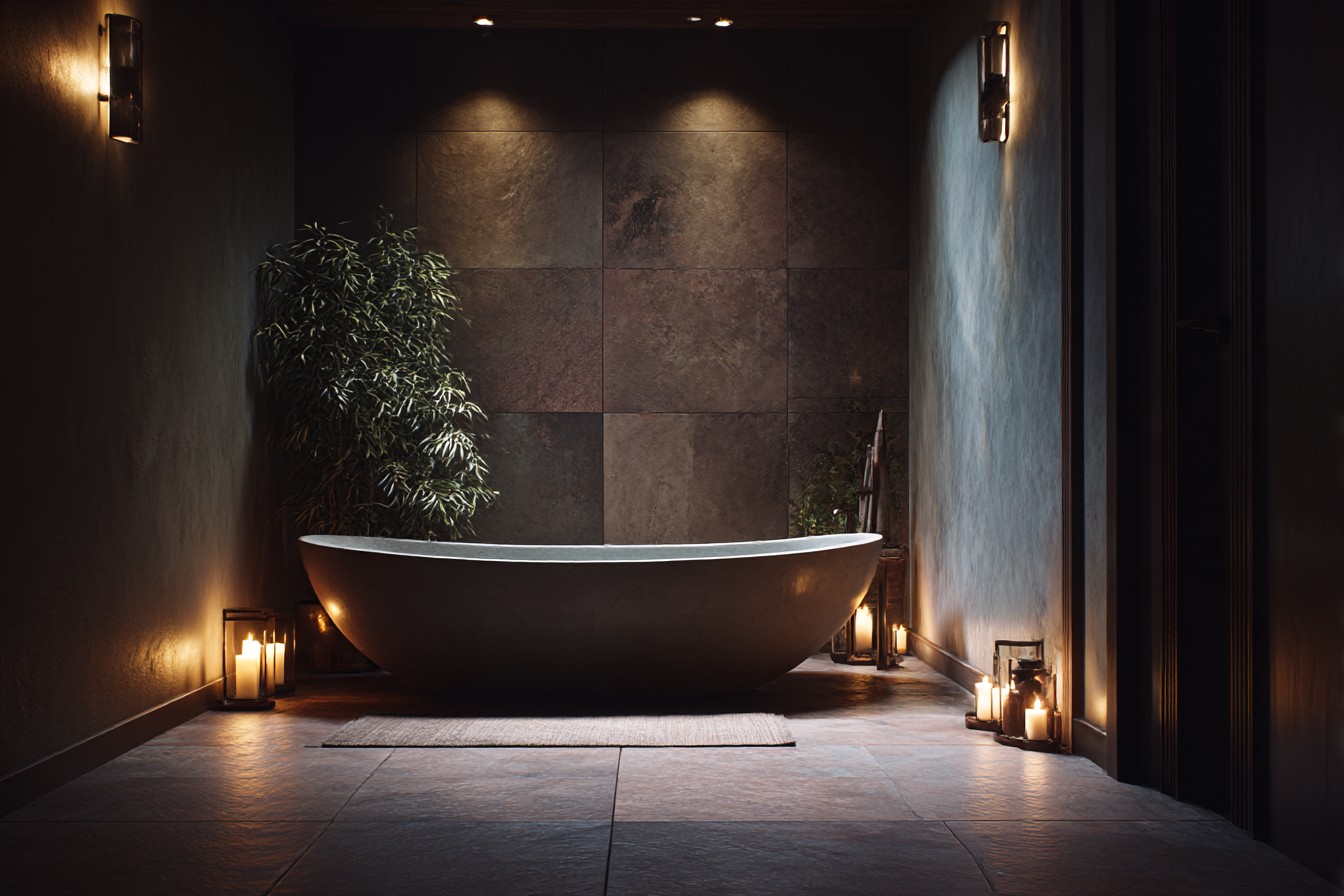
The lighting situation becomes absolutely critical, which is something I definitely didn’t consider properly the first time around. You cannot just rely on that standard ceiling light that came with the house and hope for the best. My “sophisticated” powder room became this black void every evening where you literally couldn’t see what you were doing. Now I always plan for multiple light sources – ceiling spots for general light, sconces by the mirror for actually seeing your face, maybe some under-cabinet lighting if there’s storage. It sounds over the top but trust me, you need it.
I’ve become slightly obsessed with brass fixtures in dark bathrooms. There’s something about that warm metallic tone that stops everything feeling cold and sterile. I recently swapped all our chrome taps for brushed brass ones in our main bathroom (which is a lovely soft dove grey now, much more successful than my first attempt), and the difference was remarkable. The brass adds this warmth that makes the whole space feel more inviting.
But here’s the bit nobody talks about – dark bathrooms are an absolute nightmare to keep clean. Water spots show up dramatically on black surfaces. Every bit of toothpaste splatter is glaringly obvious. I’ve had to become one of those people who wipes down surfaces daily, which I definitely wasn’t before. It’s a proper trade-off that you need to think about seriously because if you’re not prepared for the maintenance, it’ll drive you mad.
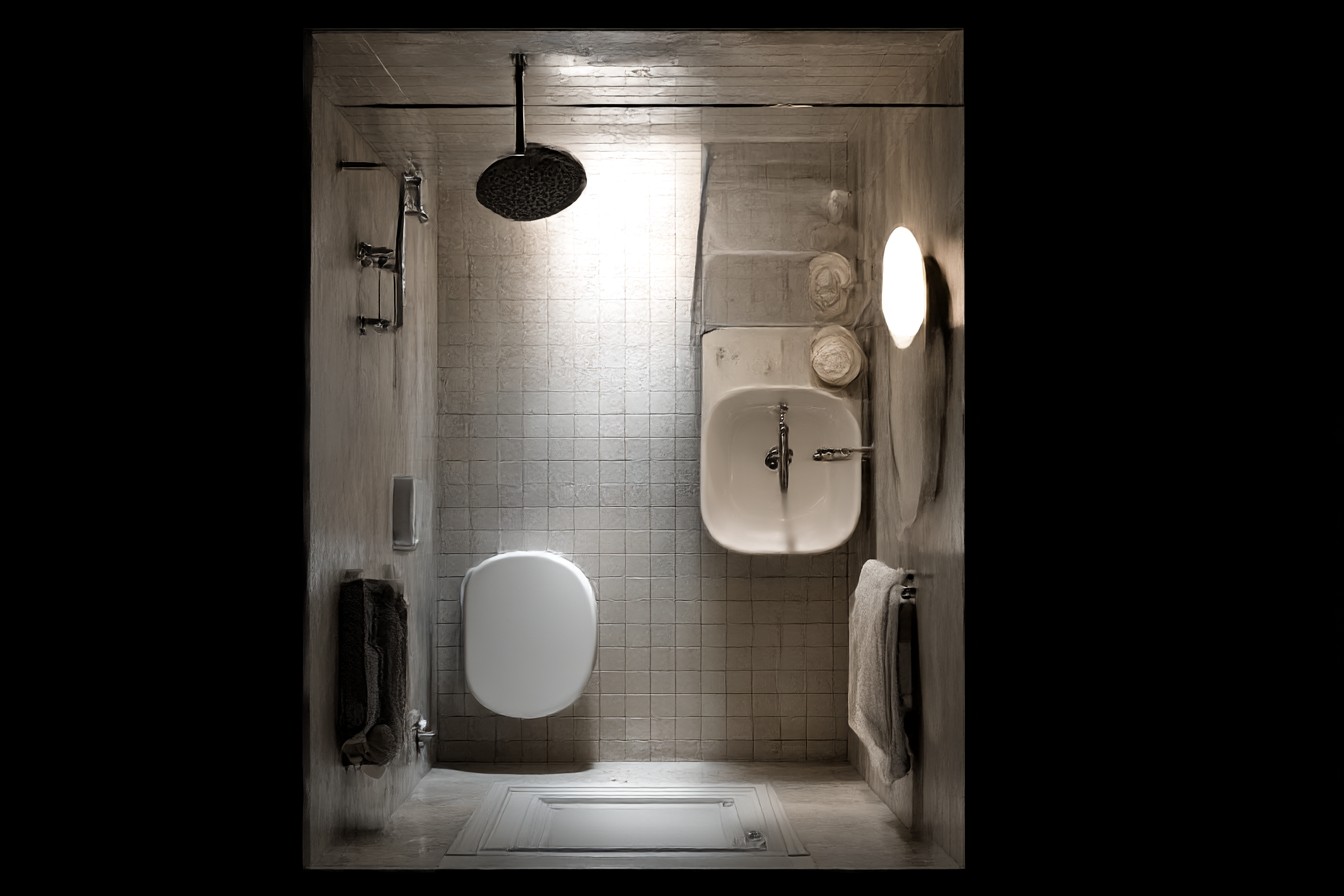
Storage becomes a whole different challenge too. White towels and toiletries that basically disappear in light bathrooms suddenly become these stark focal points against dark walls. I’ve found it’s better to embrace this rather than fight it – invest in beautiful storage containers, buy really lovely towels in colours that work with your scheme, make sure everything visible actually looks intentional rather than like you’ve just dumped stuff anywhere.
The psychology of it all is quite interesting actually. I was worried that spending time in a predominantly dark bathroom would feel depressing, especially during those grim winter months we get up here. But I’ve discovered it’s often the opposite – there’s something really peaceful and cocoon-like about a well-designed dark space. It feels like a proper retreat from everything, somewhere you can actually relax properly.
If you’re lucky enough to have a window, you need to think carefully about treatments. Heavy curtains will kill any sense of light and space, but bare windows might feel too exposed. I’ve had good results with those textured privacy films or simple cellular blinds that let light through without everyone being able to see in.
Cost-wise, it doesn’t have to break the bank. Paint is paint regardless of colour, and you can find lovely dark tiles without paying premium prices. The real investment usually comes in fixtures and lighting, but these make such a dramatic difference that they’re often worth splashing out on if you can manage it.
My biggest bit of advice though? Start small. Try one accent wall or swap out some fixtures before committing to a full dark transformation. Test how the colours feel in your actual space, with your actual lighting, in your actual daily routine. What looks incredible in those magazine photos might not feel right for your particular situation, and that’s completely fine. Better to discover that with one wall painted than with an entire room you’ll need to redo.
There’s definitely a knack to making dark bathrooms feel intentional rather than accidental, sophisticated rather than depressing. But when you get it right – and I’m determined I will eventually – you end up with something genuinely special. A space that manages to feel both dramatically modern and surprisingly comfortable to actually live with.