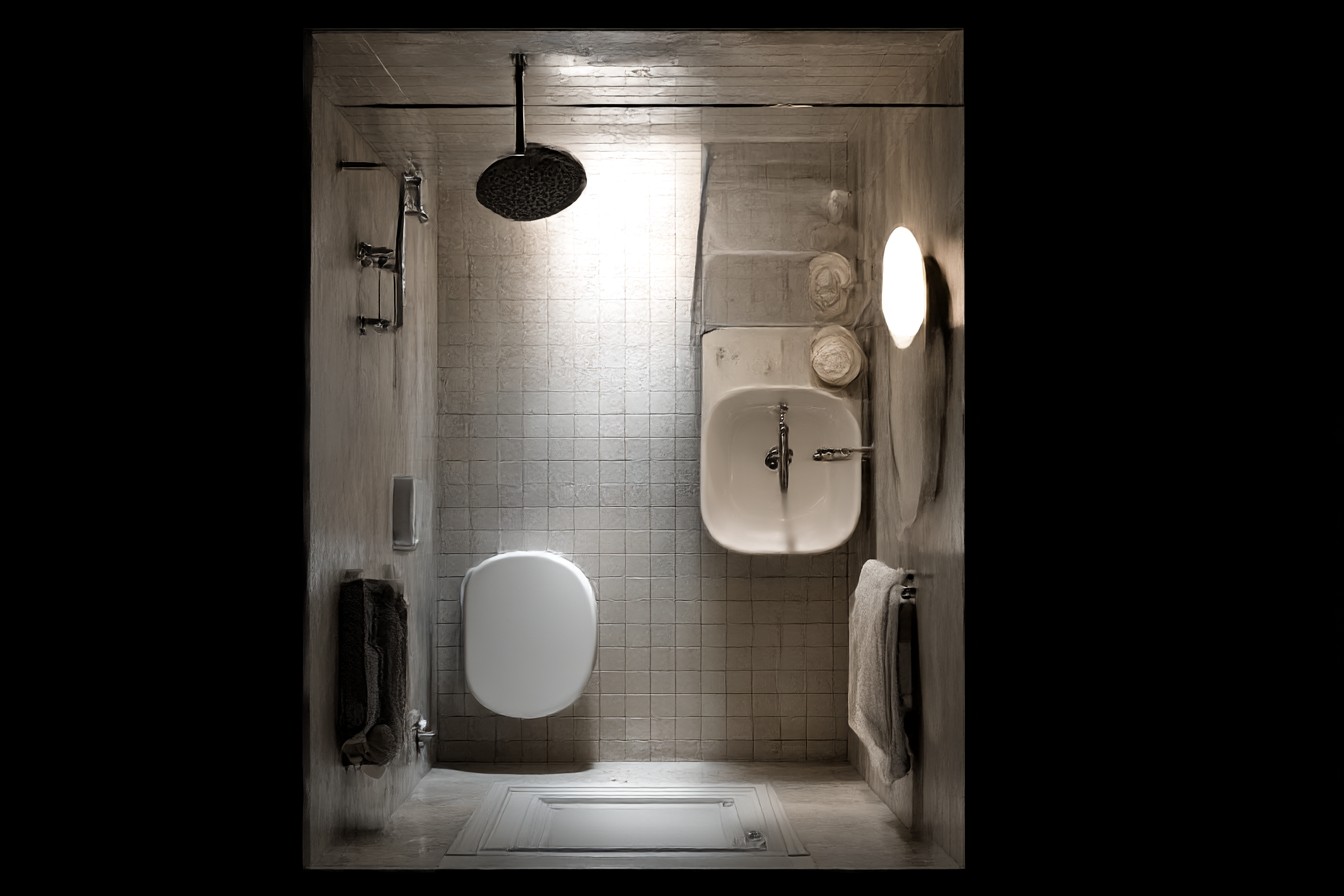
You know that moment when you open the bathroom closet and everything just… falls out? As if it’s all playing a twisted version of a game of gravity and you’re just along for the ride? This was my reality for far too long. I’d shove towels onto whatever shelf would take them, stuff as many bottles as possible anywhere that would fit, and hope that none of them fell on my feet when I desperately needed a fresh roll of toilet paper at 2 am.
I hit rock bottom last spring when I was frantically grabbing a clean towel to hand to our arriving guests, and the whole top shelf literally exploded. There were three mismatched washcloths, a hairdryer I had totally forgotten existed, and multiple bottles of shampoo that all came tumbling down. Standing there in my bathrobe, gathering all the scattered toiletries while simultaneously hearing the doorbell ring, I knew that something had to be done.
Bathroom closets are weird spaces. They are generally very narrow. They are often irregularly shaped. And for some reason they are almost always more humid than expected. We also pack them with an incredible range of items, including large towel sets and small travel bottles. Therefore, generic organizational strategies may not be applicable. I learned this the hard way after buying one of those “universal” closet systems that claimed to fix all of my problems. Spoiler Alert: it did not fit, and returning it was a bigger hassle than putting it together in the first place.
Therefore, I began again. I truly looked at what I kept in the closet. Towels, of course. Bath sheets. Hand towels. Washcloths. All of the backup toiletries extra shampoo, body wash, toilet paper (which is, in case you were wondering, an enormous amount of toilet paper). The hair tools I occasionally use. First aid supplies. Cleaning supplies. And somehow, inexplicably, a vast assortment of hotel soaps I’ve “saved” for years.
Adding proper shelving was the first major step toward creating a better closet. Again, I know this seems obvious. However, most bathroom closets come with only two fixed shelves that are in completely inappropriate positions. I purchased three adjustable wire shelves from ClosetMaid (for approximately £45 total) that I could adjust the heights of based upon the needs of the items that needed to be placed in each shelf. Huge difference. I now have one shelf that is perfectly positioned for folded towels, one for bottles that won’t topple over, and one lower shelf for those awkward bulk items.
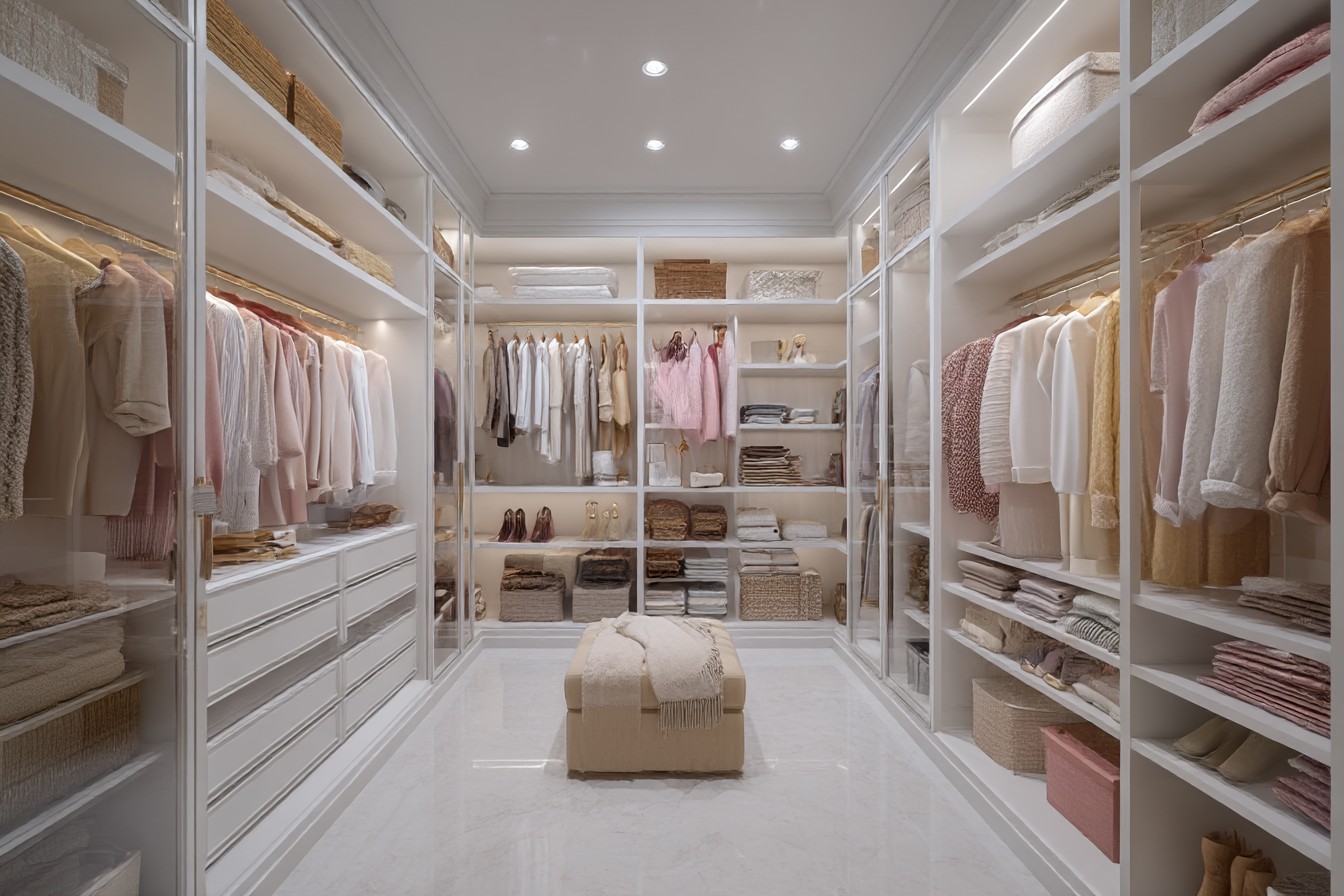
As for folding towels — well, that was when things became quite interesting. I had been folding towels using the exact method that my mother had taught me. Although it seemed fine, it consumed a ridiculous amount of space. I then found this hotel-styled towel-folding technique where you fold towels in thirds length-wise, and then roll them ever-so-slightly. It takes up roughly 40% less space. Honestly? They appear to be much more sumptuous stacked. My bath sheets were going from consuming an entire shelf to coexisting with hand towels and still appearing neat.
As for smaller items — all of those bottles and tubes that appear to double in quantity when you’re not paying attention — I invested in transparent storage bins. Simple, basic acrylic bins from IKEA’s GODMORGON series. The clear nature of the bins makes it possible to see what you have. No longer do I purchase additional backup shampoo when I have three bottles hiding beneath a stack of washcloths. I use the smaller bins for travel-size items, and the larger bins for full-size products. Labels are helpful, but seeing through the bin is usually sufficient.
Vertical space turned out to be the largest discovery. Most of us think about shelves in terms of horizontal space. However, there is typically a great deal of unused vertical space in these closets. I added a simple over-the-door organizer on the interior of the closet door — a basic model with clear pockets that holds all of the random items. Hair ties, nail files, travel containers, that lip balm you can never find when you need it. I spent £12 on it and possibly saved myself twenty minutes per week in search time.
One mistake I made early on was storing everything at eye level. Sounds reasonable. However, it’s not the best approach for maximizing space. Today, I store everyday items (the current shampoo, the towels we actually use) at the most easily accessed height. Back-up supplies and seasonal items (that fancy body scrub I save for special occasions) I put above/below. Just easier.
The humidity issue exists. I ignored it until I observed some of my towels developing a slight musk odor, despite having recently cleaned them. Using a small moisture absorber one of those DampRid containers greatly assisted. Costs about £3. Will last for months. I stow it behind some bottles where it is not visible but can still perform its duty.
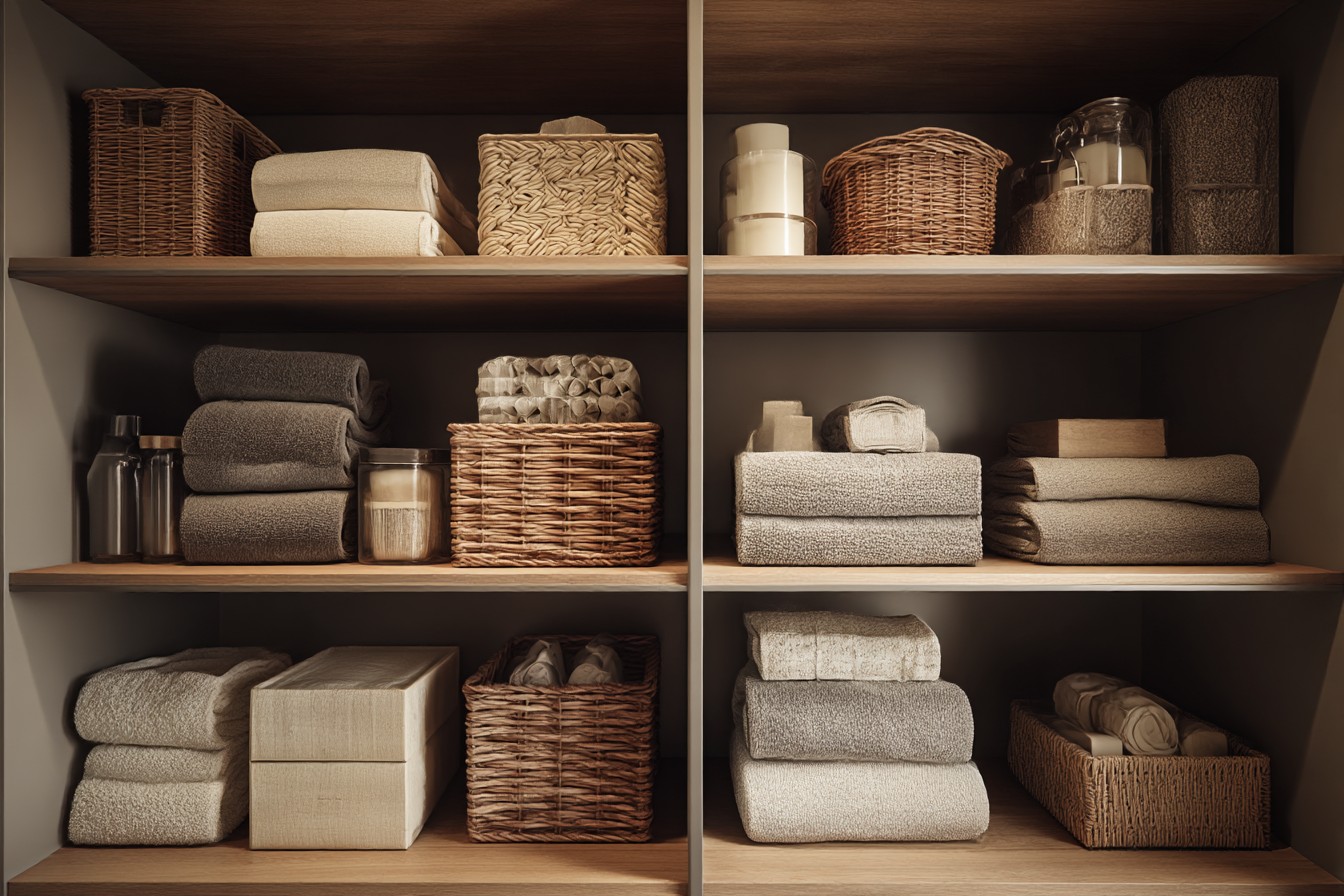
When it comes to toiletries, I’m absolutely fascinated with decanting products into identical containers. I know it sounds fussy. However, bear with me here. Those original bottles and tubes are all different shapes and sizes. Therefore, they do not stack or store as efficiently. I purchased a set of matching pump-dispenser containers and squeeze-bottle containers and suddenly everything fits together like a puzzle. Additionally, you can purchase product in bulk and fill as needed. Which will ultimately save you money.
Surprisingly, I found the aesthetic element of the closet to be the greatest contributor to its functionality. If everything appeared disorganized towels haphazardly stacked, bottles randomly arranged, etc. I tended to avoid the closet and allowed clutter to accumulate. Conversely, once the closet appeared organized towels neatly stacked, bottles contained within their respective containers, etc. I found myself wanting to continue maintaining it. It’s similar to how you tend to want to maintain a clean kitchen, rather than allowing it to remain dirty.
Six months have now passed since my initial attempt to organize my bathroom closet. To say it has improved dramatically would be an understatement. While it’s certainly not a beautifully curated closet (it still contains that hotel soap collection, and sometimes towels aren’t folded precisely), it functions. I can locate everything. Nothing falls when I open the closet. Guests can grab a towel without digging through a mess. In general, it’s simply much more convenient.
The total cost was below £100. And, most of the effort took no more than an afternoon on a Saturday. At times, the most significant transformations occur as a result of the smallest actions.