Why do we always think we need a lot of space to make a space work? I found out the hard way when I bought a Victorian conversion, which had a “bathroom” that was little more than a glorified broom cupboard. Twenty-two square feet. That includes the door swing. I measured it with my tape measure, and I wondered if I had made a huge mistake.
I call it “cozy.” My brother calls it “ridiculous.” I call it Tuesday, because that’s the day I figured out how to turn what seemed to be a closet into a real bathroom. But you know what? That small nightmare taught me a lot more about creative design than any spacious en-suite ever could.
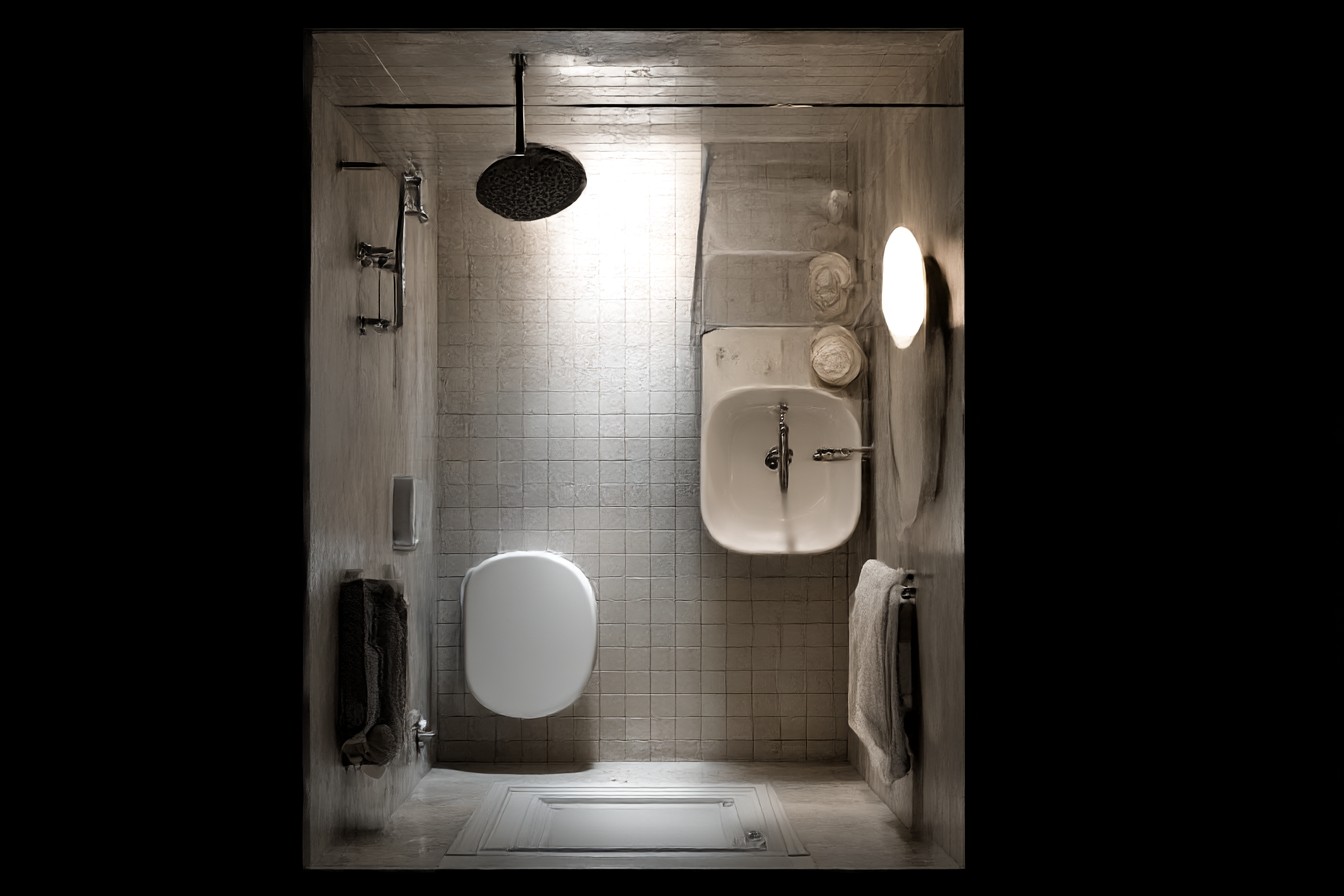
The first thing I realized was that I was completely off-base on how I was thinking about fixtures. Standard toilets are space eaters they jut out from the wall like some sort of afterthought. When I replaced mine with a wall-hung toilet, the bowl floated and the tank hid behind the wall, giving me floor space that made the room look twice as wide. I used a Geberit concealed cistern system. It cost me about £400 total (including installation) but the aesthetic benefit alone was worth every single penny. Cleaning underneath also finally became possible instead of a contortionist’s nightmare.
Next was the sink situation. I envisioned a typical vanity unit. Maybe something skinny. Wrong again. Corner sinks exist for a reason that reason is ridiculously small bathrooms. I found a compact ceramic corner basin that was only 14 inches wide it fit perfectly in the corner opposite the toilet. This gave me the entire wall for movement. Of course, the faucets were mounted to the wall too. Anything that could protrude from the wall was hidden instead.
However, the best part of corner sinks is that you have to rethink storage. There is no vanity unit underneath to store your bathroom basics. So, where did my toiletry essentials go? I installed two extremely thin shelves above the sink. They were just deep enough for toiletries. And then I installed a medicine cabinet with a mirror front. Not just any mirror, however. One of those super-slim ones that is really all storage behind the glass. Every inch mattered.
The door was almost my undoing. Standard doors swing inward, taking up valuable floor space. I measured it; roughly six square feet eaten up by the mere fact of swinging the door in a room that only had twenty-two square feet to begin with. The carpenter recommended a pocket door, and I thought he was joking. Pocket doors are for fancy homes with thick walls. Right? Wrong. If you’re willing to do some wall modification, you can retro-fit a pocket door into most any space. Mine cost £350 for the hardware and installation, and suddenly I had my six square feet back. Big deal.
Storage turned into some kind of bizarre obsession. All surfaces needed to serve more than one purpose. I hung three narrow shelves above the toilet; three shelves going almost to the ceiling. Only four inches deep. Perfect for toilet paper, towels, cleaning products. Between the wall studs? Perfect for recessed storage niches. I had two installed; one for the toilet paper near the toilet, and one for the soap and toothbrushes by the sink.
In tiny bathrooms, lighting is tough to accomplish simply because there is literally no place to hang light fixtures. Without them hitting your head or creating clutter, I opted for recessed LED spots in the ceiling. Three small ones. Instead of one large central fixture. The difference in how the space felt was incredible. No hanging fixtures, no wall-mounted lights taking up valuable room. Just clean, even lighting that created no shadows in corners.
The shower situation required a ton of outside-of-the-box thinking. A standard shower enclosure would have taken up half the room. Instead, I decided to go with a wet room style. I waterproofed the entire space and installed a drain in the floor. The shower itself is merely a corner of the room with a glass panel in it to keep water from splashing toward the toilet. No door, no frame, no bulky enclosure. Just a handheld showerhead on a rail and a fold-down seat that attaches to the wall when not in use.
Color has more to do with how a tiny space feels than anything else. In this case, I painted the entire room, ceiling, and even the window frame the same pale grey. It may seem dull, but painting everything the same color reduces visual interruptions that break up small spaces. Your eyes travel easily through the room instead of stopping due to color changes. I added personality with towels and accessories.
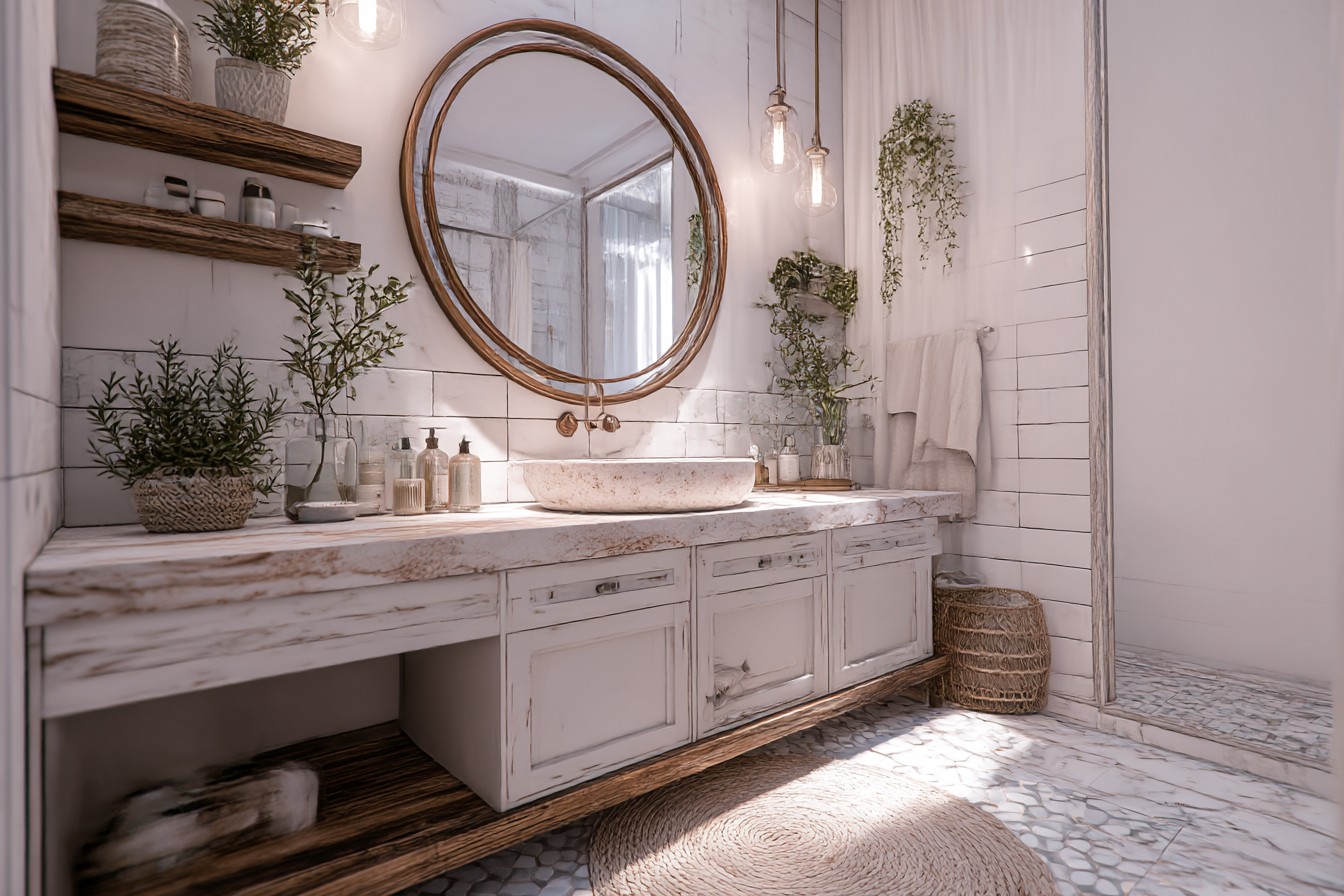
Mirrors are magical in small bathrooms, but not just any mirrors. I placed a large one on the entire wall opposite the door, so you see reflected space the instant you enter. It’s not covert it’s clearly a mirror but it immediately doubles the perceived size of the room. The medicine cabinet mirror above the sink provides yet another reflective layer.
Something I wish I knew sooner heating small bathrooms is actually easier than heating large bathrooms, but you have to think about it differently. A traditional radiator would have consumed wall space I couldn’t afford. Instead, I installed electric underfloor heating throughout. Timed, and it heated the small space rapidly while keeping the floors warm and dry. About £200 for materials, and a weekend to install.
What surprised me most was how much I actually enjoyed the tiny space once it functioned. Everything was within reach. No unnecessary walking from the sink to the shower. No lost items in the distant corners. It was efficient in ways larger bathrooms weren’t. When friends came over and saw it, they were astounded at how functional it felt despite being ridiculously small.
That bathroom taught me that space is not about square footage it’s about using the space you have as thoughtfully as possible. Each decision counts when you can’t waste an inch. But when you get it right, and each element serves several purposes, and you don’t feel crowded, there’s a certain satisfaction to it. Like solving a particularly elegant puzzle where the solution was there all along.