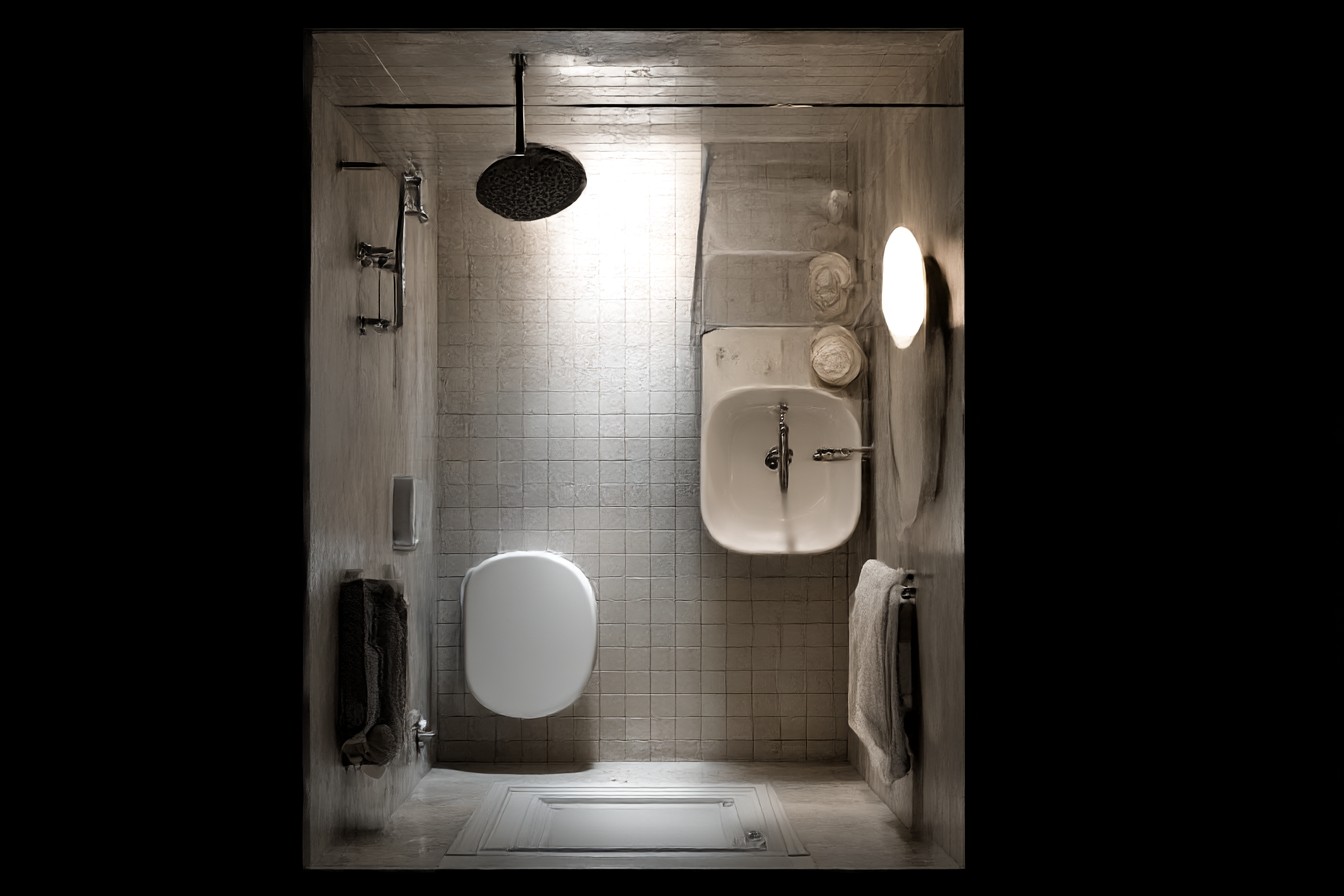
You know the sensation you enter a bathroom and it seems completely… off. I experienced the exact same feeling for months in my current flat’s teeny-tiny toilet. The walls were a bland, beige-ish color and the already claustrophobic space felt like a dentist’s waiting room circa 1987.
When your bathroom is approximately the size of a payphone booth (okay, perhaps I’m exaggerating slightly, but not that far off) each design decision gets blown-up exponentially.
I had been procrastinating taking action on this for so long because, to be blunt, the idea of retiling gave me the vapors. Bathroom tile prices seem to be increasing daily. They’re essentially made of minuscule diamonds. And if I wanted to attack the existing tile with a hammer and chisel (which would likely be the only way to remove them), I’m fairly certain my landlord would have a few choice words to share.
However, my friend Sarah mentioned that she had papered her downstairs loo and I thought, “Wait a minute… Can you paper a bathroom?”
And it turns out you can and it’s kind of genius.
First, I learned (after getting lost down a rabbit hole researching moisture resistant wallpaper) that not all wallpaper is created equally when it comes to being used in a steamy, humid space. You’ll need a type of wallpaper that can withstand an occasional splash from over-exuberant hand washing, or the moisture produced from a hot shower. Vinyl coated papers are your friends here. They’re essentially wallpaper dressed in a rain jacket. Additionally, I found that several manufacturers now create bathroom rated wallpapers that are virtually impervious to water.
My first attempt was … a learning experience. I fell in love with this gorgeous William Morris style pattern twisting vines and tiny birds but failed to check if it was moisture resistant. Spoiler Alert: it wasn’t. By week two, one corner had begun to peel off, and by week three, I was nervously plucking off curling edges like it was a habit. That was a pricey lesson to learn.
The second time around, I chose a small scale geometric pattern from Graham & Brown. Not too busy simply these tiny hexagons in soft sage and cream. The scale of the wallpaper in a small bathroom is critical because larger designs can make a space appear smaller still like you’re trapped inside a kaleidoscope. Smaller, repeating designs play tricks on your eyes to see more space than there actually is. This is why stripes work so well in tight hallways.
I could not stress enough how important it is to thoroughly prepare your walls. I mean, really thoroughly. I thought I could just quickly wipe the walls down and possibly fill a few holes. Wrong. Any imperfections in a bathroom due to its high humidity will be evident, and wallpaper has no mercy for bumpy walls. I spent an entire Saturday using fine sandpaper and filler to smooth every single bump and crack. I suffered severely sore shoulders for days, but the end result was well worth it.
Installation Day was…an adventure. I had watched approximately fifteen YouTube videos, procured a proper wallpaper table (from my next-door neighbor), and purchased the correct adhesive paste (that cost nearly my weekly coffee budget). The main challenge of wallpapering a bathroom is the confined nature of the area. Every move you make feels as though you’re attempting to fold a fitted sheet into a phone booth.
The first strip went up beautifully. Perfectly smooth, straight, precisely lined up to my carefully drawn chalk line. I felt like a DIY Goddess. The second strip…well, that’s where things began to get a bit dicey. Apparently, older homes like mine have walls that are about as straight as a question mark. What appeared to be level at eye-level was decidedly not level at ceiling height. I spent approximately twenty minutes with a spirit level, muttering profanity my mother would find objectionable.
Once complete however, the transformation was extraordinary. Overnight, my dull beige box transformed into this cozy, unique space. The added visual interest of the pattern did not overwhelm the confines of the tiny space, and the softer colors created a brighter and more upscale atmosphere than the original tile ever could. Visitors began to comment positively on the bathroom a feat that rarely occurs except when something has obviously gone drastically wrong.
In addition to aesthetic improvements, the functional aspects of the project surprised me. Because the vinyl coating allows me to actually wipe down the walls (something you can never do with traditional paint in a high-humidity environment), toothpaste spots (Why does that always happen?!), water spots, and even the occasional mascara smear all come off with a wet cloth.
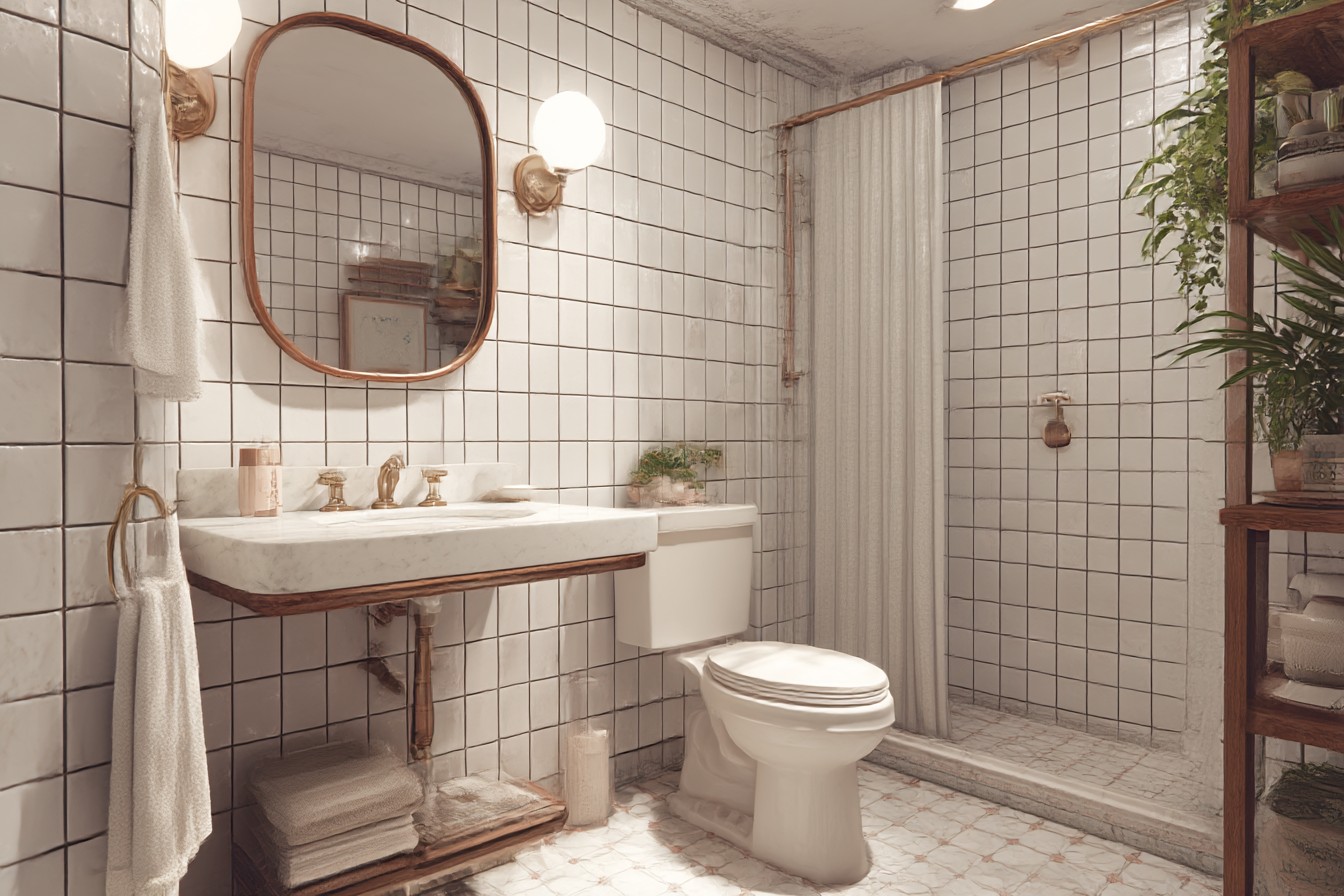
Since then, I’ve experimented with wallpaper in two other small bathrooms a friend’s rental flat and my mom’s downstairs loo. In both cases, I learned something new. Lighter colored wallpaper certainly works better in small areas; they reflect any available light and provide a non-cave-like appearance. Textured wallpaper can provide added depth, but they’re difficult to clean. Finally, while the $500 designer wallpaper may be worth the money, the majority of the time, mid-range wallpaper options will provide you with 90% of the desired aesthetic for half the price.
Additionally, the overall cost of the project was very affordable. For my bathroom (approximately 6 x 4 feet), I used 3 rolls of wallpaper @ $35 each, along with the necessary adhesive and equipment, totaling approximately $150. In comparison to retiling, which would have been an additional $800-$1,000 and the hassle of potential plumbing complications. Clearly, the winner here.
There is one word of warning. If you have serious ventilation issues, or persistent dampness in your bathroom, address those concerns first. While wallpaper is moisture-resistant, it is not magic. Proper ventilation is imperative regardless of what you install whether that is an efficient exhaust fan or simply opening the windows frequently.
In retrospect, I wish I’d been braver with wallpaper earlier. It’s such a simple method to incorporate personality into the least personalized room in the home. Furthermore, unlike major renovations, if you become tired of the wallpaper and/or want to try something different in a year or two, you can either wallpaper over it, or take it off and begin anew. At times, the greatest design solutions are the ones that don’t necessitate a second mortgage, nor a crew of contractors.