There are times when standing in front of your bedroom door, looking at your messy bedroom, will make you curl up your shoulders. Two years ago I was one of those people, standing in front of what I referred to as my “sleeping space”, but what was really an explosion of laundry and a bookstore that sold off everything cheap.
My bedroom is approximately 10 x 8 feet, I’d say it’s a generous estimate. We live in a converted Victorian house that has been built by the original builders who seem to have believed storage was optional. I had clothes draped over the one chair (I rarely even sat in it) and I had stacks of books that seemed to tower above me at any given moment. Those towers would eventually collapse and I would be woken up in the middle of the night by a cascade of books falling onto my feet. My bedside table was so cluttered I couldn’t find my phone charger without doing a full archaeological dig.
This was the final straw. On a Tuesday morning, I was running late for work and couldn’t find clean underwear. I didn’t have any clean underwear (I had many clean pairs) but because I had so many clothes and so many surfaces to put them on, they were scattered everywhere. They were either in the drawers that were packed full of clothes, or I had simply lost track of them as they drifted into the purgatory of “the chair”.
So I decided to take action.
The first thing I did was the most obvious thing any organization expert will tell you to do: I took everything out. EVERYTHING. For about 3 days my room looked like a crime scene, but I wanted to see what I was working with. What I found out was surprising. I had 4 black cardigans (How did I end up with 4?) and 6 phone chargers (Where were they when I needed them?). I had enough random papers to start my own recycling center.
What no one tells you about clearing a cluttered small bedroom is that it’s not just about getting rid of stuff, it’s about being brutally honest about how you actually live. I kept trying to convince myself that I would use that exercise bike (Spoiler alert: I wouldn’t), or that I needed three hair straighteners (I barely used one). The hardest part was not figuring out what to keep and what to get rid of, it was figuring out what my real habits were versus what I wanted my habits to be.
Once I had figured out what I truly used and loved, I had to get creative with storing the remaining items. With a small bedroom, every square inch counts. This includes the areas that you may not normally think of. Under my bed was more than just a dusty area with the occasional stray sock. I purchased these flat storage boxes – nothing special, just inexpensive clear plastic containers from the hardware store, about £15 each – and suddenly had a place to store out of season clothes, extra bedding, etc. and all those cables that I couldn’t identify, but was afraid to toss.
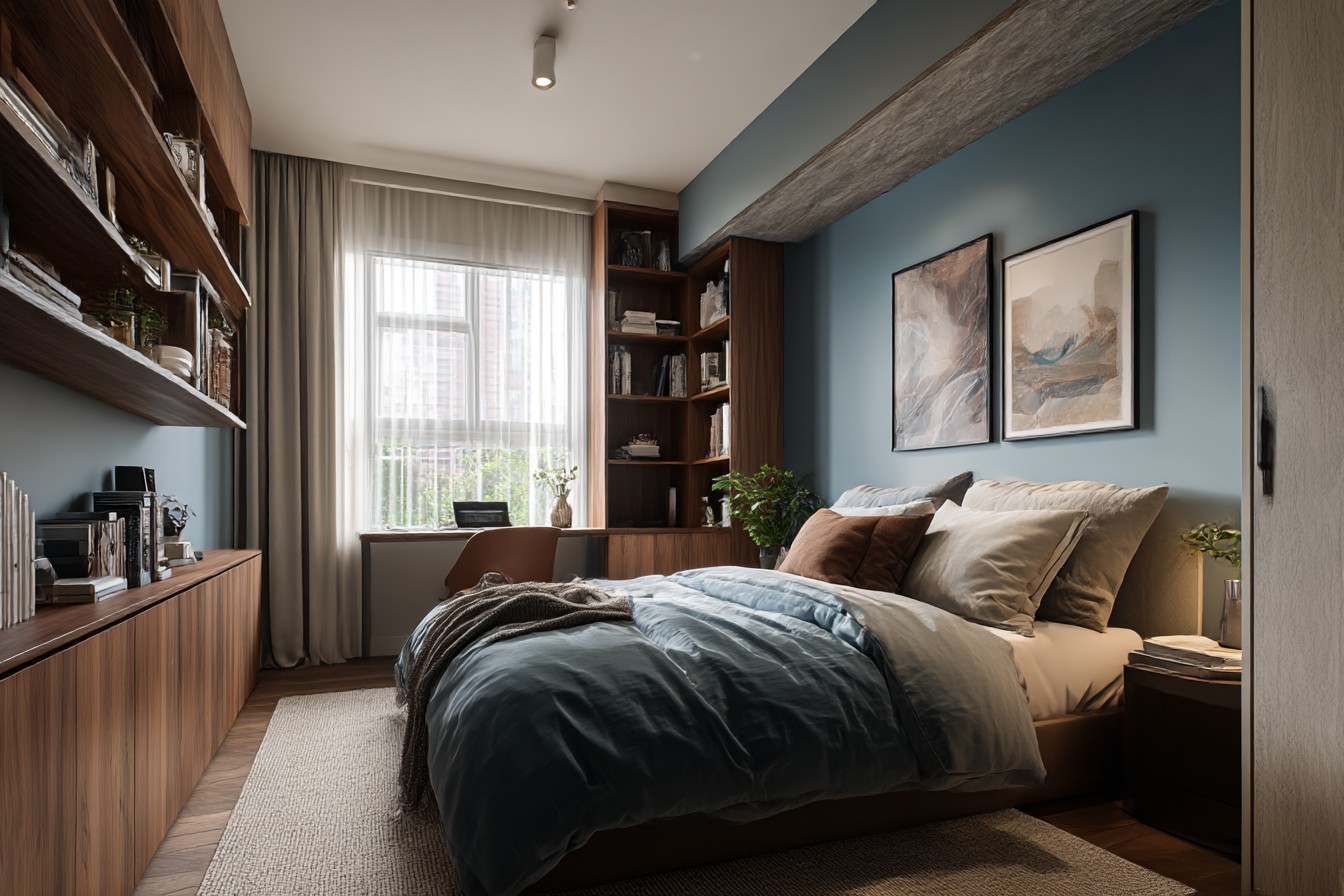
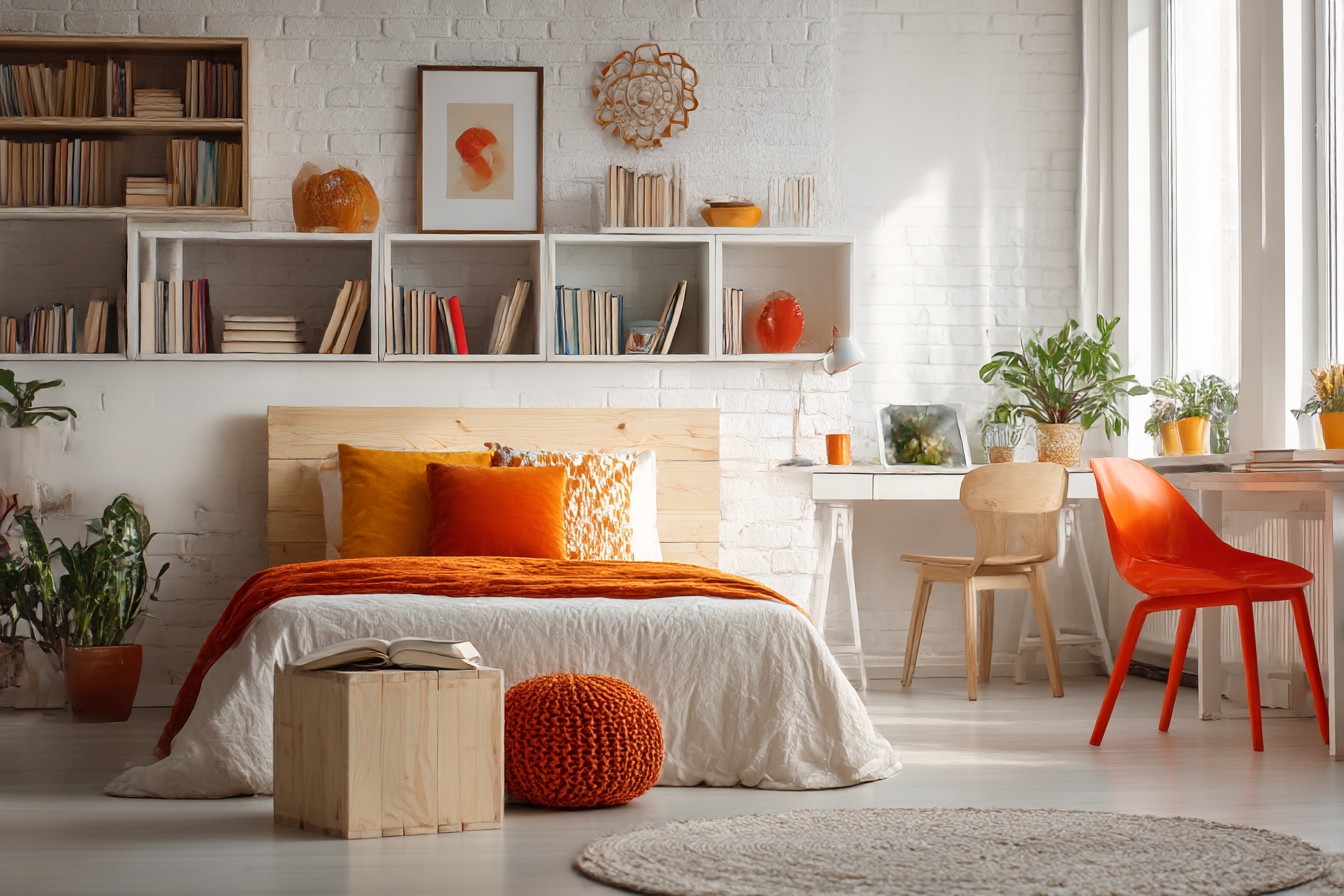
Going vertical changed the entire look of my bedroom. I’m talking about the empty wall space above your bed that you usually don’t think about. I installed floating shelves about 18 inches from the ceiling (it took me 3 tries and 2 different drill bits…but who’s counting?) and moved books, storage boxes and decorations to the top of the shelves. It instantly made my room look twice as big and half as cluttered.
However, with shelves, comes the realization that if you can’t easily access them, they become useless. I learned this lesson the hard way when I placed books on the top shelf and then needed a chair to get to them. Now I have a small step ladder tucked against my closet. Not the prettiest solution, but it works.
My closet became my next project. I had hung everything in my closet like some sort of chaotic textile artist – coats next to dresses, everything packed in so tightly that getting ready for school/work involved the same level of skill as Jenga. I invested in skinny velvet hangers (for about £20 for a pack of 50) and I almost instantly gained another 30% of usable hanging space. The difference was amazing. Additionally, everything stopped slipping off the rod.
Drawer dividers were another discovery that I hadn’t considered. I didn’t buy any of the specialized divider systems, I just used small boxes and other storage containers I already had. My sock drawer went from looking like a chaotic pile of fabric to being organized. Same with my underwear, jewelry and all those miscellaneous items that always manage to migrate to my bedside tables (batteries, lip balm, loose change, etc.).
When I cleared off my bedside table, I had to make some difficult decisions. I had 17 things on my bedside table (books, water glass, phone, charger, hand cream, tissues, etc.) and now I have to limit myself to only 3 things at any given time. Typically, it is my current book, phone and water glass. Everything else has to prove why it deserves to be on the table, or find a new home.
A trick that has helped keep me sane is the “5 minute pick-up” rule. Every night before bed, I spend exactly 5 minutes putting things back where they belong. It seems ridiculously easy, but it keeps the clutter from building back up. Clothing goes in the laundry basket or back in the closet, books go back on the shelves, and the random items get addressed rather than becoming a future problem.
The last surprise was how much better I slept. I’ve always thought of people who talk about creating a “bedroom sanctuary” as being a bit too precious. However, I’ve since found out that there is some truth to their claims. When you’re not overwhelmed by visual clutter in your bedroom, your brain gets the message that this is indeed a place for sleep, not a storage unit with a bed in it.
I’ll admit that keeping my room in order does require some ongoing effort. Some days, I come home tired and just dump everything on the chair (yes, I still have the chair, but I now actually sit in it). The difference is that the clutter doesn’t spiral out of control.
Decluttering a small bedroom has taught me that it’s not about buying fancy storage systems or creating a perfect, Pinterest-esque aesthetic. It’s about understanding the limitations of your space, the realities of your habits, and what you need to feel comfortable in the place where you begin and end every day.