Standing in my 4×6 foot bathroom at 7am, gazing at the grimy grout lines that had once been a crisp white, but had since degraded to a dullish beige/grey colour, I realised I needed to do something. And it wasn’t just the aesthetics, although yes, those dingy grout lines were questioning my life choices each morning. It was about functionality, upkeep and honesty? My sanity!
Bathrooms are a tricky beast, especially small ones. You want to give the impression of having a lot of space and cleanliness, yet you are working with the square footage of a generous closet. Each tile choice counts far more in a small bathroom than it does in a grand master bathroom. If you get it wrong you’ll feel claustrophobic every time you step under the showerhead. However, if you get it right, that small space will begin to feel intentional and perhaps even luxurious.
I found this out the hard way with my very first renovation project. Imagine this: me, armed with my Pinterest screens and no real-world experience, selecting 2×2 inch mosaic tiles in three different shades of blue. What I ended up with was visual chaos that made my already cramped shower feel like the inside of a kaleidoscope. Relaxing? No. Spacious? No. Busy? Yes.
Here’s what I wish I’d known back then: in small rooms, your tile choice can either increase or decrease the size of the space. It’s basically magic how much of a difference the right pattern and size of tile can make.
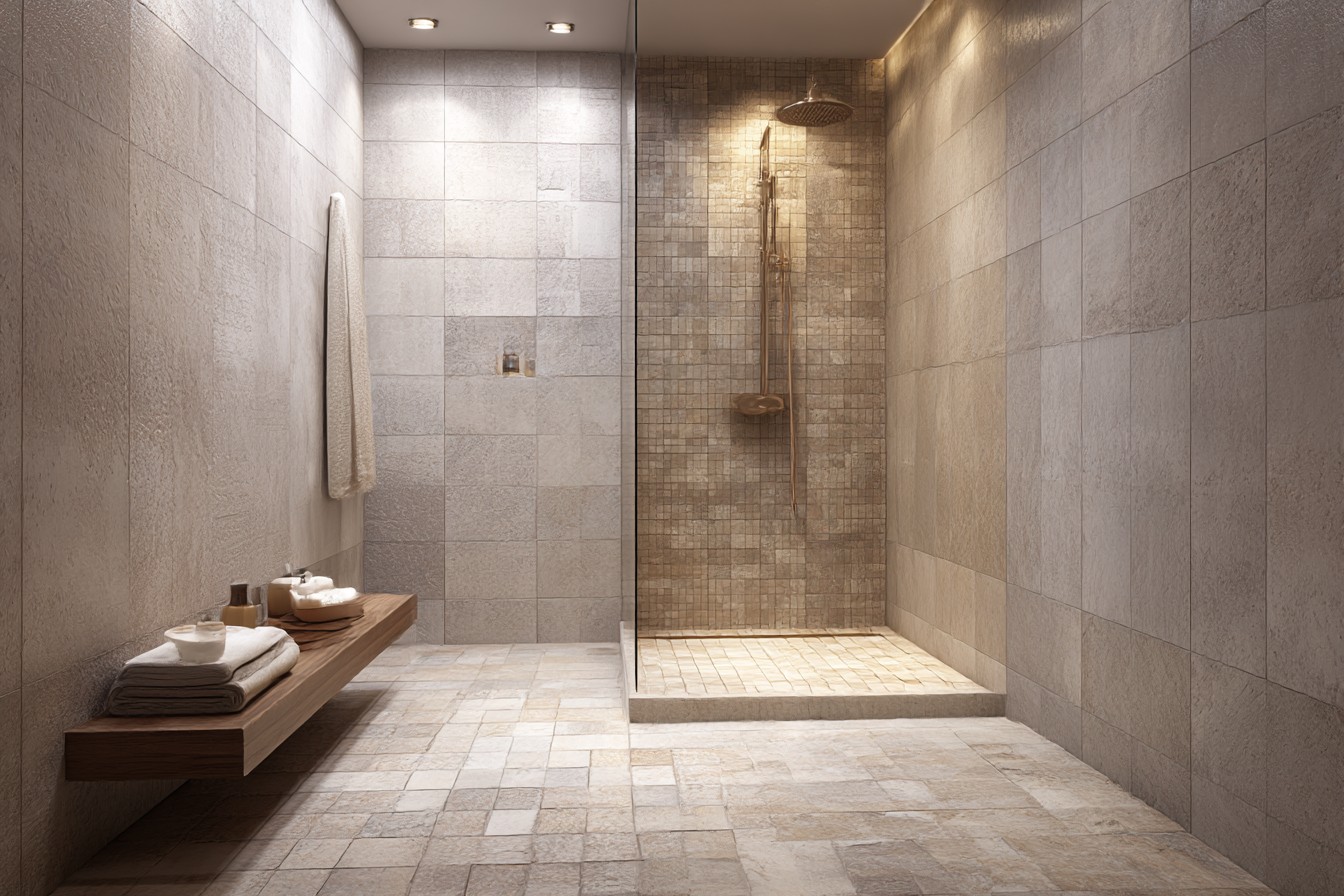
Having lived with that chaotic mosaic for two years (and developed a legitimate aversion to cleaning tiny grout lines), I finally decided to bite the bullet and re-tile. This time, I selected 12×24 inch porcelain planks in a soft, warm gray. The difference was immediate and dramatic. Suddenly, my shower felt twice as wide.

Large format tiles are your friends in small bathrooms. I’m talking 12×12 or larger, however, if possible, go larger. Those 12×24 inch planks I selected? Pure brilliance. With fewer grout lines, there’s less visual interruption and your eye gets tricked into thinking you’re seeing more space. Additionally, fewer grout lines = less scrubbing on Saturday mornings.
Another thing to consider is the installation pattern. I had mine installed horizontally, which made the narrow shower wall look wider. It’s essentially the same principle as wearing horizontal stripes to make yourself look broader, except this really works and won’t turn you into a walking optical illusion.
As for colors, I’ve come to believe in the “light, but not pure white” philosophy. Pure white can feel cold and unforgiving, and will show every single water spot (I know; I tried it in the guest bathroom). That warm gray I chose has just enough warmth to make it inviting and welcome, but is still light enough to reflect light around the space. It’s the difference between fluorescent office lighting and a softly lit café same level of brightness, totally different mood.
However, here’s where I took some liberties: I added a vertical accent strip using the same tiles, but in a darker charcoal shade. Just one thin column running from the floor to the ceiling along the back wall. This simple trick draws the eye upwards and makes the ceiling feel taller than the actual 8 feet. Cost me maybe £30 in additional tiles, but the visual impact? Priceless.
From the practical standpoint, I also came to appreciate the benefits of textured surfaces. While smooth, shiny tiles look great in photos, they’re slippery when wet and show every single water drop. I selected tiles with a slightly textured surface. They weren’t rough enough to be difficult to clean, but provided enough traction for safety and hid the inevitable water drops.
For the floor, I did what could be considered a counterintuitive move: I chose a darker option. A charcoal gray that matches my accent wall but provides a nice contrast to the lighter-colored shower walls. Surprisingly, it makes the space feel more mature and grounded rather than smaller. The key is to keep the contrast subtle i.e., don’t use white walls with black floors. It will feel jarring and choppy.
A common mistake people make (and I made in my first renovation) is thinking you have to match every single aspect of your bathroom. Your floor does NOT have to be the exact same tile as your walls. In fact, a little bit of variation will add interest to your small space and help define separate areas.
Grout, while aesthetically pleasing, serves a functional purpose. I used to think the only factor in grout color was aesthetics. Wrong. Grout color is also practical. White grout will show every speck of soap scum and mildew. Darker grout can make light-colored tiles appear dirty even when they are clean. I ultimately selected a medium-gray grout that is forgiving with stains and will not create harsh contrast lines. It’s the middle ground that keeps everyone (including my Saturday-morning cleaning schedule) happy.
Here is a product recommendation that changed my world: Mapei Keracolor U in Warm Gray. Antimicrobial, stain-resistant, and it retains the color over time. Installed approximately three years ago, and it still looks new. Worth every penny of the slight premium I paid above standard grout.

My final experience with the shower niche was a lesson. When my contractor recommended installing three small, horizontal niches in my shower, I pushed back and requested one large horizontal niche. It was the best decision I ever made. Easier to clean, holds more products without creating clutter, and maintained the clean lines of my tile design.
If I were redoing it today (and honestly, I probably will, as I am eyeing the main bathroom next), I would most likely select the same tile concept, but I would be interested in adding a subtle herringbone pattern to one of my accent walls. Enough pattern to add some interest, but not so much to overwhelm the space.
The cost for my shower retile was roughly £800, inclusive of labor. That sounds expensive for such a small area, but considering I shower in this space 365 days per year, that equates to approximately £2.19 annually of enhanced daily experiences. Best money I’ve ever spent on my house.
The greatest lesson I learned? Don’t be afraid to go big with your tile selection in small spaces. It may seem counter-intuitive, but it works. Your future self the one who stands in a spacious-feeling shower with minimal grout lines to scrub will thank you.