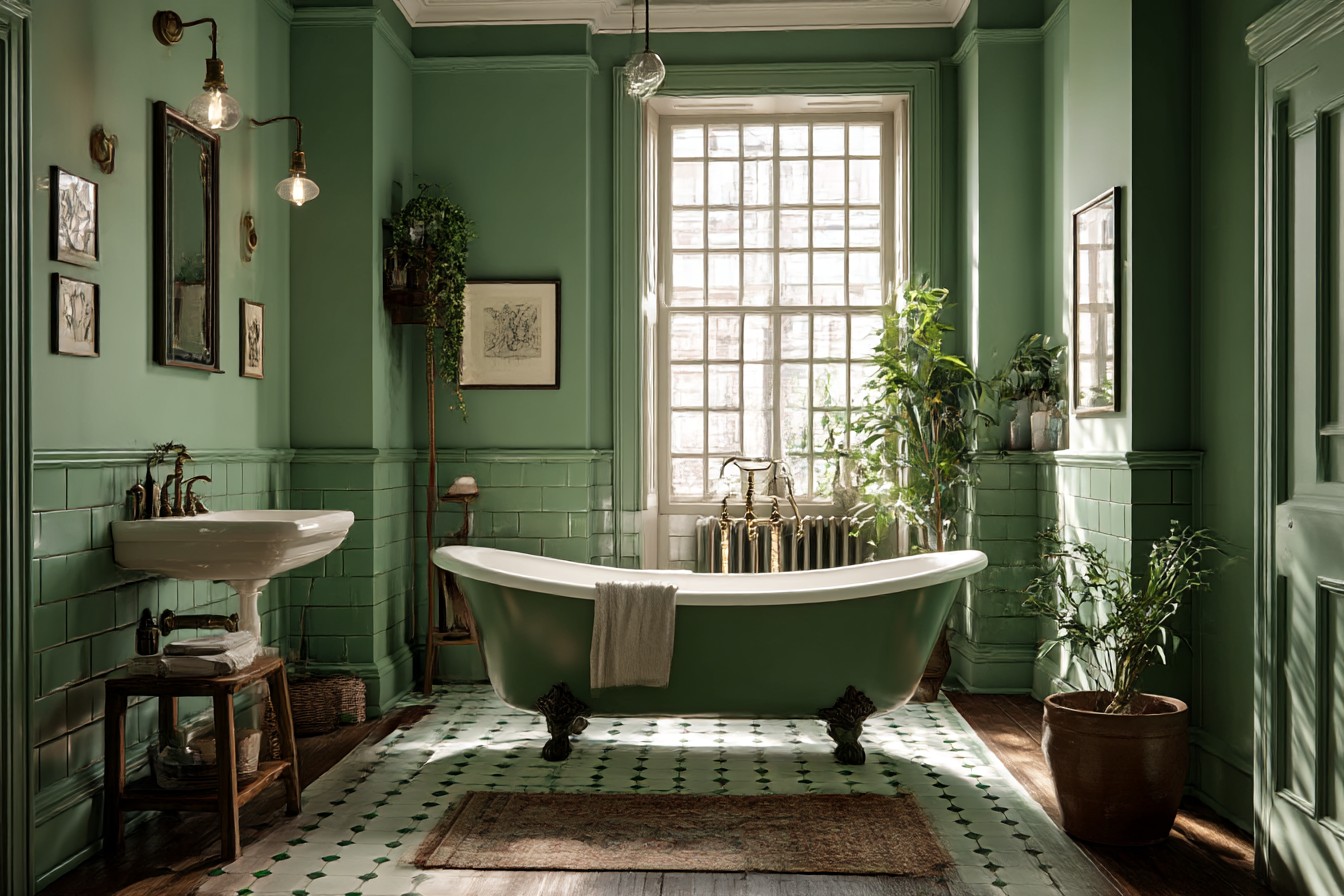
You know that feeling when you walk into someone’s bathroom and immediately think “bloody hell, this is gorgeous”? Had that exact moment last month at my mate Sarah’s house down in Brighton. Her tiny en-suite was painted this soft sage green, and I swear it felt like stepping into one of those posh spas – except it didn’t have that trying-too-hard vibe that makes you roll your eyes.
I’d been staring at my guest bathroom for literally months, trying to work up the courage to do something about it. The previous owners had left it with those horrible builder-beige walls and honey-oak cabinets that screamed “we bought this in 1995 and never looked back.” I kept putting it off because bathroom renovations proper scare me. One wrong move near a pipe and you’re dealing with water everywhere, calling Phil in a panic, probably crying over your insurance excess.
But Sarah’s bathroom changed something in my head. The sage green wasn’t shouting for attention – it was just quietly lovely. Calming without being boring, fresh without looking like it would be embarrassing in two years when everyone’s moved on to whatever colour Instagram decides we should love next.
After finally taking the plunge myself (and making some proper mistakes along the way), I reckon sage green might be the most forgiving colour you can pick for a bathroom. Those dramatic navy or forest green walls you see everywhere online look stunning in photos, don’t get me wrong, but they can make small spaces feel like you’re showering in a cave. Sage green actually makes things feel bigger somehow. It’s got enough grey mixed in to work with basically any lighting, and it doesn’t fight with whatever taps and fixtures you’ve already got.
I started with paint because, let’s face it, it’s the cheapest way to test whether you’ll love or hate your choice. After trying about six different sage greens – my bathroom wall looked like a mad patchwork for two weeks – I went with Farrow & Ball’s Vert De Terre. Christ, it’s expensive. Nearly ninety quid for a tin that barely covered my little bathroom. But the colour is incredible, properly deep and rich. It shifts throughout the day, going from soft grey-green in the morning light to this gorgeous botanical shade by evening.
The coverage was brilliant though, which matters when you’re painting over that stubborn beige that seems designed to show through absolutely everything. Only needed two coats, and it’s held up perfectly despite all the steam from showers and my rather enthusiastic teeth-brushing routine that tends to splash water everywhere.
If that price makes you feel a bit sick (totally get it), I tested Little Greene’s Sage Green as well, and it’s nearly identical for about half the money. The finish isn’t quite as luxurious, but honestly, most people wouldn’t notice the difference.
What properly surprised me was how the sage green made me fall in love with fixtures I’d been planning to rip out. Those honey-oak cabinets? Suddenly they looked intentional – like warm wood paired with botanical green rather than just sad and dated. The chrome taps that had felt cold and clinical against the beige now looked crisp and modern.
I did make one massive mistake early on though. Got completely carried away and painted the ceiling sage green too, thinking it would create this cozy, wrapped-up feeling I’d seen in some magazine. Terrible idea. Made the room feel smaller and darker, especially in the evenings. Ended up repainting it white after about three weeks of living with it – just long enough to confirm it was wrong but not so long I’d convinced myself it was fine.
Next step was adding sage green through tiles, which is where your budget starts getting interesting. Found these lovely sage subway tiles at Topps – about twenty-eight pounds per square metre – and used them as a half-wall splash behind the sink. The soft green with white grout creates this gorgeous texture without being overwhelming. They’ve got that slightly handmade look with subtle colour variations that feels organic rather than perfect and sterile.
I’ve seen people do sage green penny tiles on shower floors, which looks absolutely stunning but honestly? Those tiny grout lines collect soap scum like you wouldn’t believe. Beautiful, yes. Practical for someone like me who cleans bathrooms once a week rather than daily? Probably not worth the hassle.
Accessories are where sage green really comes into its own, and where you can experiment without spending a fortune. I swapped my old white towels for sage green ones from The White Company – pricey but they’ve kept their colour beautifully after months of washing. Added a sage green bath mat from Next for eighteen quid that’s surprisingly thick and soft. Even little touches like sage soap dispensers or a new toothbrush holder help tie everything together.
Plants are obvious but they work so well with sage walls. My bathroom gets terrible natural light, so I’ve stuck with pothos and snake plants that seem happy enough in the humid, dim conditions. The different greens – soft painted walls, deeper plant leaves – create this layered look that’s much more interesting than having everything the same shade.
One thing I really wish someone had warned me about: sage green looks completely different under different lighting. I chose my paint under the bathroom’s old halogen spots, then switched to LED bulbs a month later. The colour went cooler and more grey, which actually worked better but was quite jarring at first. Always test your colour under whatever lighting you’re planning to keep.
The brilliant thing about sage green in bathrooms is it’s not going anywhere. It’s not some trend colour that’ll look ridiculous in eighteen months. It’s grown-up enough for us but soft enough that guests don’t feel weird about it. Works with brass, chrome, black, white fixtures – basically everything. And if you ever fancy a change, sage green is neutral enough that pretty much any other colour will work with it.
Three months on, I still get this little moment of happiness when I walk into my bathroom. It feels intentional and calming and actually relaxing, which is more than I can say for most rooms in our house, if I’m being honest.