Right, I need to tell you about the bathroom that nearly broke my marriage and my spirit, but somehow ended up being the room in our house that I’m most proud of. This was about two years ago when I was still figuring out this whole home design thing, and I had this brilliant idea to create what I thought was a “rustic bathroom.” Spoiler alert: my first attempt was absolutely awful.
Phil walked in after I’d spent three weekends and god knows how much money from Very and B&Q, took one look around, and said “It looks like a garden centre exploded in here.” He wasn’t wrong. I’d bought every single thing that had “farmhouse” or “rustic” in the description – wooden signs that said things like “SOAK” and “RELAX” (because apparently people forget what to do in bathrooms?), a ladder-style towel rail that looked like it had been attacked with sandpaper, and these mason jar light fixtures that I thought were the height of sophistication. The whole thing screamed “I bought this from a Pinterest board” rather than “this bathroom has any actual character.”
My mum came round for tea the following week, used the loo, and when she came back down she just said “Well, it’s very… themed, isn’t it?” Coming from someone who still has woodchip wallpaper in her hallway, that was basically a diplomatic way of saying it was hideous. She was absolutely right.
The thing is, I’d completely misunderstood what rustic actually means. I thought it was about buying things that looked old rather than using things that actually were old, or at least had some genuine character to them. Real rustic isn’t about distressed paint effects from Dulux or artificial aging – it’s about materials that have lived a bit, that have stories to tell through their imperfections.
The turning point came when Phil was doing a job at this old farmhouse near Otley and mentioned to the owner that I was “into all that old-fashioned decorating stuff.” Turns out they were clearing out an old barn and had loads of reclaimed wood they were basically giving away. I drove out there on a Saturday morning expecting to pick up a few planks, and ended up spending four hours going through decades worth of timber with this farmer called Tom who knew the history of every single piece.
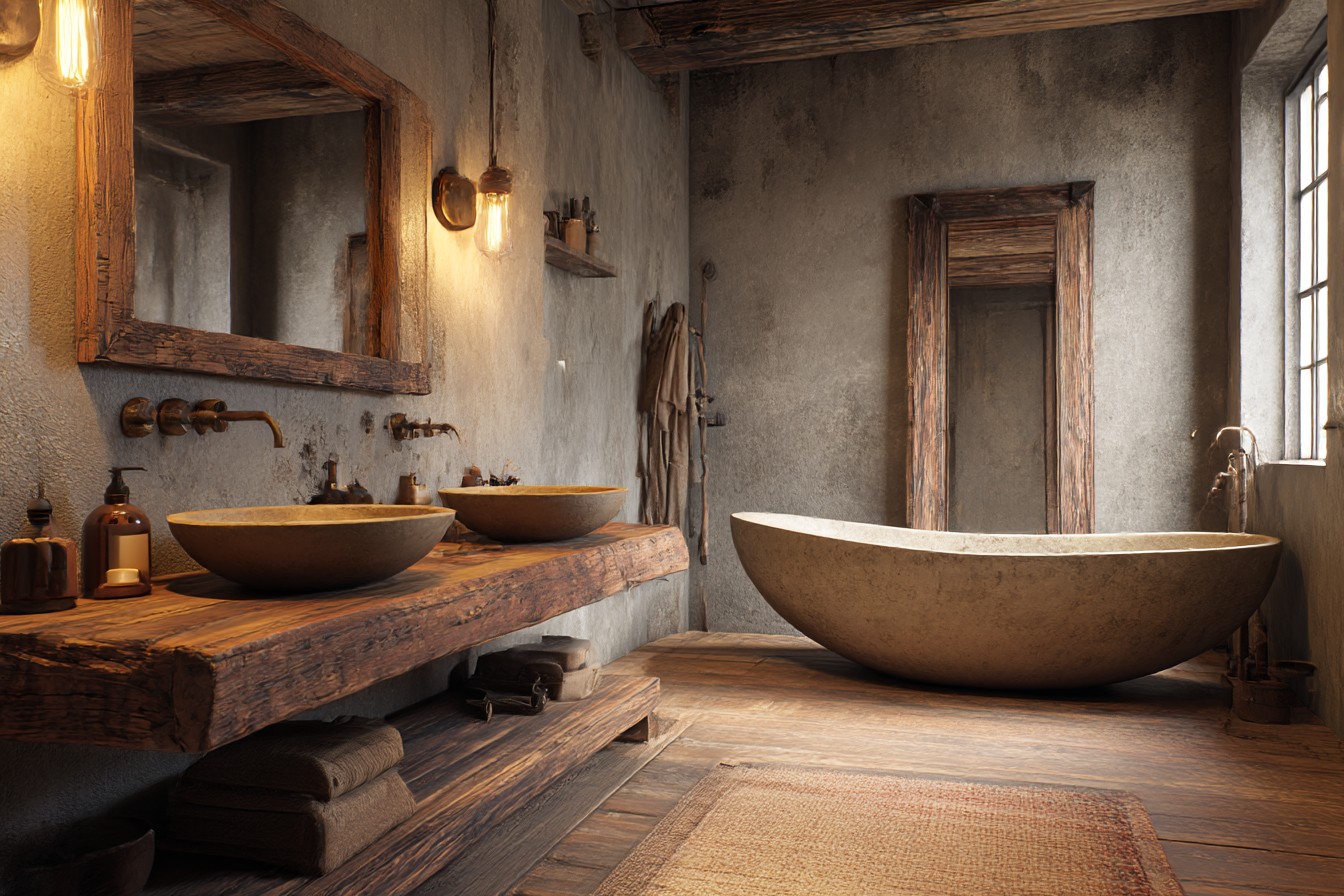
Some of the boards had been part of animal stalls, others were from the original hayloft, and one piece still had an old horseshoe nail embedded so deep we couldn’t get it out. That wood became floating shelves in the bathroom, and they’re honestly the first thing people comment on when they visit. Not because they’re perfect – they’ve got nail holes and water stains and all sorts – but because they feel authentic in a way you just cannot buy from a shop.
Once I had those shelves up, everything else I’d done looked even worse by comparison. The fake-distressed ladder towel rail looked like what it was – something mass-produced in a factory to look old. The wooden signs looked like pub decorations. Even Phil, who usually couldn’t care less about interior design, said the new shelves made everything else look “a bit daft.”
So I started again. Took everything back that I could return (thank god for Very’s returns policy) and donated the rest to the local charity shop. Probably confused the hell out of some poor volunteer trying to figure out why someone was donating brand new bathroom accessories, but anyway.
The next phase was about finding materials that actually had some history to them. I became obsessed with stone – not the polished granite everyone was putting in their kitchens, but proper weathered stone with character. Started collecting river rocks during walks with Phil, found slate offcuts at a reclamation yard in Bradford, even picked up chunks of Yorkshire stone from a demolished mill wall (with permission, obviously – I’m not running around stealing bits of buildings).
The river rocks became a border in the shower area, which took me absolutely ages to get right. YouTube makes everything look so straightforward, doesn’t it? Three attempts later, I finally got them positioned so they looked natural rather than like I’d just stuck random stones to the wall. The slate became a window sill that changes colour throughout the day as the light hits it differently. Every piece tells its own story through colour variations and the way it’s worn smooth in some places and rough in others.
Finding the right fixtures was like a treasure hunt. You know those reproduction vintage taps that cost an absolute fortune and still somehow look fake? I avoided all of those and spent months trawling architectural salvage yards instead. Eventually found this 1950s basin and tap set from a demolished school in Huddersfield. The basin has tiny chips around the edges that just add character, and the taps are proper solid brass – the kind of weight you don’t get in modern fixtures. Cost me £80 instead of the £400 I’d have paid for reproduction ones.
But I made one massive mistake that nearly drove us both mental – I got carried away with exposed copper pipes. Looked amazing on Instagram, very industrial-meets-rustic. In reality? Every time someone upstairs ran a tap or flushed the loo, our bathroom sounded like a coffee shop. The pipes expanded and contracted with temperature changes, making these random clicking and groaning noises at all hours. Phil lasted about three weeks before he threatened to box them all back in himself if I didn’t sort it out. We ended up covering most of them, keeping just enough visible to maintain the look without the constant noise.
The lighting transformation actually shocked me. I’d been using those standard bathroom spotlights that make everyone look like they’re being interrogated. Swapped them for these Edison bulb pendants hanging from iron pipe fittings that I found at a market in Leeds. The warm light completely changes the atmosphere – makes morning routines feel less harsh and evening baths actually relaxing. Added dimmer switches too, because sometimes you need proper light to see what you’re doing, and sometimes you just want that soft glow while you’re having a soak.
For the floor, I was tempted by one of those fake wood vinyl options because they’re waterproof and easy to maintain. But after learning my lesson about fake versus authentic, I went with actual reclaimed pine floorboards. Yes, they need proper sealing for moisture protection, and yes, they’ll develop marks and dents over time. But those imperfections just add to the story. My youngest dropped a bottle of bubble bath last month and left a small dent – instead of being annoyed, I quite like that it’s there. It’s part of our family’s history in that space now.
The mirror nearly broke my back and definitely tested my DIY skills. Found this piece of driftwood on Filey beach that was almost perfectly mirror-shaped, and convinced myself it was meant to be a frame. Three months and countless YouTube tutorials later, I had something that looked intentionally rustic rather than like I’d just glued a mirror to a bit of wood I’d found on holiday. The irregular edges frame your reflection in a way that feels natural, like you’re looking through a window rather than at a manufactured object.
Storage was trickier than I’d expected. Those wicker baskets everyone uses in rustic bathrooms? They look lovely until they get damp and start smelling like wet dog. Open wooden shelving showcases beautiful towels but collects steam and dust. Ended up with a combination – closed storage disguised inside what looks like a reclaimed wood cabinet, strategic open shelving for things that need air circulation, and waterproof containers that don’t look obviously plastic.
Paint colour took me ages to get right. That stark white everyone uses in farmhouse bathrooms? Too clean, too afraid of looking lived-in. I went with this colour Dulux calls “Natural Hessian” – a soft, warm grey with brown undertones that changes throughout the day as light moves across it. It complements the wood tones without competing with them, and it doesn’t show every single mark and scuff.
Two years on, this bathroom still makes me happy every time I walk into it. Not because it’s perfect – the wood shelves have warped slightly with the steam, the stone needs resealing every year, and that driftwood mirror occasionally drops tiny bits of bark into the sink. But those aren’t problems – they’re proof that the space is living and breathing with us. It’s aging naturally rather than fighting against time, and every small change just adds another layer to its character.
The whole experience taught me that authentic rustic design isn’t about buying your way to a look – it’s about choosing materials and pieces that have genuine history, then letting them continue developing character in your home. It takes longer, costs less money but more time, and the results feel real in a way that shop-bought rustic never can.