You know that awkward morning dance couples do in tiny bathrooms? Yeah, we were championship level at that. Every single weekday at half past seven, me trying to brush my teeth while Sarah attempted some sort of contortionist routine to reach her moisturiser behind my elbow. Then we’d do this ridiculous shuffle – she’d duck under my arm to get to the mirror while I tried to squeeze past with my hair straightener, both of us getting increasingly irritated before we’d even had coffee.
I mean, it sounds ridiculous when I write it out like that, but honestly? Those cramped bathroom mornings were setting a pretty grim tone for our entire day. We’d leave the flat already slightly annoyed with each other over something as stupid as who got to use the sink first. Not exactly relationship goals.
When we finally moved in together properly – got a place that was actually ours rather than my old bachelor flat – I became completely obsessed with getting the master bathroom layout right. Sarah thought I was mental, measuring everything twice and watching YouTube videos about bathroom ergonomics, but I was determined we’d never do that morning shuffle again.
First thing I learned is that bathrooms have this concept called a work triangle, just like kitchens do. Basically, you want smooth movement between your three main zones – vanity area, toilet, and shower. I actually tracked our movements for a week (yes, I’m that much of a nerd) and worked out we were doing an extra twelve steps each every morning just because everything was positioned badly. Doesn’t sound like much until you’re half asleep and already running late.
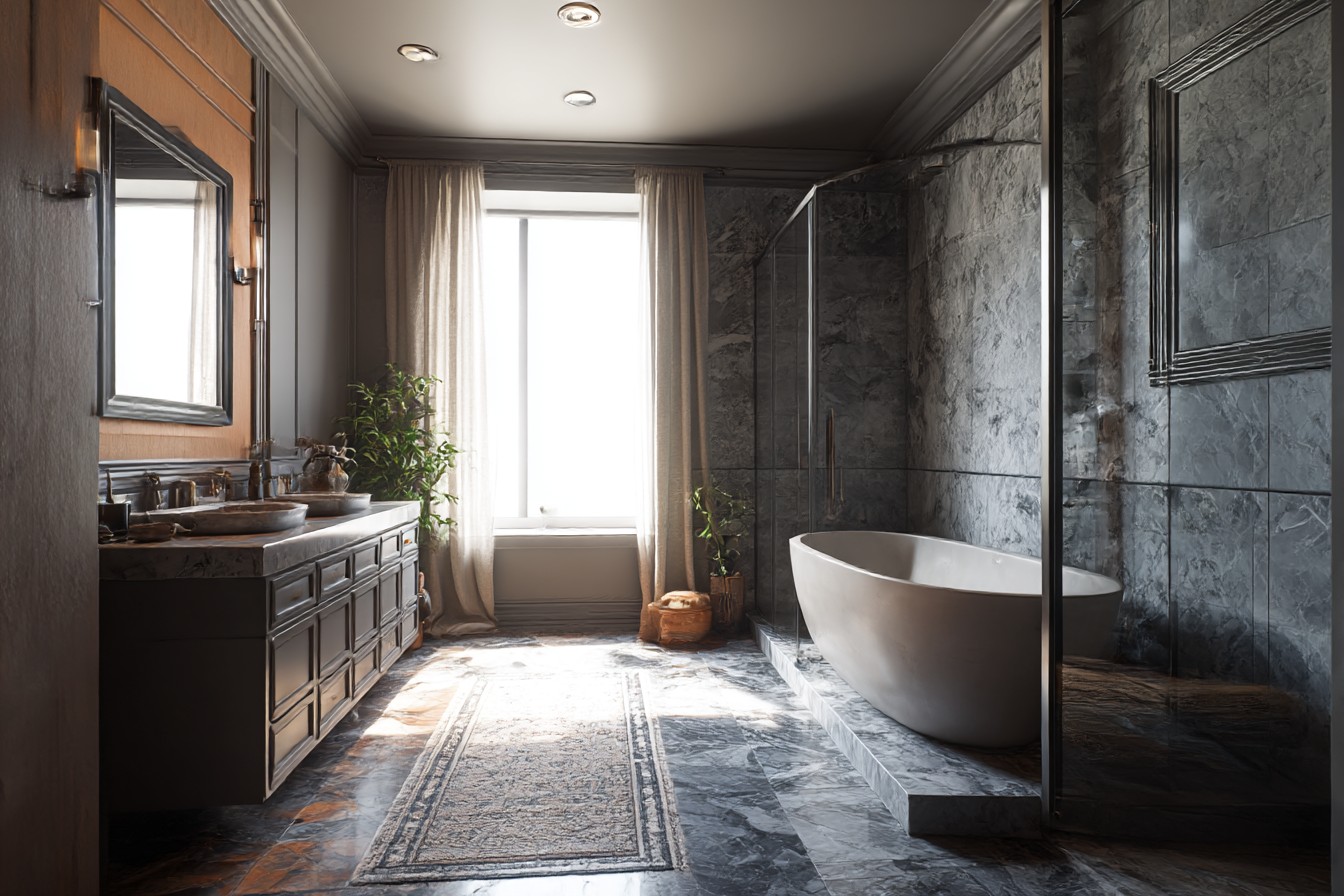
The vanity became my main focus because that’s where we’d spend most of our time. Went for a double sink setup, obviously, but the key thing I discovered is you need at least thirty inches between the sink centres. Any closer and you might as well share one sink because you’ll still be bumping into each other constantly.
Here’s something nobody warns you about though – the plumbing costs for double vanities can absolutely destroy your budget. Our contractor’s first quote for running new water lines had me googling “how to install plumbing yourself” at two in the morning. Eventually we got smart about it and positioned the vanity along the wall where the original pipes were, so we only needed to extend everything about three feet. Saved us nearly two grand, which we immediately blew on much nicer taps. Priorities, right?
Storage was my next obsession because I’d spent way too many mornings watching Sarah dig through drawers looking for her eyeliner while I searched three different cabinets for contact solution. Now we’ve got this his and hers system – separate drawers for our individual stuff, plus shared spaces for things like spare toothpaste and toilet paper. Everything has its exact spot, which sounds boring but makes mornings flow so much better.
I splurged on pull-out drawers in the vanity base because crouching down to search through the back of deep cabinets before eight AM is genuinely awful. Cost about £150 extra per drawer, but honestly worth it just for the soft-close feature. No more accidentally slamming things when I’m trying to be quiet on early meeting days.
The shower took ages to plan properly. We went with a walk-in design – no step, just a gentle slope toward the drain. Makes cleaning so much easier because you’re not trying to manoeuvre a mop over awkward edges, plus it makes the whole bathroom feel bigger. I was worried about water splashing everywhere, but our installer suggested extending the glass panel about eighteen inches past the shower head. Problem solved.
Shower storage was another learning curve. Those corner shelf things are absolutely useless when two people are sharing – bottles constantly fall out, nothing fits properly, and they’re impossible to keep clean. Instead we built a recessed niche at chest height, big enough for both our stuff but positioned so it doesn’t get directly hit by the shower spray. Lined it with the same tiles as the walls but added a subtle darker border so it doesn’t just disappear visually.
Toilet placement sounds straightforward but it’s actually quite tricky. Building regs say you need twenty-four inches of clear space in front, but I’d go for thirty if you’ve got room. Trust me on this – whether you’re cleaning around it or dealing with someone who’s feeling rough, that extra space matters. We positioned ours away from the main path between vanity and shower, which helps with privacy too.
The lighting situation in our old place was genuinely terrible – single overhead fixture that cast shadows exactly where you didn’t want them. Now we’ve got vanity lights on either side of each mirror (not above, learned that creates awful shadows), recessed ceiling lights for general brightness, and a separate light in the shower. Sounds excessive but being able to control different zones is brilliant.
Here’s something I never considered – ventilation is massively important. Our extractor fan is sized for the full bathroom square footage plus fifty percent extra, and it’s on a timer so it keeps running for twenty minutes after we leave. No more foggy mirrors or that damp smell that used to hang around.
The flooring decision nearly did my head in. Everyone kept saying heated floors were an unnecessary luxury, but stepping onto warm tiles on a freezing January morning instead of cold ceramic is genuinely life-changing. We used large format tiles – twenty-four by twenty-four inches – to reduce grout lines, which means less scrubbing and a cleaner look overall.
Nearly made a massive mistake with the door swing too. Original plan had it opening into the bathroom, which would’ve blocked access to half the vanity. Switching it to swing out into the hallway gave us back about six square feet of actual usable space. Tiny change, huge difference.
The whole renovation took six weeks and came in just under fifteen grand. Most expensive single item was the custom vanity at £3,200, but it fits our space perfectly and does exactly what we need. Best value? Switching to LED bulbs throughout – saves money and doesn’t generate heat like the old incandescent ones, which you really notice in a smaller space.
Now our mornings are actually pleasant. We can both get ready without negotiating for mirror time or doing elaborate dance moves around each other. Sometimes I catch myself grinning while brushing my teeth, just because the whole routine feels so civilised. Who knew bathroom layout could improve your mood this much?
Sarah still takes the piss out of me for getting so obsessed with optimising our bathroom workflow, but she admits it was worth all my spreadsheets and measuring when we can both get ready for work without wanting to throttle each other before breakfast.