The sound of proper sibling warfare coming through a bathroom door at half past seven in the morning – that’s when you know you’ve made some questionable life choices. Happened to me when Danny’s sister dropped her two kids off for what was supposed to be a peaceful summer stay at ours. Our lovely guest bathroom, the one I’d spent ages getting just right with those white metro tiles and the bargain mirror from the charity shop, suddenly became this battlefield of toothbrushes, territorial disputes, and daily meltdowns that could probably be heard three doors down.
That summer taught me more about shared bathroom dynamics than I ever wanted to know, honestly. But it also got me thinking about jack and jill bathrooms properly – you know, those connecting spaces between bedrooms that look brilliant on house plans but can turn into absolute chaos if you don’t think them through. Since then I’ve helped sort out three different families dealing with shared bathroom nightmares, and I’ve learned what actually works versus what just sounds good in theory.
The privacy issue is massive, and most people get it completely wrong from day one. Those flimsy pocket doors that builders love to chuck in? Absolutely useless. They don’t block any sound, they stick constantly, and when they finally break (which they will), good luck finding a replacement that fits properly. I spent ages convincing one family to rip theirs out and install proper solid-core doors with decent weatherstripping round the edges. Cost them about four hundred quid all in, but suddenly their house wasn’t echoing with bathroom-related shouting matches every morning.
Here’s something you won’t read in those glossy home magazines – the locks need to work from both sides, but you also need a way to override them when things go wrong. We went with Schlage privacy locks, the ones with the little emergency hole on the outside. Bit of a lifesaver when you inevitably get the dramatic “I’m trapped and can’t get out” situation that turns out to be someone who just can’t work a door handle properly. Bobby pin sorts it right out.
Storage gets really interesting when you’re dealing with siblings. Equal space sounds fair, doesn’t it? Complete nonsense, actually. Kids use totally different amounts of stuff, and trying to force identical storage just creates more arguments. I started doing what I call “fair but flexible” storage instead. Each kid gets their own medicine cabinet – proper separate ones, not some shared nightmare – but the space under the sink gets divided based on what they actually need, not some arbitrary half-and-half split.
The family with the teenagers was perfect example of this. The girl needed way more drawer space for about fifteen different hair products, while her brother had a bottle of that 3-in-1 shampoo stuff and a toothbrush. Gave her the drawers, gave him the shelving, and suddenly everyone was happy because the storage matched reality instead of some theoretical fairness that made nobody happy.
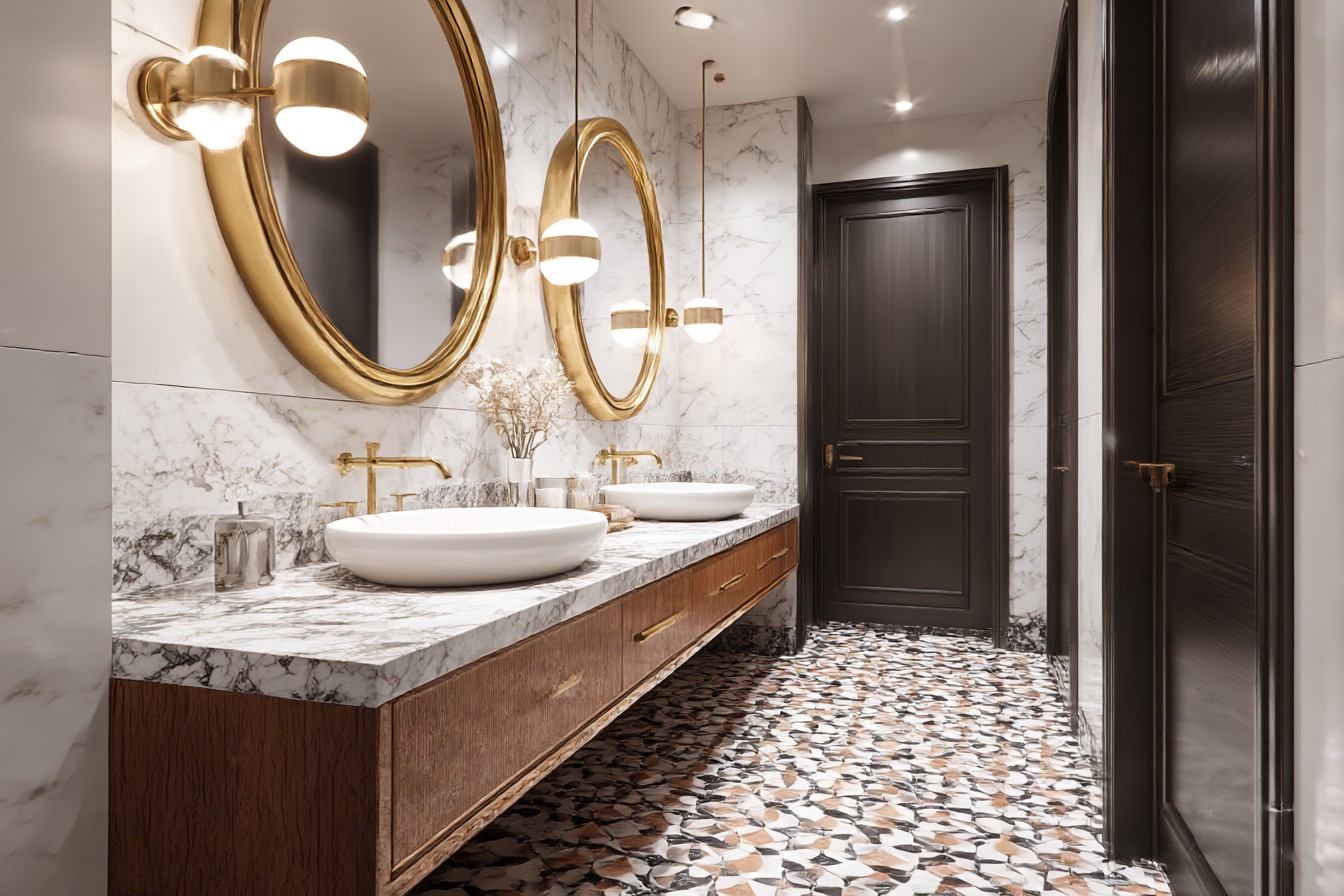
Dual sinks seem like the obvious answer, but they’re trickier than you’d think. If your bathroom’s under eight feet wide, don’t even bother. You’ll end up with two cramped sink areas that nobody can actually use properly. Saw this mistake in a house where they’d squeezed in two tiny 16-inch vanities – looked ridiculous and was completely pointless because you couldn’t fit anything on either side.
When you do have proper space though? Absolute game changer. But the key is giving each sink its own mirror and lighting. Those long vanity lights that stretch across both sinks create weird shadows and don’t actually work for anyone. I started putting in separate sconces for each area instead – IKEA’s FRIHULT ones are only twenty-five quid each and they’re actually decent quality.
The morning routine thing needs proper strategy, not just hoping for the best. I suggest creating specific zones with actual purposes. Toilet area stays properly private with good locks and maybe a small fan for obvious reasons. Shower gets scheduled time – usually works better with a simple timer than trying to use apps or complicated systems. The sink areas can overlap since kids are generally doing different things anyway.
Color schemes matter way more than you’d expect. I tried letting each kid pick their own side once. Complete disaster. You end up with a bathroom that looks like My Little Pony crashed into a Transformer. Much better to pick one main color both kids can tolerate, then let them add their own bits with towels and accessories they can take with them later.
We did sage green walls with white fixtures in one house – bit boring maybe, but it worked. Girl added her pink towels and a little plant, boy added his collection of tiny dinosaurs on a floating shelf. Both felt like the space was partly theirs without the whole room looking completely mad.
Towel storage is its own special nightmare. Those over-the-door hooks everyone suggests? They fall off constantly and create these towel traffic jams where nobody can hang anything up. Wall hooks work better but you need at least four per kid – wet towel, dry towel, face cloth, and that mysterious backup towel that somehow becomes absolutely essential.
Started using those swing-arm towel bars instead – Moen does decent ones for about forty quid. They fold back against the wall when you’re not using them and actually hold towels without everything falling on the floor. Plus kids can’t yank them down as easily, which definitely matters.
Flooring choice is way more important than just how it looks. Tile’s gorgeous but shows every single water mark and becomes lethal when two kids are dripping everywhere after showers. I’ve had brilliant results with luxury vinyl plank – the textured ones that give you some grip when they’re wet. Cheaper than proper tile, warmer under bare feet, and much more forgiving when someone drops a shampoo bottle or slips getting out the bath.
Ventilation is something nobody thinks about until your mirror’s constantly fogged up and the whole room feels damp. Two kids means double the shower time and double the steam. That basic builder’s fan isn’t going to cope at all. We upgraded one bathroom to a Broan 80 CFM fan with a humidity sensor – switches itself on when things get steamy and turns off when the air clears. Bit of a revelation, actually.
The biggest thing I learned through all this? Get both kids involved in planning, but don’t let them make the actual decisions. They know exactly what annoys them about sharing space and they’ll tell you if you ask properly. But a ten-year-old’s taste in bathroom design probably shouldn’t determine your tile choices for the next decade.
Most importantly, build flexibility into everything. Kids grow up, their needs change completely, and what works for an eight and ten-year-old definitely won’t work when they’re fourteen and sixteen. Pick storage that can be moved around, avoid built-in stuff that can’t be changed, and remember this arrangement probably isn’t permanent anyway.
Because honestly, the goal isn’t creating the world’s most Instagram-worthy shared bathroom. It’s creating a space where two kids can get ready without World War Three breaking out every morning, so you don’t spend the next few years hiding in your bedroom wondering how long until they leave for university.