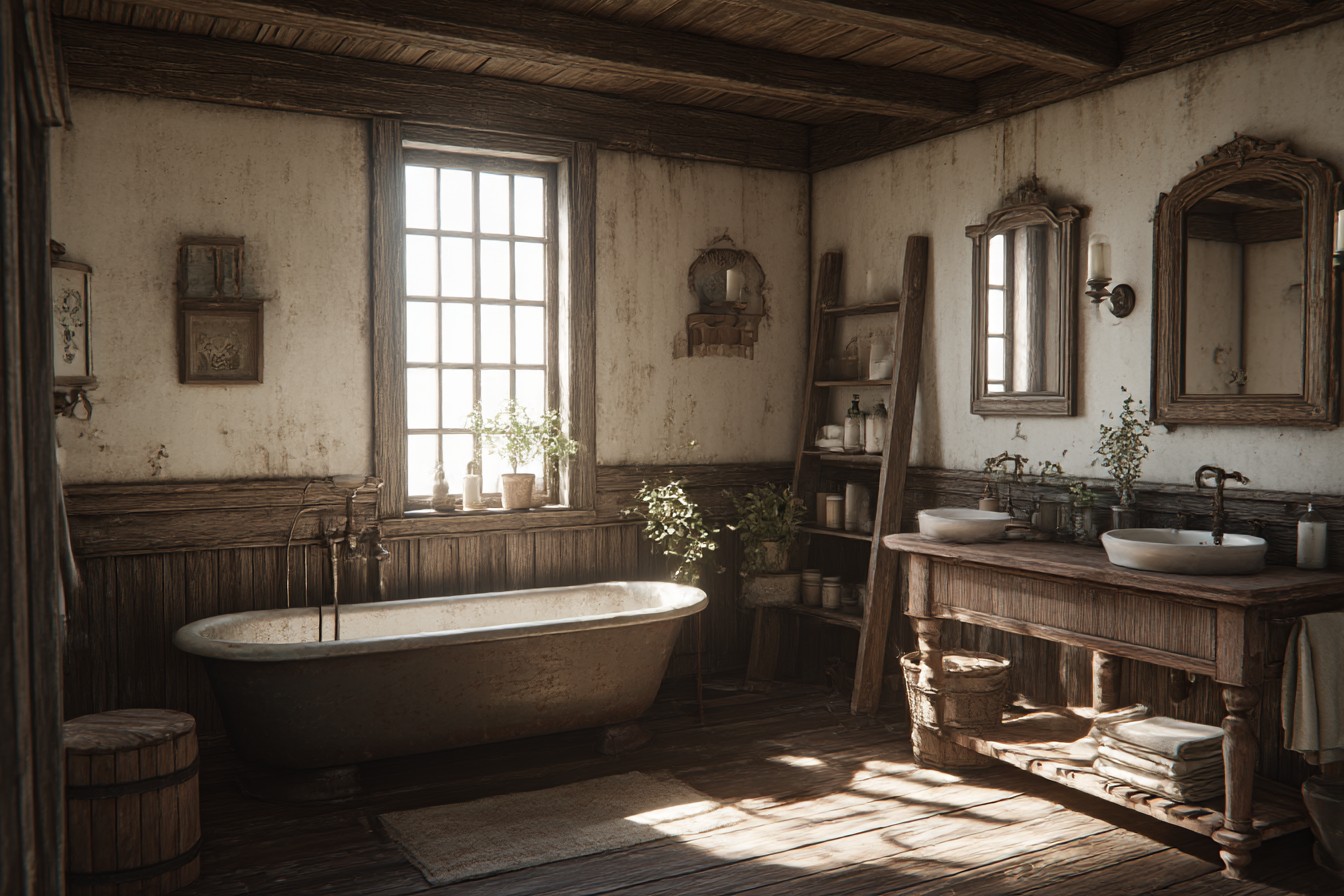
Right, so I need to confess something that’s probably going to annoy some people – most “farmhouse” bathrooms I see these days make me want to scream. There, I said it. You walk into someone’s house and they’ve got the exact same galvanized metal signs you can buy in bulk from B&Q, paired with those mass-produced mason jar soap dispensers that cost about three quid each, and fake weathered wood that’s never actually been weathered by anything more dramatic than a factory machine. It’s like farmhouse style became a shopping list instead of… well, an actual style.
I know this because I absolutely butchered my first attempt at creating a farmhouse bathroom. This was back in my old flat, and I was so eager to get away from that generic developer beige that I went completely overboard in the opposite direction. Bought everything the Pinterest boards told me to buy – wire baskets from Next, enamelware accessories from those “rustic living” websites, even one of those decorative wooden ladders that’s meant to hold towels but is actually useless if you need to grab a towel in a hurry (which, you know, is quite often in a bathroom). The whole thing looked like I’d photoshopped it straight from a catalogue. Zero personality, zero authenticity.
The moment I actually understood what farmhouse style should feel like was completely by accident. My mate Sarah was renovating her nan’s old cottage in Derbyshire, and I’d gone up for a weekend to help her strip wallpaper. The original bathroom in that cottage was… well, it was perfect, and I didn’t even realize it at first. Genuine 1940s subway tile with proper crazing in the glaze from decades of temperature changes, a cast iron clawfoot tub with actual rust stains that had stories behind them, and these wide plank floors that had been worn completely smooth by probably three generations of bare feet. Standing in that space, everything clicked. This wasn’t about buying distressed wood – this was about wood that had actually been through decades of real life.
That weekend changed everything about how I approach this stuff. Instead of shopping for things labeled “farmhouse style,” I started hunting for pieces that had genuine history. My medicine cabinet came from an estate sale in Stockport – 1950s piece with the original mirror that’s got these beautiful spots around the edges where the silvering has worn away. Does it look Instagram-perfect? Not even slightly. Does it have character that you absolutely cannot manufacture? Definitely.
Materials became my obsession after that. Real shiplap – not the tongue-and-groove boards that every DIY store sells as “shiplap” now – has specific proportions and this particular way the boards meet at the joints. I spent about six weeks trawling salvage yards and architectural reclamation places before I found actual shiplap from a 1920s barn renovation in Yorkshire. Cost me nearly twice what new boards would have, but every nail hole and bit of patina tells a story that you simply cannot fake with sandpaper and stain.
For the walls I wasn’t covering with wood, I went with lime wash instead of regular emulsion. Lime wash creates this gorgeous, slightly uneven texture that actually changes throughout the day as the light shifts across it. Plus it’s naturally antimicrobial, which our great-grandparents knew long before anyone invented specialized bathroom cleaners. Fair warning though – applying lime wash is properly messy. I looked like I’d been wrestling with ghosts for about two weeks, had lime dust in places I didn’t know lime dust could reach. But the depth and character it creates… honestly, worth every dusty, sneezy minute.
Natural materials are absolutely non-negotiable if you want authentic farmhouse vibes. I found reclaimed heart pine for my vanity top, sealed it with about four coats of marine-grade polyurethane because bathroom moisture will destroy unsealed wood faster than you can say “expensive mistake.” People always panic about wood in bathrooms, but properly sealed reclaimed timber actually develops the most beautiful patina over time. Just avoid anything that’s been artificially aged – the natural grain patterns and genuine wear are what create that proper farmhouse warmth.
The fixtures nearly drove me mental. I initially bought this “farmhouse style” tap from a brand everyone raves about online, but it just looked too… manufactured. Too shiny and perfect. Eventually found a restored 1930s bridge faucet on eBay from this seller in Scotland who specializes in period plumbing. Had to get my plumber to modify the installation slightly, but the brass has this incredible natural patina that you literally cannot buy in any shop.
Lighting is where absolutely everyone gets farmhouse bathrooms wrong. Those mason jar pendant lights that are bloody everywhere? They’re popular because they’re easy to install and cheap to buy, not because they’re actually authentic to farmhouse style. Real farmhouse lighting was about practicality first, aesthetics second. I installed this restored porcelain industrial fixture from the 1940s that originally lit a factory floor somewhere. The clean lines and honest materials work perfectly in a bathroom setting. For vanity lighting, I tracked down these milk glass schoolhouse fixtures that give the most flattering, even light I’ve ever had.
Storage should look like it evolved over decades rather than being planned by some interior designer. I use this mix of vintage pieces that don’t match perfectly – an old wooden apple crate holds rolled towels, a proper galvanized wash bucket (with genuine rust and proper dents from actual use) stores cleaning supplies under the sink, and I’ve got this feed sack from the 1950s that works brilliantly as a laundry bag. Nothing matches, which is exactly what makes it feel real.
The mirror anchors the whole space, so it’s worth getting right. Found mine at a flea market in Altrincham – 1930s piece with this ornate but simple frame that’s lost bits of silver backing around the edges. Those imperfections catch light in completely unexpected ways, creating depth that new mirrors just don’t have.
Window treatments need to be practical, not pretty for the sake of it. I hung simple linen curtains on a rod made from reclaimed iron pipe. The linen gets softer and more beautiful with every wash, developing that lived-in texture naturally over time. Anything too fussy or decorative misses the point – farmhouse style celebrates function over form.
Plants bring life to the space in ways that accessories never can. I keep hardy plants that actually enjoy bathroom humidity – pothos, snake plants, and this spider plant that’s descended from one my nan kept for about thirty years. They sit in vintage crockery pieces I’ve collected over time, each with its own story and character.
The secret to authentic farmhouse style is restraint. Every single piece should earn its place through beauty, function, or history – ideally all three. If you find yourself buying matching sets or anything described as “farmhouse chic,” step back and ask whether it feels genuine or like it was manufactured yesterday to fit a trend.
Most importantly, let the space evolve naturally. Real farmhouse bathrooms developed over decades as families added, replaced, and adapted things to their changing needs. Your bathroom should feel the same way – like it has stories to tell, not like it was installed last week to match a Pinterest board.