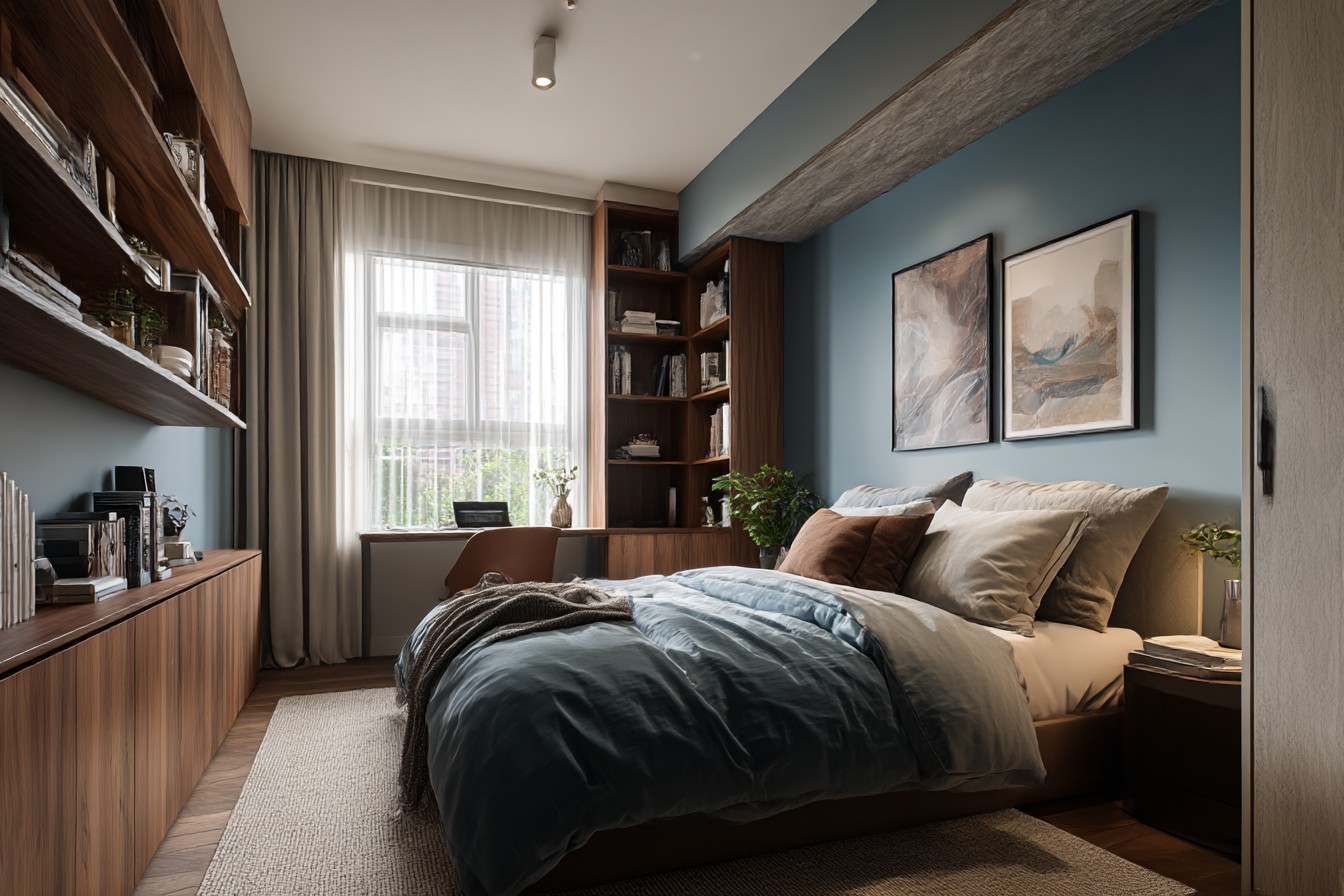
When I first walked into the bedroom of my Bristol flat, I actually laughed out loud. Not a happy laugh more like that slightly hysterical laugh you do when you realise you’ve made a terrible mistake but it’s too late to back out. Eight feet by ten feet. That was it. That was supposed to house me, my girlfriend when she moved in later, all our clothes, my work stuff, books, and basically everything else that makes a bedroom liveable rather than just a place to collapse after dealing with Year 9 geography classes all day.
My first brilliant solution? I went straight to IKEA and bought approximately seventeen storage baskets in various sizes, thinking I could just… organise my way out of the problem. Spoiler alert: you can’t. All I achieved was turning my bedroom into what looked like a wicker furniture showroom explosion.
What I learned over the next twelve months and trust me, there were some properly embarrassing failures along the way is that small bedroom storage isn’t about cramming more stuff into less space. It’s about being absolutely ruthless with every single inch you’ve got, including the bits you don’t even realise are there yet.
The space under my bed was my first lightbulb moment, though it took my girlfriend pointing out the obvious before I saw it. I’d been using that space as basically a graveyard for random junk you know how it goes, wrapping paper from two Christmases ago, a table lamp I kept meaning to fix, shoes that hurt my feet but cost too much to chuck out. Complete chaos. Sarah came round one evening and watched me army-crawling under the bed trying to retrieve a jumper, and she just said, “Why don’t you get proper storage boxes?” Like it was the most obvious thing in the world. Which, obviously, it was.
Two weeks later I had four wheeled storage containers lined up under there like little trains. Absolute game changer. The wheeled bit was crucial I tried those soft fabric bags initially, and getting stuff out of them was like some weird bedroom yoga routine every time I needed my winter clothes. The plastic boxes I ended up with from Argos, about fifteen quid each, slide out smooth as anything. One for seasonal clothes, one for spare bedding, one for shoes I actually wear but not every day, and one for what I call “bedroom overflow” all those useful bits that don’t quite belong anywhere else but you definitely need.
Here’s something I wish someone had warned me about though: measure your bed height first. Properly. I bought these lovely wooden storage boxes online, dead pleased with myself, and when they arrived they were exactly three centimetres too tall to fit under my bed frame. Three centimetres! Had to send them back and start again, which was annoying but taught me to always measure twice and buy once.
The vertical space in my bedroom was completely wasted before I got my head screwed on properly. I had one pathetic bedside table and the built-in wardrobe, and that was it. Everything else was happening at floor level, which made the room feel even smaller and more cramped. The solution turned out to be floating shelves, but not where you’d think.
I put three floating shelves above my headboard, staggered slightly so they look intentional rather than accidental. Top shelf holds books I’m not currently reading but want nearby you know, the ones you tell yourself you’ll definitely re-read someday. Middle shelf has a snake plant (because I’m realistic about my plant-keeping abilities), a candle, and a small dish for jewellery and hair ties. Bottom shelf is for whatever book I’m actually reading and my reading glasses. Keeps everything within reach without taking up any floor space, and it actually looks quite nice.
The real breakthrough was putting a narrow shelf along the opposite wall, about eighteen inches down from the ceiling. Runs the whole length of the wall and holds bags, seasonal stuff, things I need but don’t use daily. Getting things up there needs a step stool, but it’s mad how much you can store when you start thinking up instead of out.
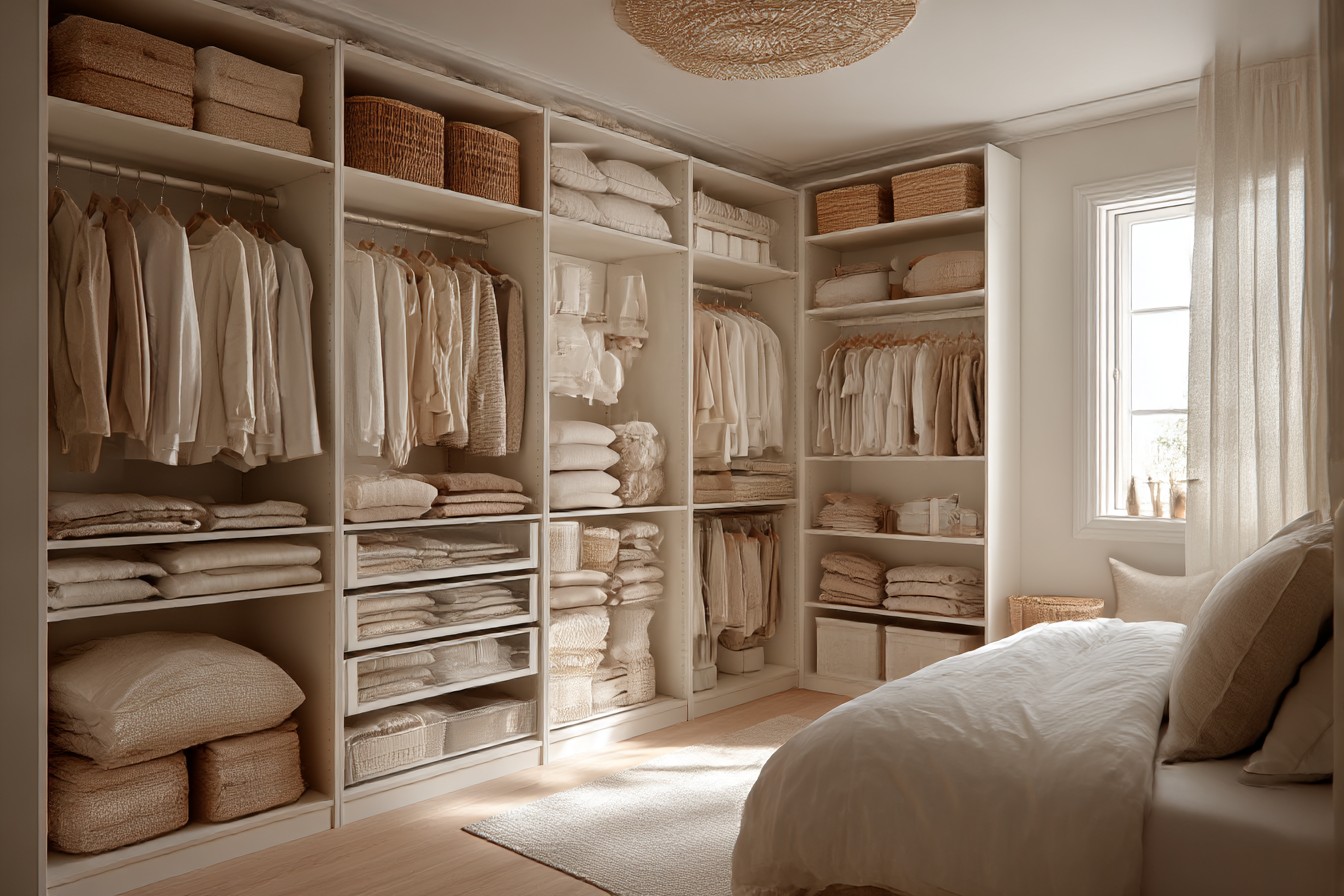
My wardrobe situation was properly dire before I discovered that you can actually make those basic rental flat wardrobes work properly. The single hanging rail and one shelf setup was basically useless for maximising space, but I didn’t want to ask the landlord if I could install anything permanent.
I put a second hanging rail about three feet below the original one, which immediately doubled my hanging space for shorter stuff. Shirts, folded trousers, anything that doesn’t need the full height they all fit perfectly on the lower rail while longer things stay up top. Then I added those shelf divider things to stop piles of jumpers from falling over every time I opened the door, because apparently I fold clothes like a primary school kid.
The inside of the wardrobe door became storage space too. I stuck one of those over-door shoe organisers on it the type with clear pockets that usually goes on bedroom doors. Perfect for flat shoes, sandals, belts, scarves. Every time I open the wardrobe I can see exactly what’s there without rummaging through boxes.
But the storage solutions that made me feel properly clever were the hidden ones. That weird gap between my bed and the wall where nothing quite fits? I found a rolling trolley that’s exactly the right width. Holds phone chargers, hand cream, water bottle, all those random things you need at bedtime but don’t want cluttering up your bedside table.
The corner behind my bedroom door was dead space until I realised I could squeeze a really narrow bookshelf in there. Only about six inches deep, but it holds way more than you’d expect skincare stuff, small gadgets, notebooks, even a few nice-looking things that make the room feel less like a storage unit.
I got creative with storage that doesn’t look like storage too. Found a vintage trunk at a car boot sale that sits at the foot of the bed stores extra pillows and blankets, but also works as somewhere to sit when I’m putting shoes on, and as a surface for folding laundry. An ottoman with storage inside sits in the corner holding my gym gear, which is much better than having yoga mats and weights scattered around the floor making the place look like a fitness equipment explosion.
One massive mistake I made early on was buying storage that was too chunky for the space. Those cube storage units that look great in bigger rooms? They completely ate up my floor space and made everything feel cramped. I learned that in small bedrooms, tall and narrow usually beats wide and short every time.
The main thing I figured out is that every storage solution needs to justify its existence by doing more than one job. If it’s just holding stuff, it’s probably not worth the space it takes up in a tiny room. But if it stores things AND provides a surface, or organises stuff AND looks decent, or holds things AND makes the room feel bigger then it earns its place.
Living in a small bedroom has taught me that good storage isn’t about hiding mess behind closed doors. It’s about creating systems that actually work with how you live day-to-day. And honestly? Most days I prefer my compact bedroom to friends’ massive ones because everything has its proper place and I can find what I need without excavating through piles of random stuff. It just took me a while to figure out how to make every inch count.