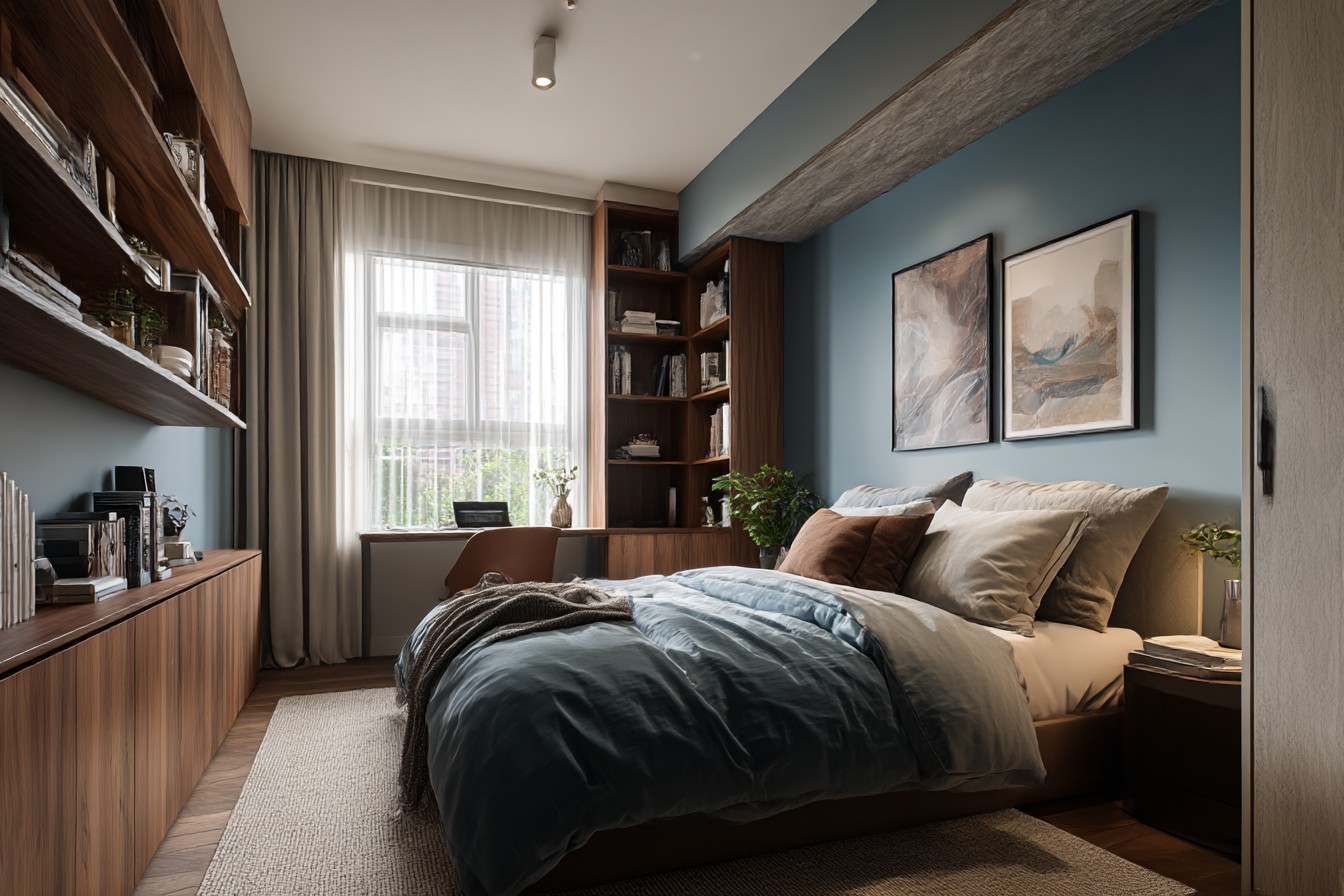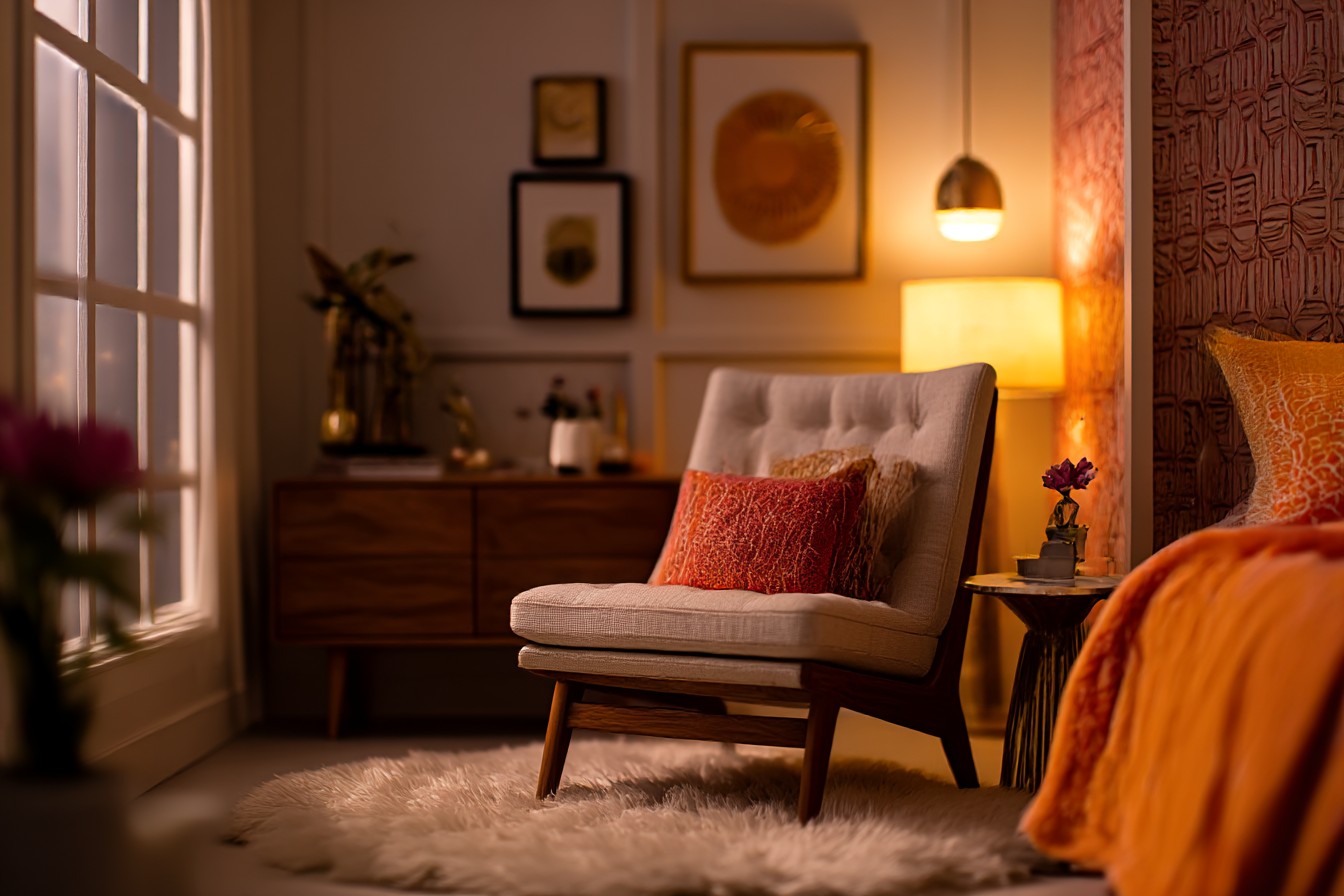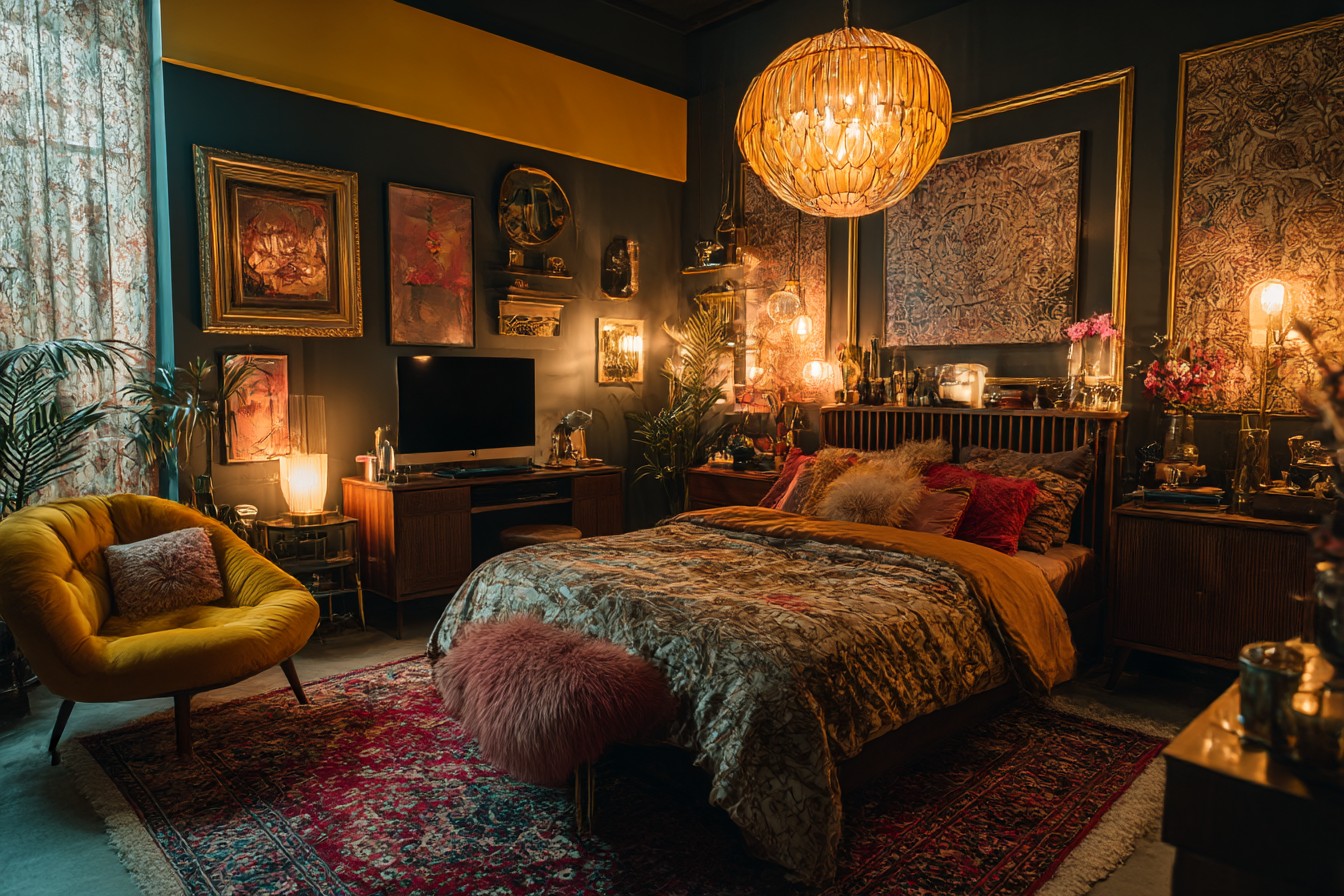
I’m talking about the rooms that, when you walk through the door, you instantly feel like you’re going to suffocate. Rooms where the estate agents say it’s “cozy,” but really mean you’ll be sleeping in what’s essentially a glorified cupboard.
Danny and I moved into a little terrace, and while I’d known the second bedroom was going to be small, I wasn’t entirely prepared for how small. We’re talking roughly nine-by-eight feet, and that’s being very generous with the tape measure. The former owners had used it for storage; I can tell that because the walls had dents in them, and the carpet had strange stains. And they’d painted it this awful, soul-sucking beige that made the entire space look like the inside of a cardboard box.
I remember standing in the doorway of that terrible little room, the first time I stepped into it after moving in, and I was sure there was no way we could possibly make it function as a legitimate bedroom. The radiator dominated nearly one entire wall, there wouldn’t be anywhere to put a bed, and the single window was so small it seemed decorative as opposed to useful. Danny jokingly said he thought we should just use it for storage again too, but I was dead set on proving him wrong.
One of the key aspects of decorating a tiny bedroom is every single decision you make has an impact. With a large room, you can typically throw in some furniture and hope for the best. But in a small room, you’ve got to consider every aspect including every color you choose, every piece of furniture, and every little decorative item. Each of those decisions can contribute to making the space either feel larger and cozier, or even smaller and more cramped.
First off, I tackled the walls. The beige walls in the room were literally depressing me. Everyone seems to give the same advice for painting small rooms painting them white to create the illusion of more space. I don’t agree. Painting small rooms white creates a cold, sterile, prison-cell type atmosphere. So I did the exact opposite and picked a gorgeous deep green color I discovered marked down at B&Q. They had a bunch of their “oops” colors, which were shades of paint that were ordered incorrectly. I purchased one of the deeper green shades for $15, whereas normally they’d sell for around $40-something.
I painted only one wall with the green the wall directly behind where the bed would go and the difference was huge. The room was no longer cramped, but it was now cozy and intimate. In fact, it felt like a real adult bedroom, and not like a makeshift space we were camping in. My mother was utterly perplexed when she saw the room asked why I’d made it darker but once she saw how good it looked with the rest of the room decorated, she changed her tune.
Once I realized how little storage we were going to have in the room, I became obsessed with finding ways to store all of our belongings. Since we had no built-in closets, and not a lot of floor space, I had to find other creative ways to store everything. I bought a number of clear plastic containers (the cheap kind, $3 each) from Wilko. Then, I wrapped them in wrapping paper I still had from Christmas. Sounds silly, but I found a great-looking William Morris-style pattern for the wrapping paper in the clearance section of the local department store. Once I covered the containers with the paper, they looked semi-expensive and fit neatly under the bed.
Choosing the bed itself was perhaps the most difficult decision. A normal-sized bed frame would take up most of the room, so we opted to place the mattress on a platform I built using reclaimed wood I’d acquired from Facebook Marketplace. Some guy was redoing his kitchen and just wanted to get rid of the beautiful old floorboards. I paid him $20, and had to transport them in Danny’s van to Arnold, but I sanded them down and created a beautiful low-platform, Japanese-style bed base that fits perfectly and provides a ton of additional storage space underneath.
I think the biggest game-changer was changing the lighting. The original overhead light in the room was awful, and made everything look like it belonged in a hospital. I couldn’t afford fancy light fixtures, so I decided to get creative with table lamps and string lights. I found a beautiful, antique-brass table lamp at a car-boot-sale for $8. I replaced the shade with a new one I purchased at Dunelm for $15. I hung some warm-white string lights above the window sill and suddenly the room felt at least three times larger than it was before, especially in the evening.
I also disregarded all of the advice I read online about decorating small rooms in a minimalist style. If you have ample storage throughout your home, that may be doable. However, since we didn’t, I needed to make this room work harder. I installed floating shelves along one wall using some brackets I purchased at Screwfix and some wood Danny’s friend had cut for me. I placed books, plants, and a few decorative items I’d accumulated over the years. This helped make the room appear taller and gave me a space to showcase the objects I care about, as opposed to just having blank walls.
The advice to hang a mirror in a small room is true it works. However, the size of the mirror matters. I purchased a gigantic old mirror at an estate sale for $12. The frame was a bit worn, but some white paint fixed that. I propped it against the wall opposite the window and it basically doubled the amount of natural light coming into the room. This was particularly beneficial during those gray Nottingham mornings when every bit of sunlight counts.
My final challenge was adding plants. Everyone told me the room was too small and too dark to support plants. I purchased a snake plant from Tesco for $6. Snake plants are virtually unkillable, and it sits nicely on the windowsill. I added a hanging pothos to one of the floating shelves and both of them seem to be thriving. There’s something special about having living things in a small space that makes it feel less like a container and more like a space where you can relax.
I also replaced the curtains. The ones that came with the house were super-thin and allowed zero light-blocking. As a result, the window appeared smaller than it actually was. I purchased some heavy-duty curtains from the remnant section at John Lewis. I have no idea how much they originally cost ($50 per yard?), but I managed to buy enough to create full-length panels for $20. I made them myself using a tutorial I found on YouTube. They greatly improved the overall ambiance of the room and also made the window appear larger and more prominent.
Finally, I purchased a small rug from Facebook Marketplace to tie all the colors in the room together and to add warmth to the space. The rug was never used, and I only paid $18 for it. The seller had purchased it for a different room and had recently moved. The rug is a nice, soft gray and hides all of the dust bunnies.