Standing in our downstairs loo last Tuesday morning – you know, the tiny space under the stairs that barely fits a toilet and sink – I had this weird moment of clarity. Amara was having a meltdown because her favourite cup was in the dishwasher, I was trying to get ready for work while feeling like a whale at seven months pregnant, and I just stopped and thought… why does this little room feel so much nicer than our main bathroom upstairs?
The downstairs loo isn’t fancy. We painted it this soft sage green when we moved in, added a small floating shelf from IKEA, hung one framed print I bought on Etsy for eight quid. But everything works together. Meanwhile, our upstairs bathroom – the one we’ve spent way more money on – still feels like a random collection of things we’ve bought over two years without any real plan.
That’s when I realised I’d been thinking about this whole bathroom design thing completely wrong. I’d been focusing on individual pieces – ooh, nice taps, lovely mirror, pretty tiles – without considering how they’d all sit together. Classic mistake, really, but one that’s cost us probably £300 in wrong choices that we’ve had to replace or live with.
The first big disaster happened about eighteen months ago when I fell in love with these gorgeous Metro tiles in a dark green. Proper statement tiles, the kind you see on Instagram accounts with perfectly curated feeds. They were £45 per square metre which felt extravagant but I convinced myself they were an investment. Then I paired them with chrome taps because that’s what was cheapest at Wickes, and a wooden mirror because I thought the natural element would “warm things up.”
Honestly? It looked terrible. The green tiles were too dark for our small bathroom, the chrome looked cheap against them, and the wooden mirror just seemed random. We lived with it for about six months before I admitted defeat and painted over the tiles with bathroom paint. Such a waste of money, but keeping them would have meant looking at my mistake every day.
That experience taught me that having a theme isn’t about finding one gorgeous thing and building around it – it’s about deciding on a feeling you want to create, then choosing everything to support that feeling. Sounds obvious when I put it like that, but apparently I needed to learn it the expensive way.
Now when I’m thinking about bathroom changes – which happens a lot because our house is still very much a work in progress – I start with the mood I want rather than specific items. Do I want this space to feel calm and spa-like? Warm and cosy? Fresh and energising? Once I know that, the individual choices become much easier.
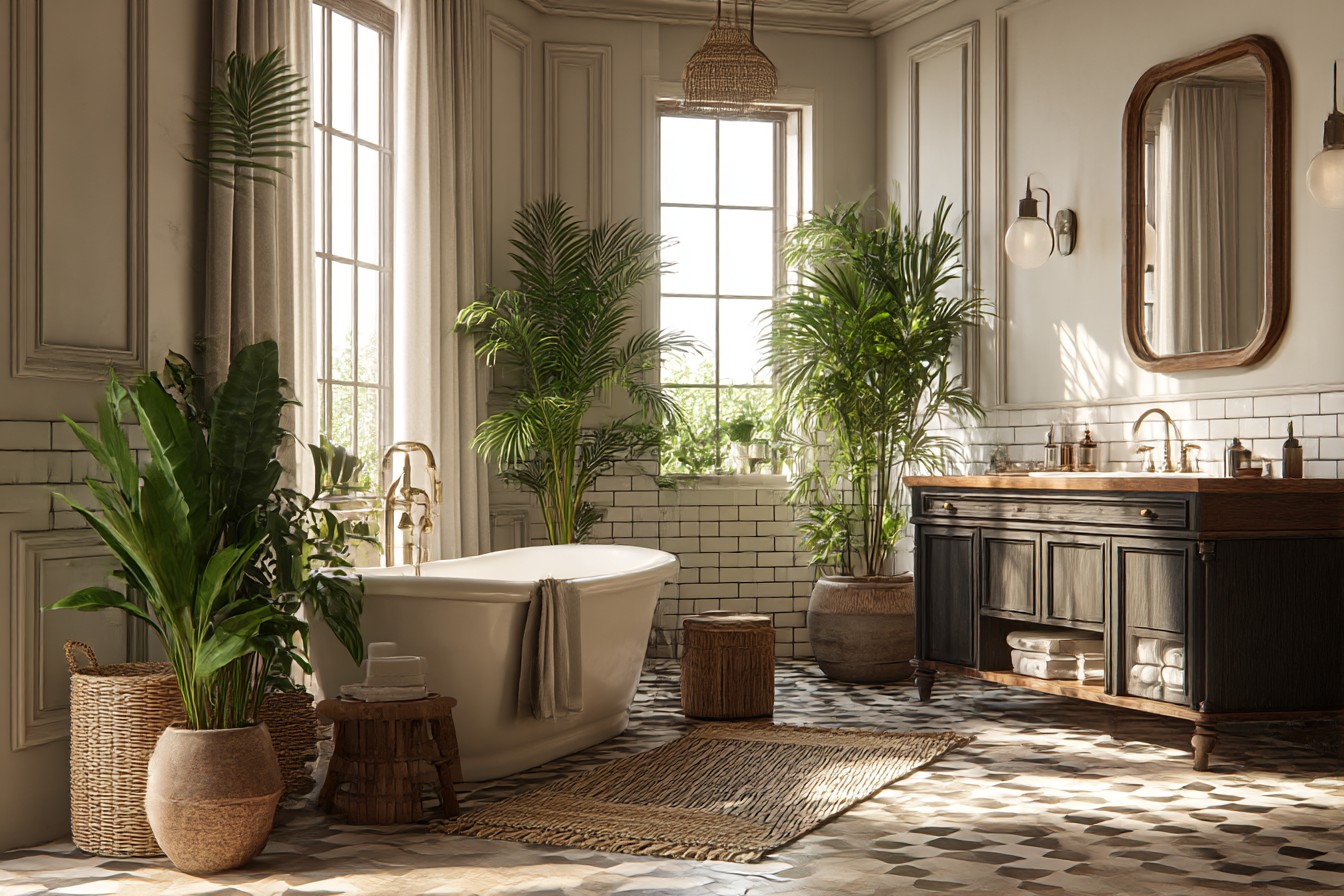
Our main bathroom now has what I’d call a “budget coastal spa” vibe, though that sounds fancier than it actually is. Basically, I wanted it to feel calm and clean without being stark or clinical. Painted the walls in this pale blue-grey – Dulux “Coastal Blue” which is definitely not as posh as Farrow & Ball but costs £18 instead of £45. White subway tiles because they’re classic and relatively affordable. Brass-effect taps and shower fittings from Screwfix that look much more expensive than they were.
The key was keeping everything in the same colour family – whites, soft blues, warm metallics – and sticking to natural materials where possible. Cotton shower curtain instead of plastic, wooden soap dispenser from IKEA, plants that can handle bathroom humidity. Even the towels are part of it – cream and pale blue instead of the random bright colours we used to have.
I’m not gonna lie, it took me ages to get this right. Initially I tried to add too much – a patterned floor mat that clashed with everything, some decorative shells that just looked silly, wall art that was too busy. Had to edit it back down to basics. Turns out restraint is quite hard when you’re excited about finally making progress on a room.
The other thing I learned is that themes don’t have to be expensive or completely original. Our guest loo – which is tiny and has no natural light – I went for what I suppose you’d call “modern farmhouse” but really it’s just black and white with some wooden touches. Painted it white, added black accessories from Dunelm, wooden shelf that Liam’s dad made from some leftover timber. Cost maybe £40 total and it looks intentional rather than thrown together.
Having a clear theme makes shopping so much easier too. Before, I’d go into B&Q or Dunelm and get completely overwhelmed by all the options. Now I know what I’m looking for – does this fit with the calm, natural feeling I’m going for? Will it work with what’s already there? Makes it much quicker to dismiss things that might be nice but aren’t right for my space.
I keep photos on my phone of each room when it’s looking its best – you know, when I’ve actually cleaned it and the light’s good and Amara hasn’t left toys everywhere. When I’m considering buying something new, I check those photos to see if it would fit. Saved me from several impulse purchases that would have been mistakes.
The biggest revelation was realising that everything doesn’t have to match perfectly – it just needs to feel like it belongs together. Our main bathroom has white tiles, blue-grey walls, brass taps, and cream towels. None of those are exactly the same colour, but they all support this calm, natural feeling I was going for.
I think where people go wrong – where I definitely went wrong initially – is trying to incorporate too many different styles. You can’t have a bathroom that’s industrial AND vintage AND tropical all at once. Pick one main direction and maybe add tiny elements from something complementary, but resist the urge to throw everything you like into one space.
Budget-wise, you don’t need to renovate everything to establish a theme. Paint is your friend – it’s the quickest way to completely change how a space feels. New accessories, different towels, maybe some plants if you’ve got the light for them. Our downstairs loo transformation cost about £60 including paint, and it went from looking like a boring rental space to somewhere that feels intentional.
The test is how you feel using the space every day. Our old bathroom always felt chaotic, even when it was clean, because nothing really worked together. Now, even when there are toys in the bath and toothpaste on the mirror (because three-year-olds are basically chaos agents), it still feels like a proper room rather than just a collection of bathroom fixtures.
And honestly, that feeling of having got something right – of walking into a space you’ve created and thinking “yes, this works” – makes all the planning and saving and occasional expensive mistakes worth it. Especially when you’re dealing with pregnancy exhaustion and a toddler who thinks the toilet brush is a excellent toy. Small victories, but they matter.