The water damage behind our bathroom sink had reached the point where Phil started calling it “the UK” because honestly, it did look like a map of Britain if you squinted at it right. I’d been pretending not to see it for months – you know how your brain just filters out the bits of your house that are slightly shameful? But when my youngest sister came to stay and asked if we’d “thought about maybe doing something with that wall situation,” I knew my days of denial were numbered.
Here’s the thing nobody tells you about bathroom sinks – they’re basically water cannons aimed directly at your walls. I’d always assumed backsplashes were a kitchen thing, something you put behind the hob to protect from cooking splashes. Never occurred to me that brushing your teeth twice a day creates the same kind of mess, just slower and more depressing.
Our bathroom was classic rental-grade when we bought the house. Pedestal sink, mirror from B&Q, walls painted in that sickly magnolia that landlords love because it supposedly goes with everything. Every morning I’d splash water on my face, brush my teeth, and tiny droplets would hit that wall. After eighteen months of this, the paint was bubbling, peeling, and developing this charming eau de mildew that made me hold my breath while doing my skincare routine.
My first fix was pathetically optimistic. Bought a pot of Dulux bathroom paint – the expensive stuff that promises to resist moisture – and painted right over the damaged area. Looked brilliant for about a month. Then the bubbling started again, right through the supposedly waterproof coating. Apparently paint, even the fancy kind, isn’t actually designed to take daily drenching. Revolutionary insight, I know.
That’s when I fell down the rabbit hole of bathroom backsplashes, and I was genuinely surprised by how many options exist. You don’t need to gut the room or hire professionals. Some of the best solutions cost less than a night out and take about as long as watching a film to install.
Peel-and-stick tiles were my entry point into this world. Found these white subway tiles at Wickes – looked like proper ceramic but with adhesive backing. Thirty-five quid for enough to cover the sink area with some spares. Installation took maybe two hours, including the time I spent having a minor breakdown about whether the rows were straight enough. (They weren’t perfect, but you’d have to be looking for problems to notice.)
The transformation was immediate. Not just how it looked – though those clean white tiles made the whole bathroom feel less grim – but functionally too. Water hits the tiles and just runs off instead of soaking in and creating that slow-motion disaster I’d been living with. I can actually wipe the wall down after brushing my teeth, which sounds mundane but feels like a minor miracle when you’ve been dealing with permanent water damage.
But I learned about height the hard way. My first attempt only went about sixteen inches up from the sink. Massive mistake. Water doesn’t just splash straight back – it ricochets off the tap, bounces off your hands, somehow ends up places that seem to defy physics. I had to extend the backsplash to nearly three feet high to cover where the real damage happens.
Width matters too. Initially I just covered the space directly behind the sink, but water has no respect for logical boundaries. Now I always extend at least six inches past each edge of the sink. Looks more intentional anyway, less like you ran out of materials halfway through the job.
I’ve become a bit obsessed with how different patterns can completely change the feel of the same tiles. Those subway tiles I mentioned? Arrange them in the traditional brick pattern and they look classic, safe, maybe a bit boring. Turn them vertically and suddenly they feel more modern, like something from a boutique hotel. Try a herringbone pattern and the whole wall becomes a feature – though cutting the edge pieces for herringbone nearly drove me to drink, so maybe factor that in if you’re attempting it yourself.
I’ve tried alternatives beyond traditional tile too. There’s this textured wallpaper designed for wet areas that looks like natural grasscloth but wipes clean like vinyl. Used it behind my sister’s sink when I helped her renovate, and it’s been perfect for over a year now. The texture hides water spots brilliantly, which is ideal if you’re not obsessive about wiping walls after every use.
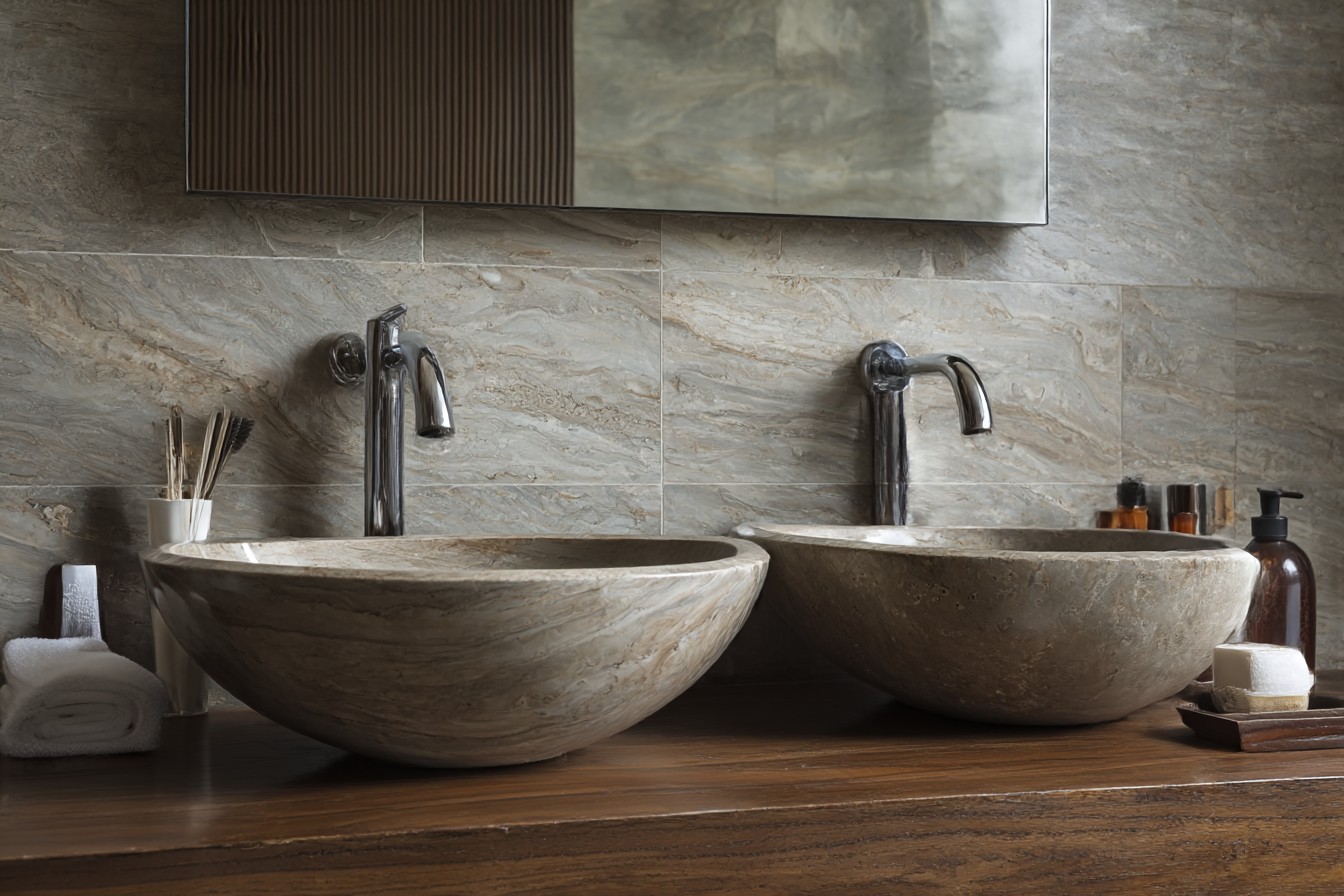
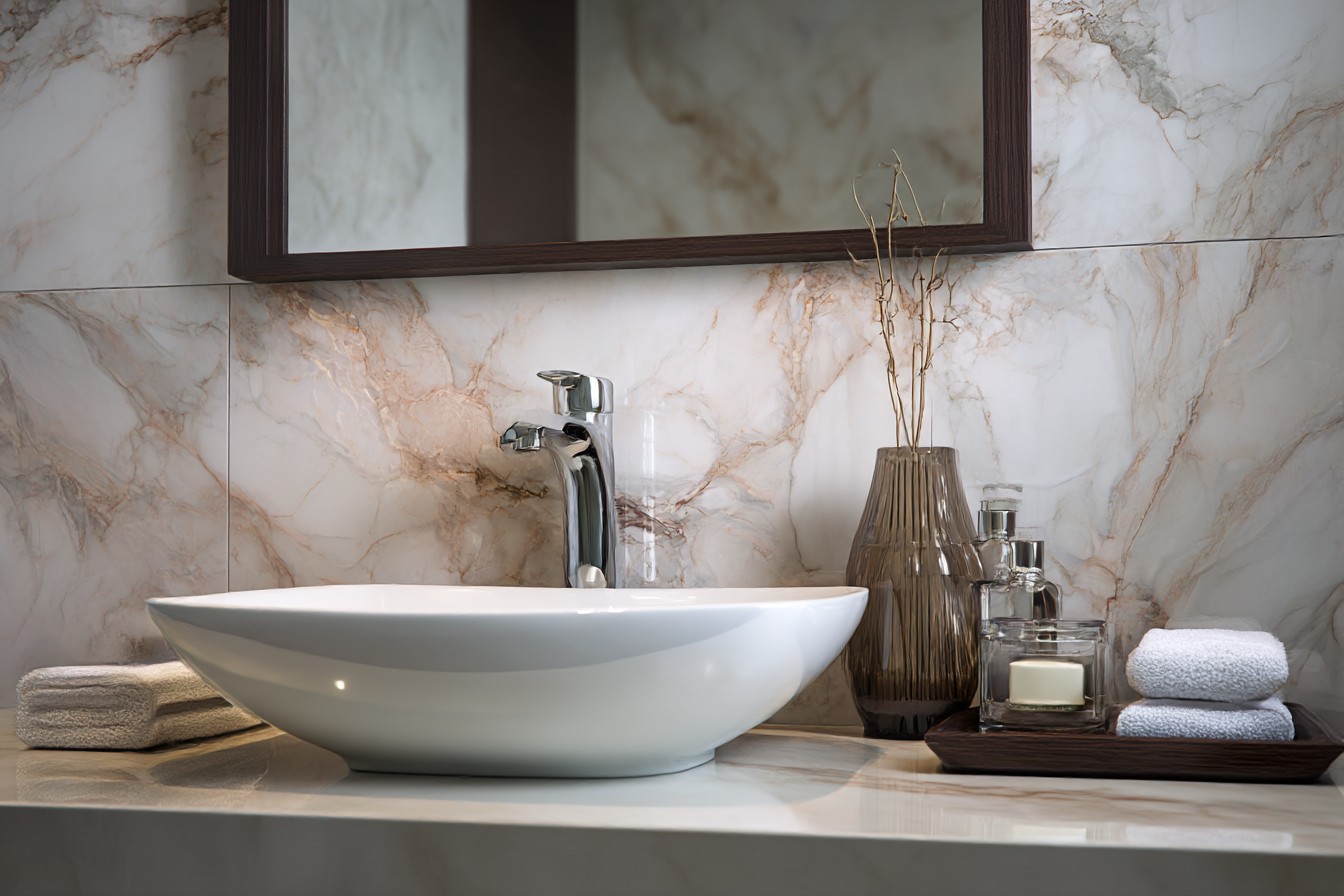
Natural stone looks incredible but needs more maintenance than I initially realised. I splashed out on a thin marble sheet for our current bathroom – one of those flexible pieces you can buy pre-cut. Absolutely gorgeous, makes the whole room feel expensive. But marble is porous and needs regular sealing, which I discovered when my toothpaste left permanent stains. Still love the look, but go into it knowing you’re signing up for proper upkeep.
For budget options, I’ve had surprising success with beadboard. Proper moisture-resistant MDF beadboard, painted with quality bathroom paint, can look really elegant behind a sink. Not as easy to wipe clean as tile, but it handles splashing infinitely better than regular painted walls and adds texture that makes small bathrooms feel less flat and depressing.
The brilliant thing I’ve discovered is that protection and beauty aren’t mutually exclusive. The materials that work best functionally – ceramic, porcelain, sealed stone – also offer endless design possibilities. You can buy tiles that look like wood, concrete, fabric, even leather now. The manufacturing has gotten so sophisticated that you can achieve almost any look while still getting the practical benefits of a proper moisture barrier.
Installation-wise, most of these options are genuinely manageable for normal humans. The adhesive tiles are basically foolproof – if I can do it while having an anxiety attack about straight lines, anyone can. Even proper ceramic tiles aren’t that scary for a small area behind a sink. You’re not dealing with complex cuts around shower fixtures or anything complicated. A decent tile cutter from Screwfix, some spacers, and waterproof adhesive will get you there.
The return on investment has been remarkable, and I don’t just mean financially, though it definitely adds value to the house. I mean in daily quality of life. No more scrubbing mysterious stains every weekend, no more worrying about mildew developing behind the sink, no more looking at ugly walls that make you feel slightly depressed every morning while you’re trying to wake up.
It’s funny how something so practical can make such a difference to how a space feels. Our bathroom isn’t fancy – it’s still got the same basic fixtures and that slightly too-small mirror – but having clean, wipeable surfaces behind the sink makes the whole room feel more intentional, more looked-after. Sometimes the smallest changes really do make the biggest difference in how bearable your house is to live in.