Right, so picture this – I’m standing in my bathroom last month, soaking wet from the shower, and I open what used to be our towel cupboard only to have about six towels fall out and land in a soggy heap on the floor. Again. I actually said “oh for crying out loud” out loud, which is definitely a sign I’m turning into my mother.
This wasn’t the first towel-related disaster in our house, not by a long shot. When Danny and I first moved into our little terrace, the bathroom came with exactly one towel rail. One. For two adults who both shower daily and occasionally have guests. The maths just didn’t work, you know? We’d hang towels on top of each other, they’d never dry properly, and everything always smelled a bit… damp.
I tried those over-the-door hook things from Argos initially – seemed like an obvious solution, right? Wrong. Our bathroom door is one of those hollow modern ones that basically vibrates every time you close it. Hung anything heavier than a flannel on there and the whole door would bow outwards like it was pregnant. Not exactly the sophisticated look I was going for.
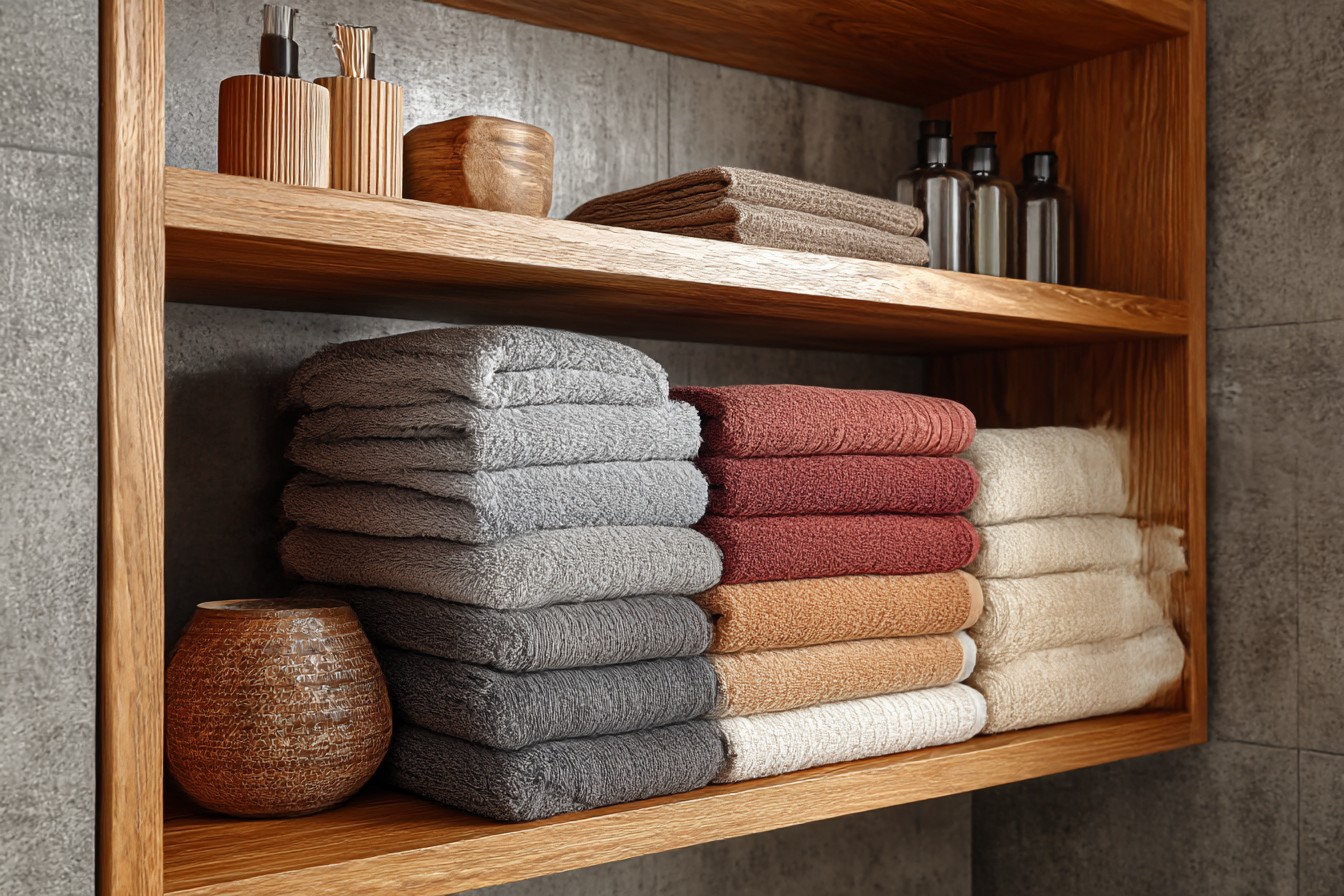
The breakthrough came from stalking someone’s Instagram, if I’m being completely honest. My mate Jess from work has this gorgeous house (makes me slightly jealous, but in a nice way), and she’d posted bathroom photos that made me actually stop scrolling. These floating shelves above her loo with towels that looked like they belonged in a proper hotel. Not folded in wonky piles like mine, but rolled up all neat and organised by colour.
I measured our bathroom wall that same evening – Danny thought I’d lost it, wandering around with a tape measure muttering about shelf heights. But that space above our toilet was doing absolutely nothing except collecting dust and the occasional spider. Two floating shelves from the local builders’ merchants (cost me about thirty quid plus a Saturday afternoon of Danny holding things while I swore at the spirit level), and suddenly we had storage that actually worked.
The positioning turned out to be crucial, though nobody tells you this when you’re researching online. Bottom shelf needs to be at eye level for your everyday towels – the ones you grab without thinking when you’re dripping wet and can’t be bothered looking around. Top shelf for the fancy guest towels and backup supplies. Sounds obvious now, but it took me three attempts to get the heights right.
Here’s what Pinterest doesn’t warn you about open shelving – dust is real. Those magazine-perfect towel displays? Someone’s up there with a duster every week. I’ve compromised by keeping the towels I actually use on the lower shelf and rotating everything regularly. Still looks loads better than our old system of “throw it somewhere and hope for the best.”
My sister came round last month and immediately pointed out that open shelving would last about five minutes with her kids. Fair point – her youngest treats towels like climbing equipment. She’s gone for this tall skinny cabinet thing instead, tucked into that weird corner space between the sink and the wall that every bathroom seems to have. Looks like proper furniture, holds tons of stuff, and has doors to keep everything tidy. Cost more than my shelves (think she said about £120 from IKEA), but it’s basically bomb-proof.
I’ve developed a weird obsession with hooks lately, particularly the kind that don’t involve drilling holes in tiles. Those 3M adhesive ones that claim to stick permanently? I was properly sceptical – anything that promises to stick to bathroom tiles forever sounds too good to be true. But they’ve been holding our thick bath towels for over a year now without budging. The secret is cleaning the tile with rubbing alcohol first. Found that out after my first attempt failed spectacularly and I had a hook and towel land in the sink at 6am.
Best hook discovery happened completely by accident. I was poking around this vintage shop in town (looking for lamp bases, if you must know), and found these proper old brass coat hooks. Heavy ones with proper mounting screws, salvaged from a school apparently. Looked completely wrong for a bathroom until I saw them in my friend’s downstairs loo. Somehow the industrial look worked perfectly with her white metro tiles. Cost me eight quid each, but they’ll outlast any plastic rubbish by decades.
Sometimes the most random solutions work brilliantly. My neighbour Sarah (the one with the amazing front garden) turned an old wooden ladder into towel storage. Sounds very Pinterest-meets-country-living, doesn’t it? But it actually works perfectly in her narrow bathroom. Leans against the wall, takes up hardly any floor space, and towels can hang without touching each other so they actually dry properly. She sanded it down and treated it with some sort of marine varnish to cope with all the steam.
If you’re going down the cabinet route, don’t make my first mistake and buy the cheapest option. Those particleboard shelves with the paper-thin veneer? They warp faster than you can say “bathroom humidity.” I learned this the hard way when my first cabinet started sagging after about six months and developed this weird musty smell. Now I look for solid wood or at least decent engineered wood, proper moisture barriers, and shelves you can adjust.
The inside of cabinet doors is brilliant storage space that most people completely ignore. I’ve got these thin rails screwed to the inside of our vanity cabinet doors – perfect for hand towels and flannels. Takes about thirty seconds to install, costs practically nothing, and suddenly you’ve got storage space you didn’t even know existed.
How you organise matters as much as where you store things. I tried that Marie Kondo folding method where everything stands up like little fabric soldiers. Looked amazing for approximately three days, then real life happened and everything collapsed into chaos again. Rolling works much better for normal people. Takes up similar space, stays neater for longer, and you can grab what you need without everything else falling over.
Colour coordination isn’t just about making things look nice (though it does help). Keeping white towels together, coloured ones separate, bath towels away from hand towels – it sounds ridiculously obvious, but it makes grabbing the right towel so much quicker when you’re in a rush.
The biggest mistake I see everyone making? Cramming too many towels into whatever storage they’ve got. Towels need room to breathe, literally. Pack them too tight and they never properly dry, develop that horrible musty smell, and feel damp even when they’re supposedly clean. Better to have fewer towels with proper spacing than a stuffed cupboard full of perpetually soggy linens.
Where you put your storage matters more than you’d think. That cabinet right next to the shower might seem convenient, but constant steam means nothing ever dries properly. I moved our main towel storage to the opposite wall, away from the shower and the radiator. Made a massive difference to how fresh everything stays.
My current system uses a bit of everything – open shelves for daily towels, cabinet for extras, hooks for wet towels to dry before they go away. It took some experimenting, several failed attempts, and way too much measuring. But now I can open any bathroom storage without fear of textile avalanches, everything’s actually dry when I need it, and I can find the right towel without excavating through piles of damp fabric. Result.