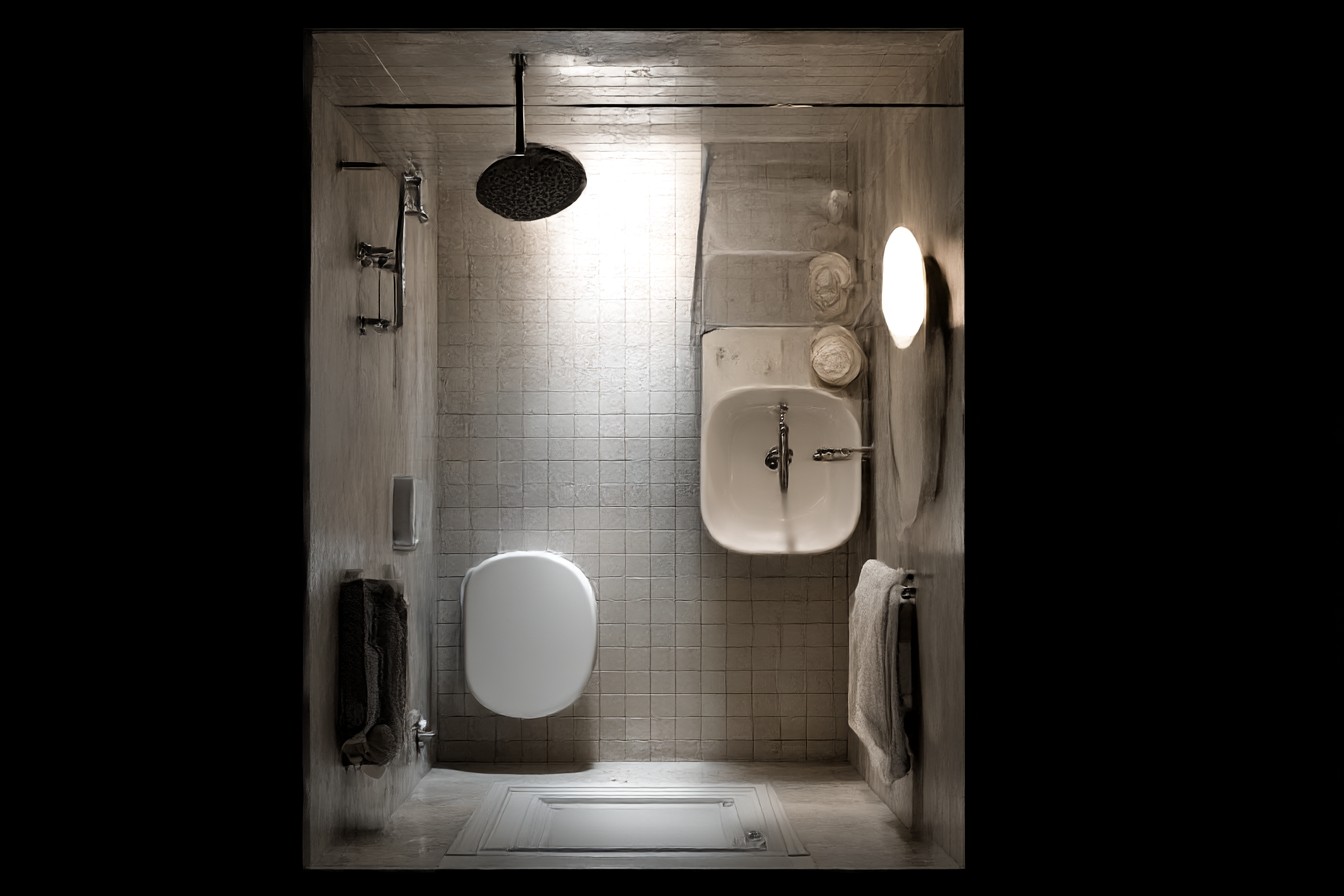
Right, so I need to tell you about the most depressing room in my flat when I first bought it. The bathroom was… well, calling it a bathroom is generous. It was more like a cupboard with plumbing shoved into it by someone who clearly hated humanity. Five feet by seven feet of pure misery, with this avocado green suite that looked like it had been salvaged from a 1970s hospital ward.
The first time I properly looked at it – I mean really looked, not just the quick glance during the viewing when I was trying to convince myself the flat wasn’t too small – I actually stood in the doorway and went “oh god, what have I done?” Out loud. To myself. Which probably should’ve been a warning sign about my mental state at the time, but anyway.
The toilet paper holder was literally hanging off the wall by one screw. The shower curtain had this horrible floral pattern that must’ve been there since the previous owner moved in about fifteen years earlier. And the lighting… Christ, the lighting. One of those fluorescent strip lights that makes everyone look like they’re dying of some Victorian disease. I looked in the mirror under that thing and immediately understood why vampires avoid their reflections.
But here’s what I learned about small bathrooms through months of staring at this space and trying to figure out what to do with it: they’re actually quite forgiving if you get the basics right. The problem is working out what the basics are when you’ve never renovated anything before and your only reference point is whatever your parents had when you were growing up.
I started documenting everything because, well, I’m a software engineer and that’s what we do. Spreadsheets, photos, measurements, costs, timelines. My mate Dev thought I was losing it when he saw my bathroom renovation project plan complete with Gantt chart, but honestly it saved me from making some expensive mistakes.
The budget was £2,800, which felt like loads of money at the time but turned out to be pretty reasonable for what I wanted to achieve. I’d done exactly zero research into bathroom costs before I decided on that number – just figured it sounded sensible. Spoiler: bathroom stuff is expensive and everything takes longer than you think it will.
First big decision was whether to move the plumbing around. The toilet was in a weird position, the sink was tiny, and I kept thinking I could optimize the layout somehow. Spent weeks drawing different configurations and measuring spaces. Then I got quotes for moving pipes and nearly fell over. £1,200 just to shift the toilet eighteen inches to the left. That was nearly half my budget gone before I’d even started.
So the layout stayed exactly as it was. Which turned out fine, actually. Sometimes the boring practical decision is the right one, even when it doesn’t feel very exciting.
The paint choice took me about six weeks of agonizing. I’m not even joking – I had paint samples stuck all over the walls like some kind of demented art installation. My downstairs neighbor probably thought I’d lost it completely. But I wanted to get it right because paint is one of those things that affects everything else in the room.
Ended up going with this pale blue-grey called Borrowed Light from Farrow & Ball. Cost me £89 for two small tins, which seemed insane for paint, but the moment I got the first coat on I knew it was worth it. The room instantly felt twice as big and about ten times calmer. My mum came round and said “oh, that’s nice, it looks like a proper bathroom now” which is basically the highest praise you can get from her.
Lighting was the next thing, and probably the change that made the biggest actual difference to using the space. That fluorescent strip had to go – I couldn’t stand another morning of looking like an extra from a zombie film. Got three different lights instead: a pendant over the sink area, some LED spots in the ceiling, and this backlit mirror that cost way more than I’d planned to spend but transformed the entire room.
The mirror thing was £320, which felt ridiculous, but it gives off this soft glow that makes everything look better. Even at 6am when I’m half-awake and definitely not looking my best. Plus it doesn’t cast those horrible shadows that normal bathroom lighting does.
Floor tiles were another saga. I must’ve brought home every sample tile from every shop within ten miles. My coffee table looked like a very boring mosaic for about a month. Eventually went with these big grey tiles – 60cm squares, which sounds mental in such a tiny space but actually works brilliantly. Fewer grout lines means it looks cleaner and bigger. Cost £180 for the tiles plus £300 to get them laid properly because there was absolutely no way I was attempting that myself.
For the walls I did half tiles, half paint. White metro tiles up to about shoulder height, then the pale blue-grey paint above. Found the tiles on clearance – £2.50 per square meter instead of the usual £8 because they were discontinuing the line. Sometimes being indecisive pays off because if I’d bought them when I first saw them I’d have paid three times as much.
The vanity nearly killed me. Everything was either massive and wouldn’t fit, tiny and useless, or looked like it belonged in a Premier Inn. Finally found this wall-hung one that’s only 400mm deep but still has decent storage. £280 and worth every penny because you get all that floor space underneath which makes the room feel less cramped.
Made some proper mistakes though. Bought this curved shower curtain rail thinking it would create more space inside the bath. Technically it did, but it stuck out so far that I kept walking into it every time I went near the sink. Lived with it for three weeks thinking I’d get used to it, then gave up and swapped it for a straight one. Sometimes the obvious choice is obvious for good reasons.
Also completely messed up the toilet roll holder placement. Put it where it looked right aesthetically, which turned out to be completely wrong practically. Had to move it twice. Left three sets of holes in the wall that I had to fill and paint over. My perfectionist tendencies don’t really extend to DIY, apparently.
Storage became this weird obsession. Added floating shelves above the toilet, a corner shelf unit in the shower, hooks on the back of the door, more hooks on the wall. Every single inch matters when you’re working with this little space. Got a bit carried away actually – my girlfriend said it looked like I was preparing for a siege, which wasn’t entirely wrong.
The heated towel bars were a last-minute addition that turned out to be brilliant. No room for a proper radiator, so I mounted these behind the door. £85 each and the difference on cold mornings is massive. Plus they don’t take up any floor space, which was the main thing.
Came in under budget at £2,650, which never happens with home renovation projects. I was quite pleased with myself until I realized I’d forgotten to budget for the time it would take to actually do everything. Took about six weeks of evenings and weekends, during which my flat was basically a building site and I was living on takeaways because I was too knackered to cook.
The real test was six months later when everything had settled in and I’d been using the space properly. Still felt spacious, surfaces were holding up well, and people kept asking if I’d somehow made the room bigger. The morning routine went from something to endure to something actually quite pleasant, which sounds dramatic but honestly made a massive difference to how I felt about living in the flat.
If I was doing it again I’d probably add underfloor heating because those tiles are proper cold first thing in the morning. And maybe spend a bit more on the shower – went for the cheapest option that looked decent and it’s fine but nothing special.
But overall I’m genuinely proud of that little space. It proved to me that even the most challenging small bathroom can become somewhere you actually want to spend time, as long as you’re realistic about what you’re working with and make smart choices about where to spend your money.