You know the feeling you have sometimes, when you walk into a room and you think something is just… wrong? It’s not the kind of wrong you notice immediately, but the kind of wrong where you think somebody has placed the furniture without really thinking about the way people use rooms. That’s how my bedroom felt for months after we moved to the house in Bulwell.
To be honest, I was so caught up in the larger issues of painting the walls, fixing the odd radiator, and replacing the old curtains (the ones the previous owners left behind – honestly, they were these hideous flower-patterned curtains that looked like someone had sneezed flowers everywhere) that I never stopped to think about the fact that it just didn’t feel right. There was the bed against one wall, and the chest of drawers against another, and this huge expanse of bare flooring in between. Everything was just… there.
Danny kept telling me it looked okay, and I know Danny could be happy in an empty cardboard box, as long as it had a TV and a kettle. I also knew that there was something missing from the room, but I wasn’t sure what.
My Mum came to visit one afternoon, and made one of those comments that hits you right in the face. She walked into the room, admired the new paint job, and said, “It’s very… functional.” Functional. I take that to mean, “it looks like a hospital room, but I’m not going to say that because I love you.”
For months, I lived with this strange floating-furniture arrangement. I thought that eventually I would be able to figure out what was annoying me about it. Well, the answer was right in front of me – or above me – the whole time. What the room lacked was something to connect all of the elements together. A rug. You know what they say, “a picture paints a thousand words.” I am convinced that a rug speaks volumes.
However, when it comes to small bedroom rugs, the risk is high that you may create a disaster. I paid the price for that mistake, obviously. My first choice was a small rug from Dunelm, approximately 4 by 6 feet, that I thought would fit perfectly under the end of the bed. It looked absolutely stupid. It was like placing a coaster under a dining table. It made the whole room appear even more disjointed than before. So, it was returned.
I did a ton of research to learn about rugs. I spent hours looking at bedroom layouts on Pinterest, reading blogs about how to position rugs (yes, that’s a thing), and measuring and remeasuring our bedroom. Danny was sick of me crawling around the room with a tape measure. Our bedroom is approximately 10 by 11 feet. Not large, but not small either. I read that when choosing a rug, you should choose something larger than you think you’ll need. This seemed crazy when you are working within limited space. However, I discovered a 8 by 10 rug on Facebook Marketplace. A woman in West Bridgford was moving and selling most of her belongings. It was barely used, and of great quality. I purchased it for roughly half the amount I would have paid for a new rug.
Getting the rug home was an experience in itself. I had to borrow my brother’s van because there was no way it was going to fit in our little Corsa. Danny complained the entire ride that it was too big, too expensive, and too many things. By the time we arrived at the top of the stairs and unrolled the rug, I was starting to wonder if Danny was correct. It was enormous.
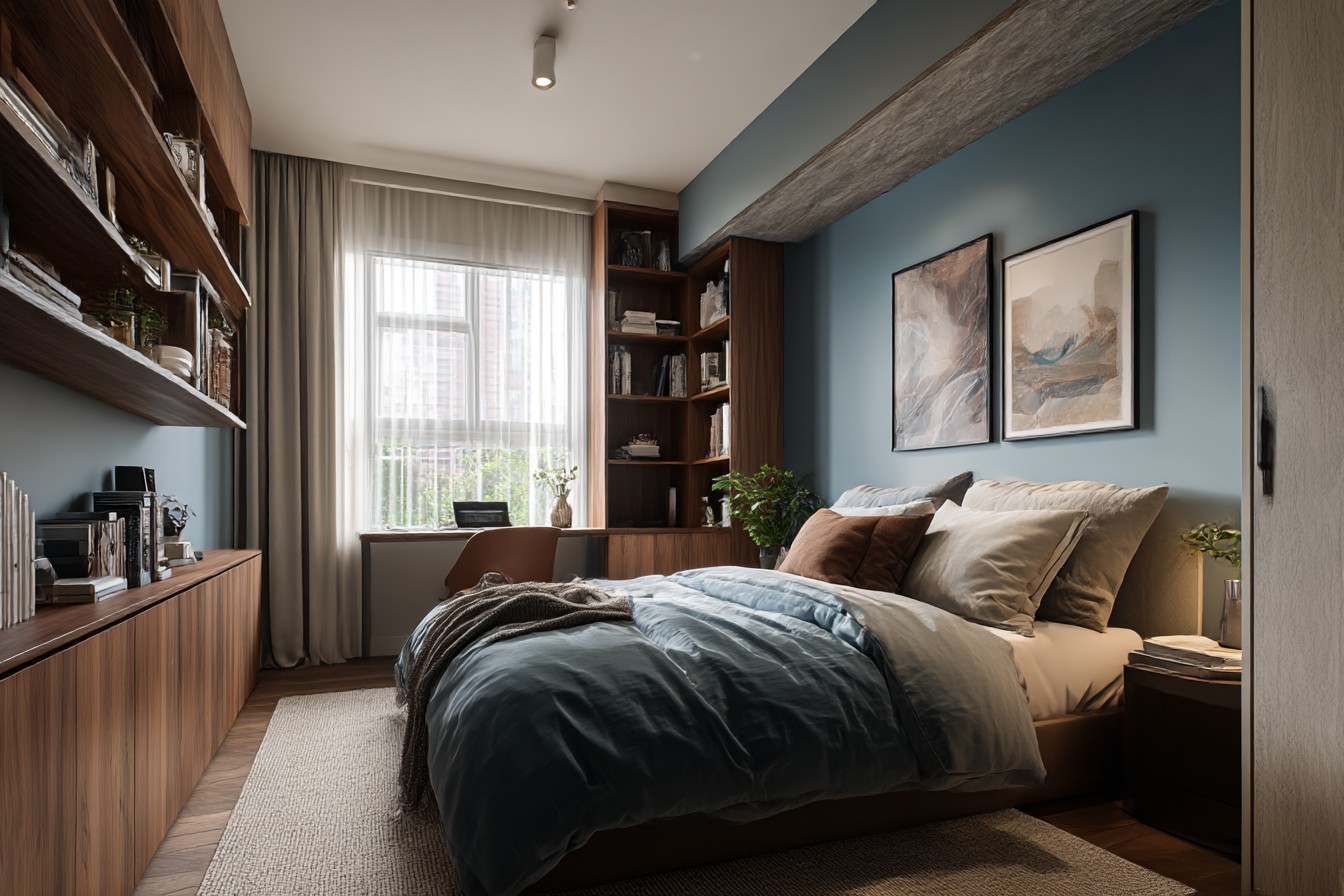
However, once we began placing the furniture back into the room, I realized something. The rug provided a base for the bed. The foot-end of the bed rested on the rug. The bedside tables – the mismatched ones I had painted white to give them an air of being intentional – sat partially on the rug. For the first time since we moved into the house, the room felt as though everything belonged in the same room, rather than just being there.
The rug is a soft cream-colored rug with faint gray and blue botanical designs throughout it. It’s nothing too fancy or bold. I had previously learned my lesson from a previous rug disaster, when I chose a rug with a geometric design that looked fantastic in the store. Unfortunately, the rug made our bedroom resemble the inside of a kaleidoscope. This rug has enough visual interest to be worth a second glance. However, it does not scream at you when you’re trying to sleep.
Finding the perfect location for the rug took some trial and error. I tried centering the rug and the furniture perfectly. In theory, this seemed like the correct way to do it. In reality, however, it looked terrible. There was too much of the bare floor exposed on both sides. Additionally, there was not nearly enough space to walk comfortably around the bed. I attempted to move the furniture and the rug around three different times before I finally figured out the correct positioning. I ended up placing the bed slightly forward on the rug rather than centered. I also left more of the rug visible at the foot end.
The transformation was instant and quite surprising. Friends of mine complimented the room, stating that it looked “complete”, which was exactly what the room was missing. The room suddenly felt as though each piece of furniture was intentionally placed, rather than unintentionally.
What I had not anticipated was how the rug would affect the way I actually used the room. Prior to the rug, exiting the bed in the mornings required stepping directly onto the cold floorboard. It was a proper jolt to the system. With the rug in place, I now have a softer landing area that makes the entire morning routine more enjoyable. I have also noticed that I sit on the edge of the bed more frequently. I use the area of the rug to help me get dressed, and/or to take a few moments with a cup of coffee/tea prior to beginning the day.
The cost of the rug was certainly worth the money, even though I ultimately spent more than I had planned to. The rug cost approximately $250. While I certainly had to watch my pennies, the rug has greatly improved the aesthetic of the room. I believe that the rug will outlive numerous changes of bedding, and possibly a few furniture updates.
If you are experiencing a similar issue, I strongly suggest you consider selecting a rug that is larger than you normally would. I understand that it may seem absurd to purchase an 8 by 10 rug for a small bedroom. However, when the rug is actually connecting your furniture to the rest of the room, it creates a greater sense of space in the room, not less.
When selecting a pattern for the rug, remember that subtle patterns are best when you already have a lot of other visual stimuli in the room. Allow the rug to serve as the foundation upon which the rest of the room’s aesthetic is built. Do not allow the rug to compete with other items in the room. Measure carefully. I cannot emphasize this point enough. Determine the actual placement of your furniture, not just where you would like to see it based on how it looks on paper.