You know what’s properly annoying? When you’re half-asleep, reaching for your phone charger, and you’ve got to basically contort yourself into some sort of human pretzel just to reach the plug because your bedside table is either miles away or turned your bedroom into an assault course. I lived with that exact scenario for about eight months in my Chorlton flat, stubbornly refusing to admit that my furniture choices were genuinely terrible.
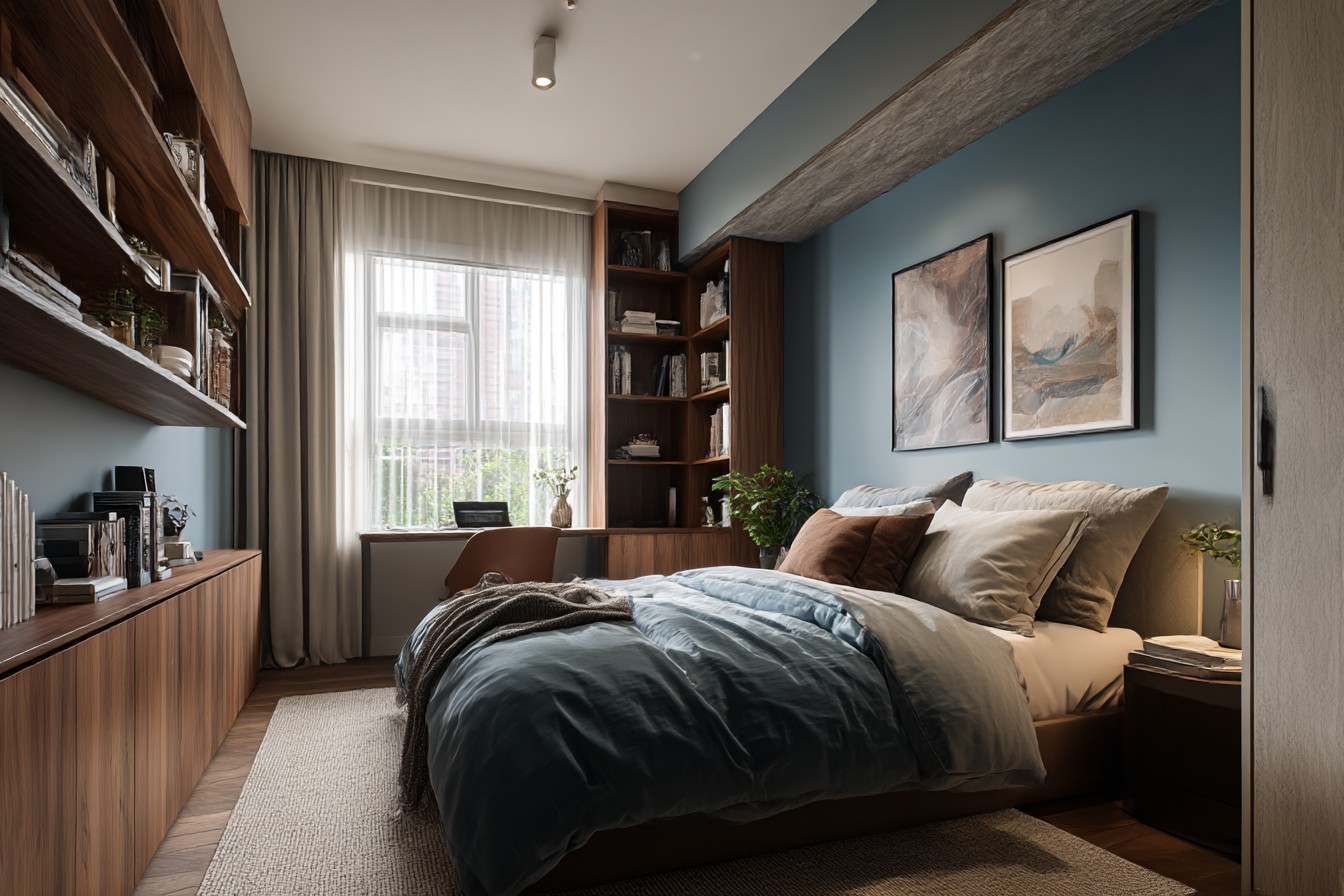
My bedroom is what the estate agent called “efficiently proportioned” when I bought the place which is basically code for “you’ll be living like a sardine.” We’re talking maybe ten feet by eight and a half feet, with a double bed that leaves roughly eighteen inches on either side. I actually measured it properly with my tape measure after I’d had enough of whacking my shin on the corner of this massive bedside table I’d bought without thinking it through. Classic me, really saw it in IKEA, thought “that looks sturdy,” completely ignored the fact that it was basically a small chest of drawers masquerading as bedside furniture.
The thing was built like a tank, which I’d initially thought was brilliant. Solid pine, loads of storage, looked properly grown-up and responsible. But living with it? Absolute nightmare. The bedroom felt like I was sleeping in a furniture warehouse, and getting to my wardrobe meant doing this ridiculous sideways shuffle every morning. My girlfriend at the time said it looked like I was planning to store a small library next to my bed, which wasn’t entirely unfair.
Finding a replacement became this weird obsession. You’d think it’d be simple just buy a smaller bedside table, job done. But most furniture shops seem to assume everyone’s got massive Victorian bedrooms with acres of space. Everything was either ridiculously chunky or looked like it’d collapse if you put anything heavier than a paperback on it. I spent way too many evenings scrolling through furniture websites, getting increasingly frustrated with the complete lack of sensible options.
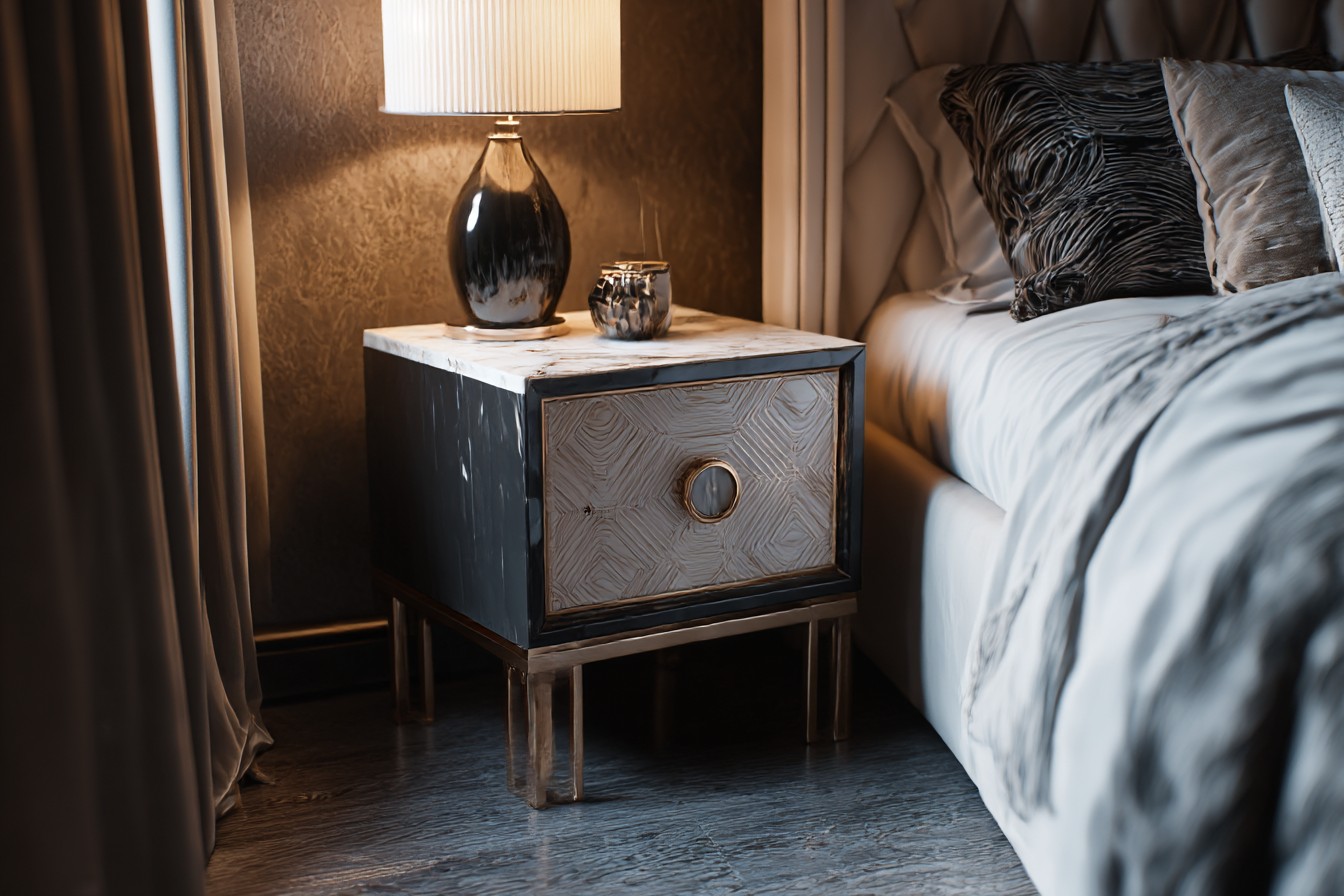
The breakthrough came when I stopped looking for “bedside tables” specifically and started hunting for narrow console tables instead. Completely different category, but the proportions made so much more sense for what I actually needed. Found this beauty at West Elm their Penelope Nightstand in white oak, though knowing them they’ll probably discontinue it next season because that’s what they do. Dimensions are spot on: 24 inches wide, but only 8 inches deep, and 26 inches high.
That narrow depth was the absolute game-changer. Gives you plenty of surface area I can fit my lamp, a stack of books, phone, and a little dish for my watch and wallet but doesn’t eat up half the room. The single drawer is surprisingly roomy too, perfect for hiding all the random stuff that used to clutter the surface. Charging cables, hand cream, spare lightbulbs, that sort of thing.
Assembly was straightforward enough, though I did mess up the positioning initially. Made the rookie mistake of setting it so the surface was level with my mattress, thinking that’d be most convenient. Turns out when you’re lying down, reaching for something at mattress height means you’re basically fumbling around blind. Knocked over my water glass three nights running before I admitted defeat and raised the whole thing by about four inches using some furniture risers I had lying around. Much better high enough that I can actually see what I’m grabbing, but not so high I need to sit up completely.
The narrow profile solved my walkway issue completely. Before, I had to turn sideways and squeeze past the old table every time I wanted to get to my wardrobe or the window. Now there’s proper clearance not exactly spacious, but I can walk normally without doing the furniture shuffle. Amazing how much difference those few extra inches make when you’re working with such tight dimensions.
Storage-wise, I was initially worried about losing capacity, but it’s forced me to be way more organized, which is probably a good thing. Everything has to have a proper place rather than just accumulating randomly. I use a small wooden tray to keep smaller items contained, and honestly the whole setup looks much neater than my previous system of “chuck everything on the surface and hope for the best.”
The styling possibilities surprised me. Because the table doesn’t dominate the space visually, I could be a bit more adventurous with the lamp. Got this lovely ceramic one from a local pottery place that would’ve looked completely ridiculous on the chunky old table, but works perfectly here. The proportions let the lamp be the focal point rather than competing with the furniture.
Cleaning became infinitely easier too. With the old table, vacuuming meant shifting the bed, unplugging the lamp, and generally making a massive production of it. This slim design means I can easily get the vacuum around and under it without major furniture rearrangement. Doesn’t sound like much, but when you’re trying to keep a small space feeling fresh, those little conveniences really add up.
The only real downside is you can’t just accumulate random stuff like before. There’s no room for the gradual buildup of books, mugs, spare change, and mysterious objects that somehow appear overnight. But that’s probably healthy forces you to think about what actually needs to be within arm’s reach versus what can live elsewhere.
Six months in, this was definitely one of those small changes that made a disproportionate difference to how the room feels and functions. Not exactly life-changing, but genuinely better every single day. Sometimes the best solutions aren’t the obvious ones they’re the ones that work so well you forget there was ever a problem in the first place.