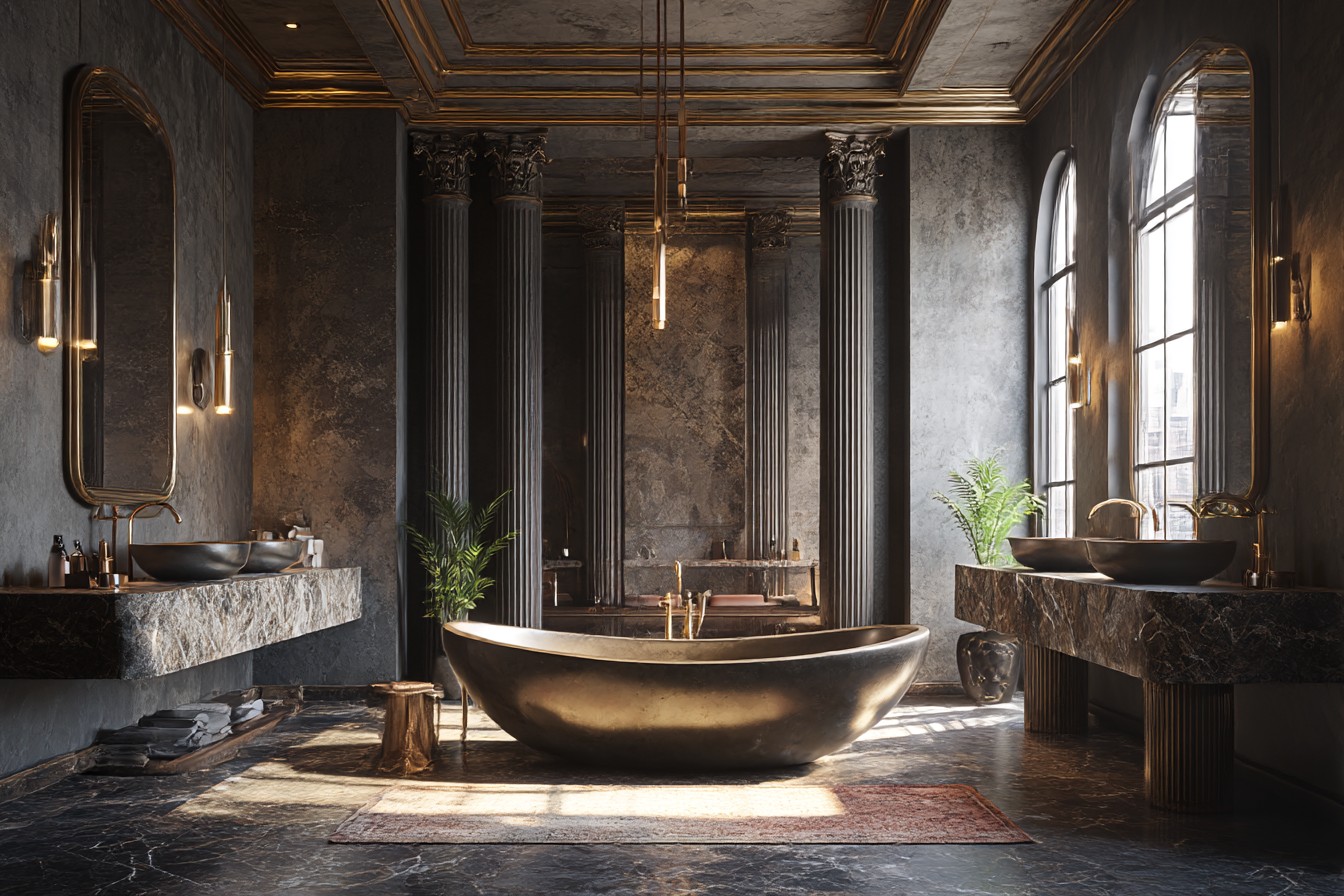
At 7 am while holding a coffee mug and staring down at the lower portion of the walls in my bathroom I asked myself “Why are these walls so … uninteresting?” The paint was a nice soft gray that made for great photo opportunities for instagram. However, something seemed to be missing. The space felt incomplete like I’d missed adding that final layer to transform a space from “good enough” to “I love this.”
This is when I recalled my grandmother’s powder room. Small space, maybe 4 ft. x 6 ft., however, it felt large due to the dark wood paneling covering the majority of the walls. She called it wainscoting. I had always thought it was simply an outdated form of decorating, but after standing in that bathroom that morning I realized it was far more than that. It provided both a visual barrier and additional weight to areas where they needed it most.
What no one ever explains regarding the walls of bathrooms is that they take a beating. The faucet leaks, steam forms and then drips down the walls, towels continually rub against the paint, and the chemicals used to clean the surfaces will leave their mark. The bottom three feet of any bathroom wall works significantly harder than the top and they deserve a better shield than a coat of semi-gloss paint.
After researching wainscoting options that afternoon I found myself falling into one of those rabbit holes of endless research where you eventually find yourself with 17 web browsers open and a Pinterest board titled “Maybe this will work?” The choices appeared to be endless; Bead Board, Board & Batten, Raised Panel, Flat Panels. Height ranges included the typical 36-inch chair rail and the more common full wall coverage. Options included MDF, Solid Wood, and Vinyl (I have to admit, the vinyl option made me cringe a little).
After measuring my bathroom numerous times (approximately 12 times, because I am extremely cautious about purchasing the incorrect size) I chose a simple beadboard style of MDF. I know it is not the most attractive option, but it is very stable in humid environments and paints exceptionally well. I also elected to use a height of 42-inches. While this is above the standard chair rail height, it worked perfectly with the ceiling height in my bathroom which is 9 ft. Any lower height would have made the space appear stunted.
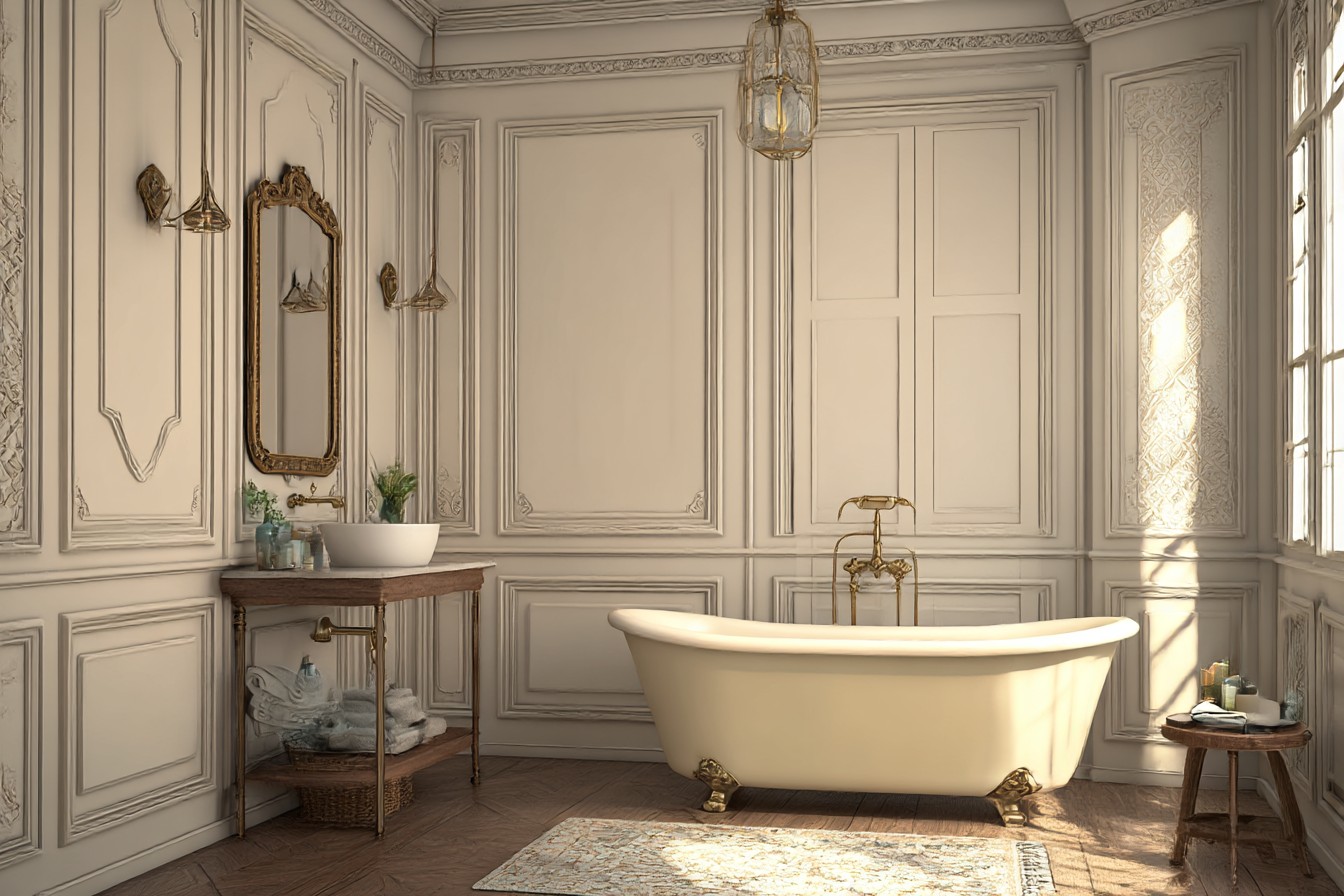
It took me approximately three weekends to install the wainscoting. I would have completed the project in one weekend, but I failed to check that the walls were level. Unfortunately, they were not. Old house problems. Most of the second Saturday was spent shimming and adjusting because perfectly aligned boards look uneven next to a crooked wall.
I originally painted the wainscoting the same color as the upper walls the soft gray I mentioned earlier. What a huge mistake. The space appeared to be incomplete. Therefore, I repainted the entire area in a deeper shade, nearly charcoal. At that point the space had developed character. The contrasting colors created interest without being overbearing, and the darker section of the lower area assisted in concealing any future water spots or scuffs.
The transformation was immediate. The space went from being a basic builders bathroom to appearing to be custom. Even friends who were visiting couldn’t determine specifically what had changed. That is the power of good wainscoting. It does not draw attention to itself, but rather elevates everything surrounding it.
However, this is where it becomes truly functional, and I’m happy I installed it. Approximately six months later my toddler nephew came to visit and managed to get toothpaste on the wall directly below the height you would expect. Had the area been painted previously, it would have required either careful spot cleaning or the application of touch-up paint. With the wainscoting, I simply wiped it away. The texture of the beadboard panels helps conceal minor imperfections, and the darker paint color does not show water spots such as the lighter paint color did.
Surprisingly, the visual effect was also significant. The room appears taller, not shorter as I had feared. The horizontal line formed by the top rail creates a visual path for the eye and makes the space appear larger. There is also some psychological satisfaction in having distinct zones in a space. A practical lower zone and a decorative upper zone. It’s like the space has better posture.
There are a couple of things I learned along the way that I wished I had known prior to starting the project. First, caulk is your friend, but don’t go crazy with it. Too much caulk looks sloppy. Second, if you are painting the wainscoting a different color than the walls, paint the upper walls first. Believe me on that one. Finally, that fancy router bit I purchased to create custom profiles? Completely unnecessary for a bathroom. Clean, simple lines are more effective in a space focused on functionality.
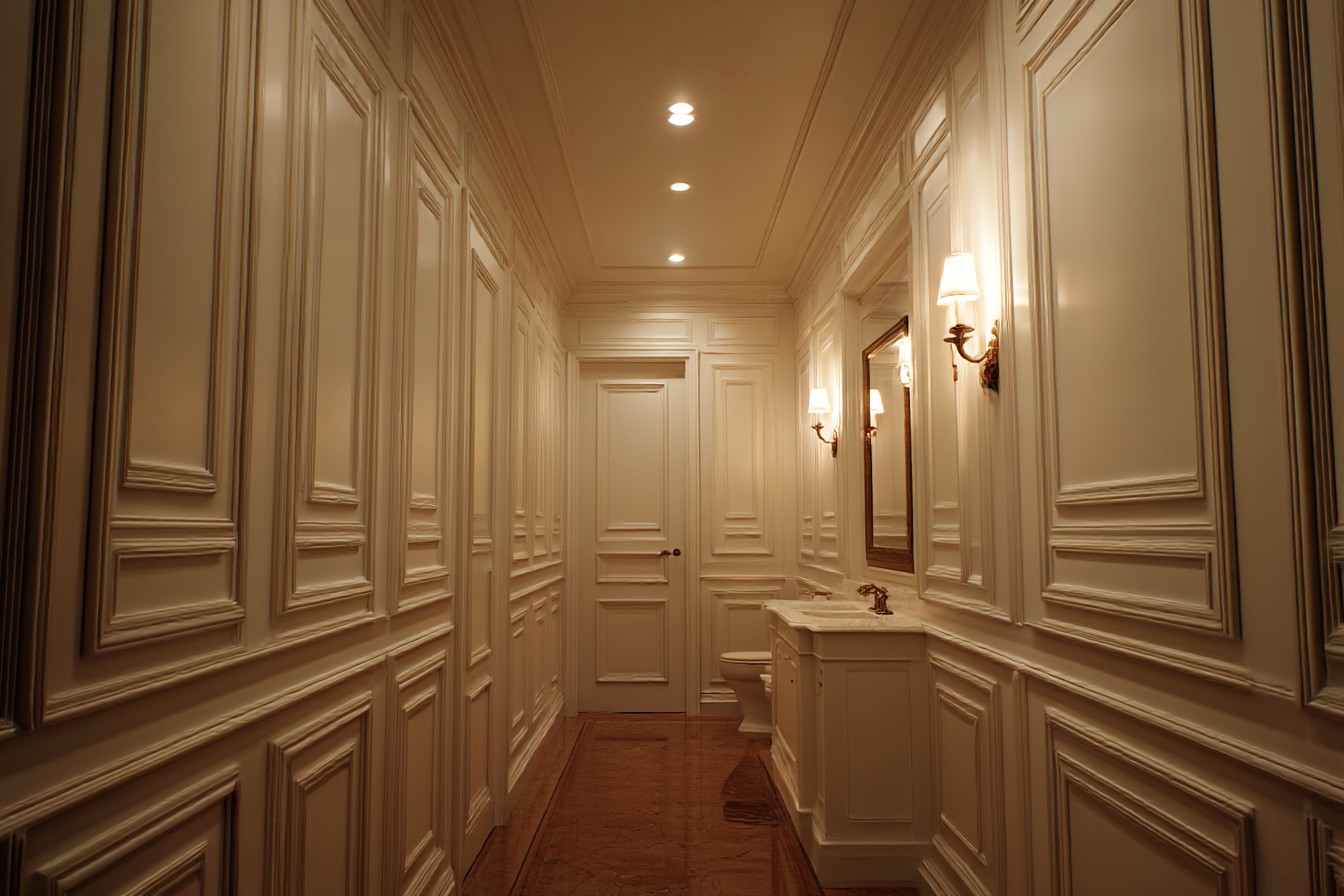
While the cost was not exorbitant (approximately $200 for materials, plus whatever you want to charge me for my time (I prefer to avoid counting that as well)), compared to retiling or replacing fixtures, it was essentially nothing. Additionally, unlike the larger renovation projects, I was able to complete the project myself without needing to hire anyone.
Would I do it again? Yes. I’m currently looking at the powder room downstairs and thinking about doing the same thing. Possibly a different height and possibly a different color combination. One of the advantages of wainscoting is that it can be adapted to fit with almost any style, whether it be traditional, modern farmhouse or whatever I’ll refer to my somewhat eclectic method.
Standing in the same bathroom today, coffee mug in hand once again (some things remain constant), the space feels complete in a way it didn’t before. Not because the wainscoting is flashy or expensive looking, but because it serves several purposes silently and effectively. Protection, visual appeal, and that custom-installed feeling that makes a home feel purposeful.
Sometimes the best design decisions are the ones that seem obvious in hindsight, even if you couldn’t envision them until later.